
COREDO – EU Legal & Compliance Services Expert legal consulting, financial licensing (EMI, PSP, CASP under MiCA), and AML/CFT compliance across the European Union. Headquartered in Prague, we provide seamless regulatory solutions in Germany, Poland, Lithuania, and all 27 EU member states.

Alena Sharykava
04.03.2026 | 6 min read
Updated: 04.03.2026
Since 2016 I, together with the COREDO team, have been guiding clients through the full cycle of international structuring: from company registration in key jurisdictions of the EU, the United Kingdom, Singapore and Dubai to obtaining financial licenses, AML consulting and subsequent support. Over the past years we have seen steady interest from entrepreneurs and funds in the Astana International Financial Centre (AIFC). The reasons are clear: English common law, transparent supervision by the Astana Financial Services Authority (AFSA), the flexible regulatory framework of the AIFC rulebook and tangible tax incentives in the AIFC for investors when residency and substance conditions are met.
In this article I have systematized COREDO’s practical experience and set out concrete steps on how to approach obtaining an AIFC investment license, registering funds and building a sustainable compliance model. The text is addressed to those who expect clear timelines, a controlled cost of the process and predictability of regulatory requirements – from fit and proper to IFRS reporting.
Why the AIFC

AIFC: a closed perimeter of English common law with its own court, the AIFC Court, and an independent regulator, AFSA. For financial services the AIFC rulebook applies: Conduct of Business, Prudential Rules, Collective Investment Schemes, AML/CFT and related guidance. COREDO’s practice confirms that for international groups it is a safe entry point to the Central Asian markets, as well as a platform for cross-border capital structures.
From a tax perspective, the relationship between the AIFC and the Kazakhstan tax regime provides incentives to participants in the centre for a number of financial services, exemption from certain local taxes and the ability to apply double tax treaties. It is important to assess the commercial feasibility of opening an office in the AIFC taking into account the investment strategy, investors’ jurisdictions and the operational risk map.
Map of AIFC licenses
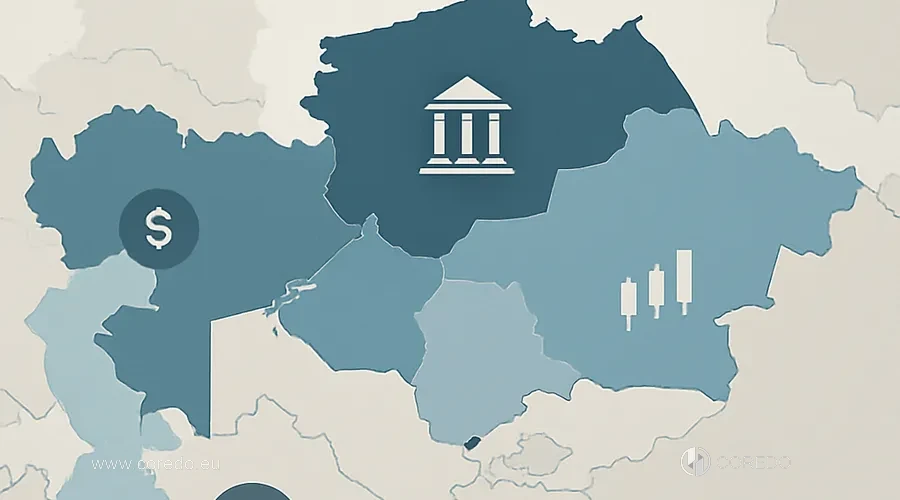
Types of AIFC investment licenses are detailed in the AIFC regulatory framework for investment services. The AIFC license map: broker, dealer, manager, depository and related statuses allows flexible selection of the scope of authorisations to suit a business model.
Broker, dealer and market maker
The AIFC securities broker license and the AIFC market-maker and dealer license cover «dealing in investments», «arranging deals», «making a market». Separate requirements apply to algorithmic trading: strategy testing, risk controls and compliance when using algorithmic trading. The COREDO team has implemented projects where access to derivatives and derivative instruments with enhanced limit management was added to the basic dealing permission.
Asset and fund managers
The AIFC asset management license grants the right to «managing investments» for a separate mandate, while the AIFC fund manager license covers management of collective investment schemes. There are also specialized categories: an AIFC alternative investment management license for private equity and VC structures. A solution developed at COREDO often combines a managed account and a fund platform to flexibly onboard both institutional and qualified investors.
Depository and custody
An AIFC depository license and the organisation of custody and asset accounting in the AIFC imply strict segregation of client assets, segregated accounts, as well as restrictions on commingling client and own funds. For some strategies a separate custodian provider is required or outsourcing services: fund administration and custodian with clear SLA and KPI.
Investment adviser
The AIFC investment adviser license (advising on investments) is critical for groups where the portfolio is managed outside the AIFC, while advisory, distribution and oversight functions are performed at the centre. Our experience at COREDO has shown that such a configuration is convenient when AIFC licenses are compatible with European regulations (MiFID) and when a MoU with foreign supervisory authorities is in place.
Digital assets sandbox
An AIFC digital assets trading license is possible through AFSA regimes for Digital Asset Trading Facility and custody of digital assets. The AIFC regulatory sandbox for fintech and tokenisation (regulatory sandbox) allows testing of asset tokenisation models and security tokens in the AIFC before obtaining a permanent license. In several projects, COREDO selected smart contract architectures with legal recognition in the AIFC, ensuring AML compliance/KYC when obtaining an AIFC license.
Regulatory framework of AFSA and AIFC

The rules for regulating investment activity in the AIFC are built on the principles of risk-based supervision and are close to MiFID approaches. AFSA relies on Conduct of Business Rules (COB), Prudential Rules (IPRU), Collective Investment Schemes (CIS) and the AIFC AML Rulebook.
Capital requirements and adequacy
capital requirements for an AIFC license depend on the type of activity: broker-dealer, custodian, manager, consultant. Capital requirements and the calculation of capital adequacy are applied taking into account market, credit and operational risks, as well as off-balance obligations. We prepare ICAAP/ICARA models, portfolio stress testing and liquidity management considering counterparty and credit risk limits.
Corporate governance: fit and proper
The AIFC corporate governance rules define the minimum governance structure required to obtain an AIFC license: a board of directors with an independent director, Senior Executive Officer, Finance Officer, Compliance Officer and MLRO. Requirements for AIFC directors and senior personnel include checks of probity (fit and proper) and fitness and propriety checks for experience, reputation and competence. The COREDO team prepares CVs, competency matrices and justification for role allocation to pass Due Diligence AFSA without delays.
AML/KYC Compliance Program
AIFC compliance requirements for investors and clients imply risk-oriented KYC procedures and CDD for clients, a register of beneficial owners and BO disclosure, as well as AML/CFT policy and requirements. The compliance program—policy, procedures, monitoring—must include sanctions screening, compliance performance indicators (for example, false positive rate for transaction monitoring systems), and the preparation and submission of SARs. COREDO’s practice confirms that correct tuning of thresholds and scenarios in transaction control systems and risk monitoring at the AIFC reduces the burden on the team and improves the quality of risk detection.
Protection of client assets
Restrictions on mixing client and own funds and protection of client assets through segregated accounts: a key element of trust. AFSA requires documented reconciliation procedures, reporting on client assets and regular external audit, as well as independent internal audit if the scale of the business exceeds established thresholds.
Substance and residency in banks

Residency and substance requirements at the AIFC include having an office within the centre’s perimeter, local managers and key functions on the ground. This is especially important for tax benefits and for demonstrating the place of effective management.
Interaction with correspondent banks for AIFC companies and onboarding requires a pre-prepared AML package, a policy on sources of funds and control procedures. In several cases COREDO has arranged a combined solution: local settlement banks for operational flows and foreign correspondent banks for cross-border clearing.
How to obtain an AFSA license

obtaining an AIFC investment license AIFC: this is a project with clear stages. I always start by assessing the business model for compliance with the AIFC rulebook and check which permitted activities are actually needed today and how to keep the option to scale tomorrow.
How to prepare the package and IT environment
Preparing the documentation package for submission to AFSA includes a business plan, financial forecasts, risk, compliance and information security policies, as well as minimum requirements for IT infrastructure and cyber security. AFSA assesses checks for financial soundness and the business plan, the presence of continuity processes, an incident log and a DRP/BCP testing plan. The COREDO team designs internal control procedures and internal audit from scratch, the duties of the Compliance Officer and the MLRO role.
Timelines, cost and communication with the regulator
The timeline for issuing an AIFC license is usually 3–6 months from a correctly prepared dossier, especially if the regulatory sandbox mode for fintech is involved. The cost of obtaining an AIFC license consists of AFSA regulatory fees, expenses for legal preparation, audit and compliance setup, as well as CAPEX on IT and operational environments. In one recent project, a solution developed by COREDO helped reduce the budget by outsourcing the fund administrator and custodian functions until the AUM threshold was reached.
Supervision and reporting
regulatory supervision and AFSA inspections involve regular IFRS reporting, audit opinions, notifications of changes in controllers and risk events. Reporting requirements and IFRS standards are a mandatory part of licensing conditions. In addition, information exchange with foreign regulators (MoU) is in effect, which is especially important for groups operating in multiple jurisdictions.
Funds in the AIFC: registration and listing
registration of an investment fund in the AIFC includes choosing a form: open‑ended or closed‑ended, as well as using SPVs and holding levels to structure flows. Private equity and VC funds in the AIFC often employ closed‑ended models with mechanisms for capital calls and returns.
Fund manager and depository
An AIFC fund manager license allows operating a collective investment scheme provided there is an independent depository. Contracting depositories and beneficiary agreements require a clear compliance architecture: segregated custody, reporting, SLAs and liability clauses. For public products, preparing a prospectus and making disclosures for funds is mandatory in accordance with AFSA requirements.
Listing and exit
Listing and exit opportunities in Kazakhstan via the AIFC are implemented through the AIX, and synergies are also possible when interacting with KASE and international venues. Exit strategies — IPO, asset sales, secondary market — depend on investor profiles and jurisdictions of placement. The COREDO team has helped funds prepare data rooms, assess economic impact and perform investment due diligence for exits to international markets.
Taxes and private equity strategy
The advantages of an AIFC license for private equity funds include simplified dealings with qualified investors, clear rules on carried interest and flexibility in structuring the waterfall. Tax optimization measures and double tax treaties can reduce the tax burden on repatriated profits if the criteria for AIFC participant status are met. ROI metrics for funds in the AIFC are combined with methodologies for valuing illiquid assets, while liquidity management and portfolio stress‑testing are embedded in the investment committee’s regulations.
Liability of license holders
Risks and liabilities of AIFC license holders include sanctions compliance, legal risks of cross-border asset management and counterparty risk-control requirements. Compliance with sanctions regimes and screening is not reduced to a formal list check; continuous calibration of policies and staff training are required.
Regulation of derivatives and derivative instruments in the AIFC requires documented limits, margin modelling and close‑out terms. For algorithmic trading, code verification procedures, a change log and pre- and post-trade controls are important.
Compatibility with MiFID and passporting
The compatibility of AIFC licenses with European regulations (MiFID) is reflected in the similarity of approaches to client classification, suitability and product governance. Direct passporting of services through the AIFC into the EU is not applied. Nevertheless, international recognition of AIFC licenses is growing thanks to unified standards, MoUs and participation in IOSCO initiatives.
Using the AIFC for cross‑border investments is convenient when the parent company is in the EU or the UK, and fund management functions for regional deals are located in the AIFC. In such structures, anti‑money laundering and counter‑terrorist financing procedures in the AIFC and the group’s unified KYC/CDD policy are useful.
COREDO Case Studies: how it works
In Case No. 1 an international group requested Licensing of a broker-dealer with a market-making option. The COREDO team implemented a phased approach: first the permitted activities «arranging deals» and «advising on investments», then an extension to «dealing in investments». We built a capital model, calculated operational limits, and implemented transaction controls and risk monitoring in the AIFC. Time to obtain the basic license: four months, the extension – another three.
Case No. 2 – registration of an investment fund in the AIFC under a private equity strategy. We designed a closed-ended structure with an SPV for individual deals, arranged the AIFC fund manager license and the engagement of a depositary. During the preparation of the prospectus the risk framework, ROI metrics and the procedure for valuing illiquid assets were disclosed. The fund passed an audit, set up IFRS reporting and began placement among institutional investors.
Case No. 3 – a fintech company with a trading platform model for digital assets. At the start we used the regulatory sandbox, implemented AML/KYC when obtaining the AIFC license, and then moved to a full AIFC license for trading digital assets with a digital-asset custody module. The solution developed at COREDO included smart contracts and legal recognition in the AIFC, as well as compliance metrics with a false positive rate below 8% alongside a steady flow of SARs for actual incidents.
Commercial feasibility
Assessing the scalability of a business model through the AIFC includes a comparison of CAPEX/OPEX scenarios, the AUM growth model and substance requirements. It is often more advantageous to start with lean operations, using outsourcing services: fund administration and custodian, and then insource functions as volumes grow.
corporate structure: holdings, trusts and funds are structured to take into account restrictions on profit distribution and return of capital, as well as the terms for attracting institutional investors. For international jurisdictions we support the employment of foreign personnel and work permits, set up management remuneration policies and monitor the compliance of delegated functions with regulatory expectations.
COREDO Roadmap
- Diagnosis: mapping activities to license “maps” and the AIFC rulebook, risk assessment and capital.
- Designing governance: minimal governance structure, roles SEO/CO/MLRO, independent directors.
- Capital and financial model: capital requirements, ICAAP/ICARA, liquidity stress tests.
- Compliance: AML/CFT policy and requirements, KYC and CDD procedures for clients, sanctions screening, register of beneficiaries.
- Asset control: segregated accounts, agreements with depositaries and custodians.
- IT and cybersecurity: incident log, BCP/DRP, access control and logging.
- Preparation of dossier for AFSA: business plan, policies, fit and proper packages, evidence of substance.
- Bank onboarding: correspondent relationships and source-of-funds control.
- Reporting and audit: IFRS, internal audit, regulatory reporting and interaction with AFSA inspections.
- Scaling: adding licenses (for example, AIFC market‑maker and dealer licenses), going public, international MoU.
Frequently asked questions from clients
- Impact of international sanctions on business in the AIFC. The regulator expects reliable sanctions screening and de‑risking scenarios. We develop processes taking into account the dynamics of sanctions regimes and the data‑sharing requirements under the MoU.
- Passporting services through the AIFC. There is no direct passporting into the EU, but compatibility with MiFID helps build cross‑border chains via subsidiary structures and recognition by banks and counterparties.
- Reporting requirements. In addition to IFRS, AFSA emphasizes risk disclosure, management of conflicts of interest and fee transparency. Prospectus preparation and disclosures for funds: an area of special attention.
- Comparison of the AIFC with EU and UAE jurisdictions regarding investment licenses. The AIFC wins on launch flexibility but requires meaningful substance and discipline in compliance. For groups with an Asian focus this is often the optimal balance.
What a partnership with COREDO provides
I maintain personal involvement in the design of each structure, while the COREDO team supports the project from the initial architecture to the first regulatory inspection. We combine legal expertise, the financial model, AML/KYC practices and operational implementation so that you receive not just a license, but a sustainable business. Our clients appreciate predictable timelines and transparent costs, as well as the readiness to explain complex requirements in plain language.
If you are considering obtaining an ADGM investment license, an ADGM license for investment activities can become the center of your international structure. The regulator AFSA offers clear rules of the game, and tax incentives in the ADGM for investors help increase the returns of strategies. The main thing is to assemble all the elements correctly: from capital and governance to AML/CFT and IT architecture.
Conclusions
The AIFC is a mature yet flexible platform for investment business, fund management and fintech initiatives. The AIFC rulebook and regulations provide clear guidelines: capital requirements, corporate governance rules, KYC/CDD procedures and client asset protection. With proper preparation, obtaining an AIFC investment license takes a reasonable timeframe, and the structure remains scalable and compatible with international standards, including MiFID principles.
I am convinced that success here is built on three pillars: a correct licensing architecture and substance, compliance discipline, and a pragmatic scaling plan. The COREDO team helps establish all three pillars sequentially and without unnecessary iterations. If you need a roadmap — from choosing an AIFC securities broker license or a fund manager license to setting up custody, IFRS reporting and interaction with AFSA, we have proven solutions and experience implementing them.