
COREDO – EU Legal & Compliance Services Expert legal consulting, financial licensing (EMI, PSP, CASP under MiCA), and AML/CFT compliance across the European Union. Headquartered in Prague, we provide seamless regulatory solutions in Germany, Poland, Lithuania, and all 27 EU member states.

Nikita Veremeev
25.03.2026 | 6 min read
Updated: 25.03.2026
I have been leading COREDO since 2016 and every day I see how a high-quality training program on combating money laundering and terrorist financing turns from a formality into a strategic advantage. In Europe, Asia and the CIS countries it is competent AML training for staff that allows businesses to confidently undergo Licensing, expand cross-border operations and build sustainable risk control processes. The COREDO team has implemented dozens of programs for companies in the EU, the Czech Republic, Slovakia, Estonia, Cyprus, the United Kingdom, Singapore and Dubai, and in this article I will summarize the practices that work.
My task is to speak honestly about the challenges and show how to overcome them without unnecessary bureaucracy. The solution developed at COREDO always combines regulatory requirements, business objectives and technological implementation. Below is a structured guide: what regulators check during AML training, how to formalize policy and KPIs, which technologies to choose and how to document AML training so that any audit is completed without unnecessary questions.
Why isn't AML training mandatory?

A high-quality AML/CFT training program reduces TTD (time-to-detection), improves SAR quality score and reduces false-positive alerts in the transaction monitoring system (TMS). In practice this means lower operational costs, higher service quality and predictability for the regulator. Our experience at COREDO has shown: where training is integrated with KYC/KYT processes and case management, the business expands its geographic footprint and product range faster.
At the core of an effective program is an approach based on risk assessment (risk-based approach). Client, product, distribution channel and geography risk profiles determine the depth of CDD (customer Due Diligence), the requirements for EDD (Enhanced Due Diligence) and the training priorities. Tone from the top is critical here: when management personally supports the regularity and quality of training, employees understand priorities and act more deliberately.
It is important to think in terms of ROI. In COREDO's practical projects we calculate metrics: cost-per-learner, cost-per-detection, the impact of training on TTD and on escalation frequency. This approach turns training from an expense into an investment, and the dialogue with co-owners and auditors into a discussion of numbers.
What the regulator looks for in AML training

When assessing AML training, the regulator looks not only at the formal presence of courses but also at the content of programs, their alignment with real risks and demonstrable effectiveness. Below are the key requirements and expectations — program frameworks, documentation, methods for verifying knowledge and control mechanisms.
Regulatory requirements for AML training
Regulators in the EU (AMLD5, AMLD6 and EBA guidelines), the UK, Singapore and the UAE expect the training program to take into account the FATF recommendations, local laws and industry standards. Many refer to FinCEN best practices and European guides on roles, frequency and course content. Not only a formal anti-money laundering training program is important, but also traceability, from risk assessment to testing protocols and remediation.
Regulators emphasize adaptation to specific functions: front office, risk, operations, IT and management. AML staff training should include KYC and AML training for employees, sanctions compliance (OFAC, EU, UN), working with PEPs and UBOs, as well as CFT. A separate focus is cross-border activity, where AML training is required for cross-border operations and harmonization of requirements between jurisdictions.
How the regulator evaluates training
Inspectors look not only at completion rate, but also at pass rate, competence score and the frequency of refresher courses. They expect that the periodicity of AML training and refreshers is linked to the level of risks and changes in products, sanctions or geographies. Additionally, they assess the presence of fraud scenarios and practical cases for AML training, tabletop exercises and case studies that reflect business realities.
Quality is confirmed by internal tests and external validation of AML training. In some jurisdictions an independent audit of content, comparison with AMLD5/AMLD6, EBA and local guidelines is welcomed, as well as an action plan to address non-compliance (remediation plan) with real deadlines and responsible parties.
AML regulatory audit checklist
- AML training policy with roles and responsibilities of the compliance officer.
- AML competency matrix and competency assessment by function.
- Content matrix: topics KYC/CDD/EDD/KYT, sanctions, PEP screening, adverse media, identification of UBO, SAR/Suspicious Activity Report.
- Schedule and frequency, participation logs, test results, certification and re‑certification of employees.
- Audit trail for the LMS: who, when, which modules were completed, results, electronic signatures and timestamps (timestamping).
- Evidence of course updates when sanctions lists and regulations change, updates to sanctions lists and monitoring of data provider reputation.
- Integration with TMS and case management for KYT practice (Know Your Transaction).
COREDO practice confirms: when this package is documented and easily accessible, the inspection proceeds constructively and quickly.
How to document AML training
For evidence, recording and storage of AML certificates, immutable logs and logging (immutable logs), chain of custody and legally significant documentation are critical. We use SCORM and xAPI for training records, integration of the LMS with HR and the access control system, as well as API implementations and automatic confirmation of completion via electronic signature.
Additionally we prepare electronic certificates and access for inspectors, as well as report templates with KPIs and commentary. Automation of AML training evidence (audit trail) saves compliance officers weeks of work and speeds up any regulatory dialogue. At the client's request we support evidence preservation practices for eDiscovery and external auditors.
GDPR, DPIA and data retention periods
GDPR requirements for storing training data mean a deliberate choice of document retention periods (retention policy), data minimization and transparency. For training that processes sensitive data we conduct a DPIA, determine legal bases, and set up access based on the principle of least privilege. In some projects we have used biometric technologies and e‑ID to verify employees during remote training, with separate assessments of legality and secure logging of actions during knowledge assessment.
It is important to ensure integration of the LMS with the company's security policy: immutable logs, control of deletions and modifications, key management and recording of all administrator operations. Such a level of maturity answers inspectors' questions at the outset.
Anti-Money Laundering Training

Building an anti-money laundering training program requires a clear policy and a well-defined allocation of roles within the organization. Below we will look at how to formulate an AML training policy and the role the AML officer should play so that the training is systematic and effective.
AML Training and the Role of the Responsible Officer
The AML compliance training policy is the foundation. It records the objectives, frequency, roles and responsibilities of the compliance officer when conducting training and a risk-based approach. In the document we set out areas of responsibility: the AML officer — content design and quality control; HR — onboarding and cadence; IT — access and integrations; business lines — adapting cases to their processes.
We separately describe the requirements for the content and duration of the AML course and the passing criteria: passing score, module completion deadlines, conditions for re-certification. The policy sets the framework for internal AML compliance training and for contractors: AML training for outsourcing staff and vendor due diligence are mandatory for any critical process.
Competency Matrix: Roles and Localization
Creating an AML competency matrix is a practical way to link risks, roles and content. We build a role-based training model: front office and sales departments focus on KYC, detecting suspicious transactions and red flags; risk and compliance focus on EDD, sanctions and PEP; operations focus on KYT and working with TMS; IT focus on integrations, immutable logs and data security. For corporate groups we use course scaling: a unified program vs localization, where the common framework is supplemented by local rules.
Competency assessment and a skills matrix allow managing personnel: whom to certify more often, who to assign EDD training for higher-risk employees, how to optimize refresher schedules and triggers for EDD training when product changes occur.
KYC, CDD, EDD, sanctions and SAR
- KYC and CDD, customer due diligence, identification of the source of funds (source of funds) and verification of the source of wealth (source of wealth), verification of beneficial owners (UBO) and working with public UBO registries.
- EDD: enhanced due diligence for high-risk categories, PEP screening and classification of politically exposed persons, adverse review / adverse media monitoring and OSINT for investigations.
- KYT: transaction monitoring, optimization of transaction monitoring and rule tuning, reduction of false positives.
- Sanctions compliance and sanctions (OFAC, EU, UN), sanctions list screening engine (watchlist screening), updates and evaluation of data providers.
- Filing SAR / Suspicious Activity Report, SAR quality control and assessment of their completeness, channels for reporting suspicions and whistleblowing.
- Training on preventing the financing of terrorism (CFT) and specific indicators.
In companies working with digital assets, we include blockchain analysis and crypto-AML tools, customer behavioral analytics, and machine learning and anomaly detection for AML: necessarily including ML model management — governance, explainability and bias assessment.
Scenarios and Cases
AML scenario-based training for employees is the best way to consolidate knowledge. We model fraud scenarios, regional cases, tabletop exercises and case studies based on real (depersonalized) transactions, and include walkthroughs of SAR forms and common mistakes. This approach increases the competence score and directly affects KPIs: TTD is reduced, and the SAR quality score increases.
For cross-border directions we add specifics of local requirements and regulatory due diligence for cross-border transactions: allocation of responsibilities, cross-border data transfer and coordination with local officers.
Frequency of Refresher Training and Triggers
The frequency of AML training and refreshers depends on the risk profile and changes in the landscape: new sanctions, product launches, entry into a high-risk jurisdiction, results of internal controls. In certain programs we define triggers for unscheduled training: spikes in false positives, SAR quality incidents, changes in TMS. Such a dynamic approach demonstrates the maturity of the system to the regulator.
Technological architecture for training
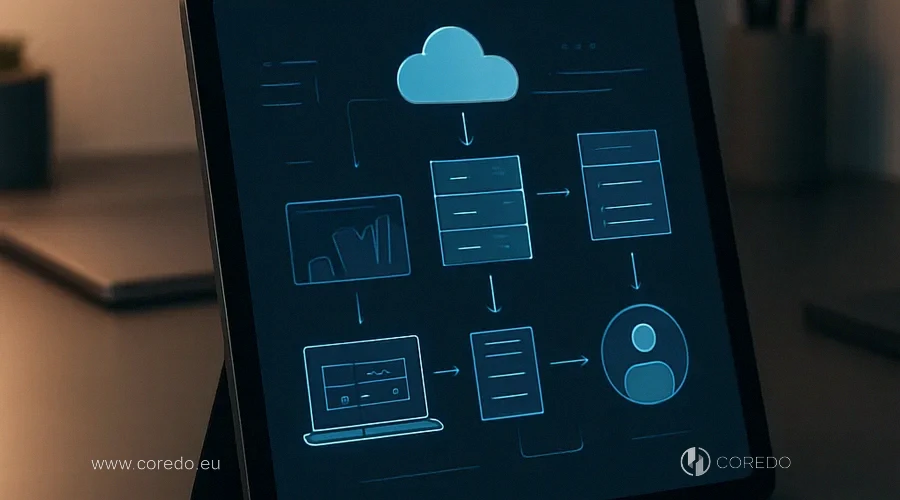
The components of the technological architecture that support training define platform operating principles, data exchange formats, and methods for verifying results. In the following sections we will examine the role of LMS, SCORM/xAPI standards, and the importance of digital evidence for a reliable and scalable system.
LMS, SCORM/xAPI, digital evidence
The technological base is an LMS with SCORM and xAPI support for detailed activity tracking, integration with HR, access control systems, and IDM. We use electronic signatures and timestamps, immutable logs, and a centralized registry of AML trainings and certifications. This creates a full audit trail and allows for fast export of legally significant reports.
Integrating the LMS with HR and access control systems simplifies onboarding and offboarding, and API implementations and automatic completion confirmations reduce manual work. For inspectors we configure a secure portal with electronic credentials and visibility restrictions based on the need-to-know principle.
Integration of TMS, KYT, and case management
Training must be linked to practice: we connect modules with TMS, KYT, and the case-management system. An employee who has completed a sanctions module immediately receives alert simulations; an investigations officer receives training cases of increased complexity followed by quality review of decisions. Such a loop allows measuring before-and-after metrics: pass rate, case processing time, and escalation frequency.
In several projects we implemented internal tests and external validation of AML training — from independent certification providers. The results are used to tune TMS rules, which simultaneously increases accuracy and the return on investment of training.
Remote training and microlearning
Remote and microlearning AML for employees provides flexibility. For higher-risk teams we include identity verification via e-ID and, where legally permitted, biometrics. A transparent DPIA and logging control during testing are important: who, when, from which device and IP, with recording of any breaks or retakes. Inspectors and internal auditors value this level of detail.
Automation of evidence: audit trail, immutable logs, electronic certificates, and electronic distribution of reminders about refresher training - all this reduces operational risk and frees compliance officers for analytical work.
Measuring effectiveness: KPI and ROI

When measuring effectiveness, it is important to consider KPIs, ROI and the impact on risks in order to link training outcomes to the organization’s financial and operational objectives. Below we look at training metrics and management indicators that allow objective measurement of these effects and informed decision-making.
Training metrics and management indicators
- Completion rate, pass rate, competence score by role.
- Operational KPIs: TTD, SAR quality score, share of false positives, investigation time.
- Economic metrics: cost-per-learner, cost-per-detection, training ROI.
- Maturity indicators: quality of the audit trail, regularity and timeliness of refreshers, percentage of closed action items in the remediation plan.
We link KPIs for management to strategy: reducing operational risks, complying with licensing requirements, speed of launching new markets and products. Such a dashboard turns AML training into a transparent management tool.
External validation, audit and improvement
External validation and independent audit of training are not a formality but a way to confirm credibility. We use compliance maturity frameworks (maturity models), compare the program with the EBA and FATF, analyze incidents, whistleblowing channels and SAR quality. The results are documented in a remediation plan and supported by an incident playbook and an incident management system.
This closed improvement loop — from metrics to audit, then to changes in content and processes — demonstrates to the regulator a sustained culture of compliance.
COREDO cases and solutions
Cases and solutions in COREDO's practice clearly demonstrate our approaches to complex business challenges. This section contains real examples - from legal support and licensing to the development of training programs, as in the case of a European fintech company where licensing and training were carried out as a single project.
European fintech: licensing and training
The COREDO team implemented a comprehensive solution for a payment service provider in the EU: company registration, licensing, AML training for the staff of the financial company and LMS integration with HR. We built a program verified for compliance with AMLD5/AMLD6 and EBA guidance, and also added a GDPR layer, a retention policy and a DPIA. The content included CDD/EDD, sanctions, PEP screening, UBO and SAR.
Result: the pass rate increased to 96%, SAR quality score: by 18%, and TTD decreased by 27%. The regulator during inspection noted the quality of evidence: electronic signatures, immutable logs, chain of custody and inspectors' access to electronic certificates.
Crypto provider in Singapore and Dubai
In the project for a crypto company we focused on blockchain analysis and crypto AML tools, behavioral analytics and anomalies. Training was built around KYT, scenarios of typical schemes and ML models with explainability and bias control. It was important to ensure updates to sanctions lists and independent assessment of data providers, as well as vendor due diligence for external training providers.
The comprehensive approach reduced false positives by 35% through rule tuning, and analysts' competence increased thanks to scenario-based training. Regulators in Singapore and the UAE accepted the evidence base without additional requests.
Scaling a group of companies in the EU
The solution developed at COREDO for the corporate group included a unified training program and localization to national requirements. We created a central LMS, integration with case management, refresher notifications on risk triggers and external validation once a year. For the front office we strengthened the module on detecting suspicious transactions and handling alerts.
Outcome: uniform practices, transparent KPIs and rapid rollout of new jurisdictions. Inspections in both countries received positive assessments of the regularity and quality of training, and auditors noted the structured remediation plan and incident playbook.
How to avoid common mistakes
I often see two extremes: excessive theoreticism without connection to the TMS and a lack of formalization. We address this by integrating training with real cases and rule settings, as well as a clear policy, a competency matrix and an audit trail. Additionally, we help compliance officers formalize third-party and vendor control (vendor due diligence) and minimize the risks of outsourcing training through SLAs and independent quality assessment of content.
Budgeting and planning
Budgeting and planning: not abstract stages, but practical tools for achieving the economic efficiency of the business. Only through a transparent cost structure and clearly defined SLAs can you balance expenses, reduce unnecessary spending, and measure the real impact of investments.
Cost structure and SLAs
The budget includes content creation, LMS licenses, integrations (HR, access rights, API), external validation and audit. We optimize costs through reuse of modules, microlearning, package licenses and clear SLAs with providers (response time, updates to sanctions lists, SCORM/xAPI compliance, reliability of logs). In COREDO projects the cost-per-learner decreases by 20–30% after the first year due to standardization and automation.
Business case for executives
AML training ROI metrics for management show how training affects TTD, SAR quality, and operational risks. We model scenarios: reduction of false positives, shortening investigation time, decreasing the number of incidents. We include KPIs: ROI, TTD, SAR quality score, and the impact on capital requirements, if applicable. Such a business case helps make decisions about scaling and localization.
Implementing AML training with COREDO
The roadmap for implementing AML training with COREDO begins with an assessment of the current state of processes and the team's competencies. The first stage is a thorough diagnosis and gap analysis, which will identify knowledge gaps and technical constraints so that subsequent steps are precise and effective. Based on these, a training and integration plan is developed, tailored to the company's risks and regulatory requirements.
Diagnosis and gap analysis
We start with a diagnosis: we compare current practices with FATF, EBA, FinCEN and AMLD5/AMLD6, conduct a gap analysis, and interview key roles. Based on the results we prepare regulatory due diligence, set priorities and develop a project plan with clear stages.
Program design: policy and content
Next we design the AML training policy, a competency matrix and a content plan. We define the responsibilities of the compliance officer, the frequency, refresher triggers, testing and evaluation after the AML training. We embed requirements for content and duration, SAR quality control and whistleblowing channels.
Integrations and technologies
We choose an LMS, configure SCORM/xAPI, integrate with HR and access control systems, enable electronic signature, immutable logs and an audit trail. We connect TMS/KYT, case management, configure APIs and automatic confirmation of completion. If necessary, we add e-ID/biometrics with a DPIA.
Pilot launch and continuous improvement
We launch a pilot for risk-sensitive roles, collect metrics on completion/pass/competence, and adjust content and scenarios. Then we scale to the entire company and groups, set up KPI dashboards, plan external validation and an independent audit of the training. We regularly review the program taking into account new sanctions, regulatory changes and incident management outcomes.
Frequently Asked Questions and Answers
- How to formalize an AML training policy? Document objectives, roles, frequency, refresher triggers, requirements for tests and audits. Attach a competency matrix and an evidence checklist.
- What does the regulator check in AML training? Compliance with AMLD5/AMLD6 and local regulations, frequency, role model, quality of cases, KPIs, audit trail, storage of certificates and data protection.
- How to prepare training evidence for the regulator? Use an LMS with SCORM/xAPI, electronic signatures and timestamping, immutable logs, a single registry of trainings and certifications, ready reports and inspector access.
- What is the frequency of AML training and refreshers? Basic, annually, for high-risk roles, more often and on triggers: new sanctions, product changes, incidents.
- Do outsourced employees need training? Yes, taking into account vendor due diligence and inclusion in the training registry, KPIs and SLAs.
- How to account for GDPR and the retention policy? Determine legal bases, minimize data, set retention periods, conduct a DPIA and ensure access controls.
- How to link training and KYT? Integrate training with the TMS and case management, use alert simulations and quality assessment of decisions.
- Is external validation necessary? It is recommended annually or upon significant changes. This increases regulator confidence and the quality of the program.
Conclusions
A comprehensive AML training program for employees is not just a checkbox for a license. It is a system that reduces risks, accelerates scaling and strengthens the trust of clients and regulators. When training is based on a risk-based approach, supported by technology (LMS, SCORM/xAPI, immutable logs), integrated with KYC/KYT and case management, and measured through clear KPI and ROI, the business gains a strategic advantage.
COREDO's practice confirms: a strategic, evidence-based and flexible approach works equally well in the EU, the United Kingdom, Singapore and Dubai, provided local nuances are taken into account. My team and I at COREDO take on the complexity of design, implementation and documentation so that you are left with what matters most: time to develop your product and markets. If you are planning company registration, obtaining a license or scaling cross-border activities, make AML training the foundation of your roadmap. This is an investment that pays off faster than it seems and protects the business in the long term.