
COREDO – EU Legal & Compliance Services Expert legal consulting, financial licensing (EMI, PSP, CASP under MiCA), and AML/CFT compliance across the European Union. Headquartered in Prague, we provide seamless regulatory solutions in Germany, Poland, Lithuania, and all 27 EU member states.

Alena Sharykava
20.02.2026 | 6 min read
Updated: 20.02.2026
I have been leading COREDO since 2016 and every year I see how technological progress changes legal and financial constructs faster than regulators’ manuals can be updated. Tokenized funds are not hype but a practical tool if you approach design as an engineering task: from choosing the legal wrapper and license to smart contracts, custody schemes and marketing restrictions. The COREDO team has implemented a number of projects in the EU, Asia and the CIS, and in this article I have gathered the practical experience that will save you months of searching and hundreds of hours coordinating with providers.
I write simply about complex matters, but I do not downplay the risks. Tokenization of fund units and the issuance of a security token fund provide liquidity, fractionalization of assets through tokens and on‑chain transparency, but require discipline: compliance by design, a correct tokenized fund structure, smart contract audits and a contractual framework with clear transfer restrictions. The solution developed by COREDO for such projects is built on the combination of law, technology and operational management — without one of these links the structure won’t fly.
Tokenized funds: why businesses need them
A tokenized fund is a fund on the blockchain where shares/units are represented as security tokens according to the regulator’s classification of the token as a security. This model provides a flexible subscription, redemption and secondary market mechanics for the fund’s tokens, the possibility of trading security tokens on regulated exchanges or OTC alternatives, and also simplifies cross‑border distribution with correct fund passporting.
Our experience at COREDO has shown that tokenized funds increase ROI through fund tokenization due to four factors: reduction of transactional costs, acceleration of investor subscription, expansion of distribution geography and liquidity, and fractionalization of even ‘illiquid’ assets. Benchmarking the ROI of tokenization against traditional funds varies by strategy, but with fair token economics of the fund and competent market making, efficiency gains become measurable.
COREDO’s practice confirms: tokenized funds work not only for crypto strategies. We see cases of real assets, credit strategies, venture portfolios and even ESG tokenization for impact investing via tokens. The key criterion is a proper corporate wrapper and compliance with marketing restrictions and rules for advertising investment products in target jurisdictions.
Legal qualification: EU, Asia, CIS

My approach begins with a map of regulatory regimes. In the EU the basic framework is set by AIFMD and MiFID II, as well as the regulatory requirements of MiCA and tokenized funds for crypto infrastructure. AIFMD and fund tokenization are compatible: the interest is issued as a token while retaining AIF status; for retail offerings it is possible to combine UCITS/AIF and tokenization via an intermediary “wrapper”. MiFID II’s consequences for the sale of fund tokens concern client categorization, suitability/appropriateness and distribution rules through investment firms.
In Asia I more often rely on Singapore and Dubai. Registering a tokenized fund in Asia via a Singapore VCC with an ITO/STO under MAS supervision, provided the manager is licensed, gives a clear roadmap. In the UAE DFSA and VARA offer regulatory sandboxes for tokenized funds and clear guides on security token offering for a fund, including transfer restrictions on security tokens and access to licensed exchanges.
In the CIS clients often choose the AIFC in Kazakhstan. The AIFC Courts and AFSA provide the predictability of Anglo‑Saxon law, and registering a fund in the jurisdictions of the EU, Asia and the CIS and the subsequent STO for the fund are structured into a single cross‑border arrangement. The legal choice of jurisdiction when launching a fund‑token we make based on the investor mix, requirements for the depositary and transfer agent, taxation and listing objectives.
Structure of a tokenized fund
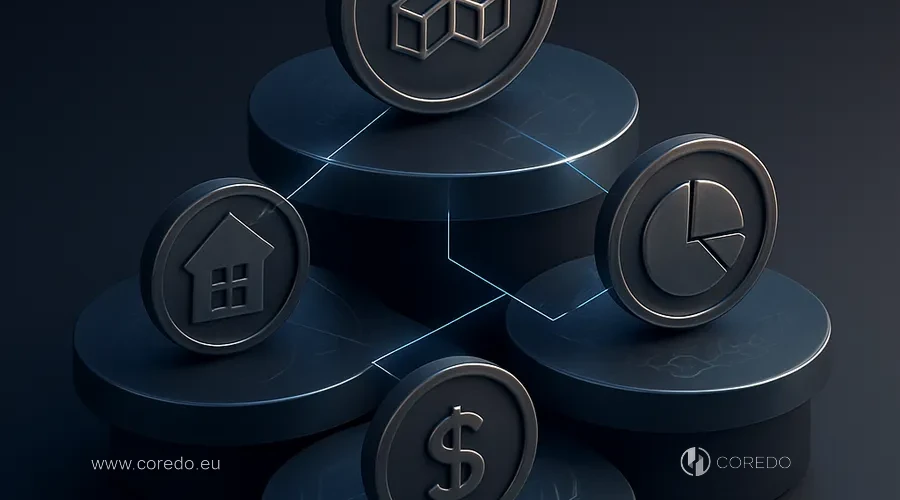
- Structuring a fund as an SPV with tokens is suitable for niche strategies and club deals. The SPV issues tokens instead of units, and the management company enters into an investment management agreement, setting out fees and carry.
- Using a corporate «wrapper» in the EU: commonly applicable fund forms in Cyprus, Estonia or Slovakia; for institutional investors — Luxembourg/Ireland via an AIF, and tokenization occurs at the level of the register of units.
- The combination of UCITS/AIF and tokenization is possible with strict marketing limits. The COREDO team implemented such a hybrid in Cyprus with a white‑label platform for fund tokenization and a partnership with a licensed depositary.
The tokenized fund structure establishes: investors’ rights in the tokenized fund (voting, redemption, dividends), veto restrictions and the fund’s governance tokens, issuance of tokens with vesting and cliff mechanics, locking periods and exit restrictions for investors. The solution developed by COREDO contains a checklist of corporate and contractual provisions, including the subscription agreement, transfer restrictions, and, if necessary, a SAFT for pre‑round subscription within a closed perimeter.
Licenses and offering documents

For the EU we prepare the prospectus filing and the KIID for the tokenized fund, the prospectus approval with the regulator, the white paper and the offering memorandum for the fund. Regulatory qualification determines whether the fund’s initial token issuance (ITO/STO) falls under the prospectus regime, national exemptions, or within an AIF via private placement.
In Asia the document set is similar, but the emphasis is on the offering memorandum and risk disclosures, including law enforcement and the enforceability of smart contracts. Legal support for tokenized funds at COREDO includes regulatory advice and obtaining licenses for investment companies, approval of marketing materials and recording restrictions on the sale of tokens to residents of certain countries.
Important organizations and standards: FATF, ESMA, IOSCO – define the language of compliance and AML/KYC standards for tokenized funds. We incorporate these principles into documentation and operating procedures from day one.
AML/KYC Compliance and Data Protection
Compliance by design for tokenized funds is not a slogan, but an architecture of processes. Мы строим AML политику и screening санкций для инвесторов, интеграцию KYC провайдеров и санкционных списков, EDD (enhanced Due Diligence) для институциональных инвесторов, а также beneficial owner disclosure для токенизированных фондов. Процессы KYC/AML автоматизации с использованием API сокращают тайм‑ту‑сабскрайб и снижают операционный риск.
The register of token holders and KYC must be linked: on‑chain accounting of shares and profit distribution are validated by off‑chain identity data and investor permissions. For EU clients we take into account data storage requirements and GDPR for EU investors and define a retention policy.
Наш опыт в COREDO показал, что the implementation of AML автоматизации в подписи транзакций через политики смарт‑контрактов и адресные списки снижает нарушения трансферных ограничений. Мы также настраиваем AML/KYT‑мониторинг адресов, чтобы оперативно реагировать на риск‑сигналы.
Standards, custody, and stack security
Choosing a token standard determines future compatibility. For utility‑subscription logic ERC‑20 is used, for paper rights: token standards ERC‑1400 and ERC‑3643, which implement transfer restrictions, whitelists and compliance checks. A smart contract for investor subscriptions automates issuance, distribution and the payment of dividends via smart contracts on a schedule or upon occurrence of events.
Custodial solutions for fund tokens require discipline. For custody of private keys for funds we rely on storing private keys in hardware modules (HSM), multisignature (multi‑sig) custodial schemes, segregation of operator rights and an emergency recovery procedure. In some projects clients choose custodian vs qualified custodian for fund tokens, and I help make a balanced decision together with the partner depository.
Operational security matters no less than legal considerations. We assess tokenization technology providers (tokenization platforms) by ISO27001 and SOC 2 criteria, smart contract audits and formal verification are mandatory before ITO/STO. Oracle solutions for external NAV data and asset prices link off‑chain settlement and reconciliation with on‑chain logic, ensuring correct on‑chain NAV calculation for the fund.
Liquidity: from issuance to turnover
Primary issuance of fund tokens (ITO/STO) sets the starting liquidity, but I always design the secondary market in advance. Trading of fund‑tokens on exchanges is possible through regulated security token platforms and OTC alternatives for qualified investors. Market making and liquidity provisioning for fund tokens are arranged contractually, and buyback and burning mechanisms for fund tokens create a “soft” price corridor.
Integration with DeFi for fund liquidity opens liquid pools and AMMs for fund tokens while complying with jurisdictional and investor category restrictions. DeFi lending against fund tokens and the issuance of synthetic assets and derivatives on fund tokens are possible only after legal review and the configuration of transfer restrictions for the security token in smart‑contracts.
For subscription and redemption settlements I increasingly provision a stablecoin as the fund’s settlement instrument, but I also connect commercial banks and fiat‑on/off ramps for funds, including correspondent bank and fiat payments for subscription and redemption. This duplex reduces dependence on volatility and speeds up clearing.
Taxes for cross-border distribution
Taxation of tokenized funds in the EU and Asia requires early modeling. We calculate tax planning for non‑resident investors, tax withholding (withholding) on payments to investors and the applicability of double taxation treaties. For some clients I recommend corporate structures with ‘pass‑through’ taxation or umbrella funds with subfunds.
Fund passporting for cross‑border distribution and marketing restrictions, areas where it’s easy to make mistakes. The COREDO team prepares a map of available channels under MiFID II and local private placement regimes, including restrictions on selling tokens to residents of certain countries. This reduces regulatory risk and speeds up scaling.
ESG‑orientation is growing, and blockchain-based funds demonstrate advantages in the transparency of metrics. Paradoxes of transparency: competitive risks of portfolio disclosure are addressed through reporting to regulators and investors in aggregated form and by using zero‑knowledge proofs for private investments at the level of attesting facts without revealing details.
Insurance and Risk Management
A comprehensive assessment of operational risks of a tokenized fund is included in the initial sprint. I analyze legal disputes and precedents related to security tokens in target jurisdictions, conduct technical due diligence of infrastructure providers, and arrange cyber risk insurance and issuer liability. Loss recovery and insurance for tokenized funds cover key scenarios, from key compromise to operational errors.
The factor of speed and gas cost on Ethereum networks for fund operations has a direct impact on investor UX. To reduce costs we use layer‑2 solutions and sidechains to scale operations while maintaining security and compatibility, and mechanisms to control token price manipulation are embedded in market-making agreements and trade monitoring.
Formal guarantees of smart contract execution and the enforcement and enforceability of smart contracts are addressed by a dual layer: legal obligations in the documentation and code audits with formal invariant checks. On critical paths I always include emergency pause functions and manual settlement procedures.
NAV: operations and infrastructure
On‑chain NAV valuation for the fund increases transparency, but it cannot be separated from accounting. We set up off‑chain settlement and reconciliation, and the oracle provides verification of prices and corporate actions. Requirements for the depositary and transfer agent are specified in agreements, including registry reconciliation processes and SLAs.
Balanced through data architecture and access rights. We use allowlists, ZK‑proofs and data segmentation to comply with GDPR and protect the fund’s strategy.
The register and registrar of the fund’s holdings can be either internal or external. Partnership with a licensed depositary adds a supervisory layer, and the custodian vs qualified custodian for the fund’s tokens is chosen based on the makeup of investors and listing plans. COREDO’s solution for on‑chain accounting of shares and profit distribution reduces human error and speeds up reporting.
COREDO Case studies: EU, Asia, CIS
В ЕС команда COREDO реализовала AIF на Кипре с токенизацией долей по стандарту ERC‑1400, STO под режим частного размещения и листинг на регулируемой площадке security tokens. Кастодиальные ключи хранились в HSM с multi‑sig, а NAV рассчитывался on‑chain с верификацией через oracle и сверкой у администратора фонда.
In Singapore we structured a VCC‑fund with tokens instead of units for a credit strategy in Asia. The regulator approved the offering memorandum, we implemented EDD processes for institutional subscribers and transfer restrictions for certain countries. For liquidity we set up an OTC channel and a restricted‑access AMM‑pool, and dividend payments through smart contracts were executed in a stablecoin.
В СНГ запустили фонд через AIFC с корпоративной оберткой‑SPV для инвестиций в частные debt instruments. Регистрация tokenized fund в ЕС для кросс‑продаж прошла через партнерский управляющий AIFM, а пасспортирование ограничили несколькими странами. Этот гибрид показал, как legal‑мосты и технологические белые ярлыки (white‑label платформы) ускоряют выход.
Roadmap for a tokenized fund
- Diagnostics and design: legal choice of jurisdiction, the fund’s token economics, target audience assessment, marketing restrictions.
- Law and licenses: registration of a tokenized fund in the EU and/or registration of a fund with tokens in Asia, regulatory consultations, obtaining licenses, approval of prospectus, KIID, offering memorandum.
- Technology: choice of token standard (ERC‑20/1400/3643), smart contracts for distributing the fund’s income, audit and formal verification, oracle, custody with HSM and multi‑sig, ISO27001/SOC 2 compliance of platforms.
- Operations: depositary and transfer agent, token holder registry and KYC, off‑chain settlement and reconciliation, reporting to regulators and investors.
- Market and liquidity: ITO/STO, listing of security tokens on regulated exchanges, market making, OTC, DeFi integration and liquidity pools, buyback/burning mechanics.
- Taxes and risk: tax planning, withholding, cyber risk insurance and issuer liability, incident response procedures and manipulation controls.
COREDO handles coordination of providers, compliance setup and building the “operational rails”. I personally oversee the architecture and key agreements with regulators and banks so that you get predictable timelines and a transparent budget.
Frequently asked client questions and practical answers
Investors will ask about rights in the tokenized fund – we enshrine them in the charter and smart contracts: voting, dividends, priority order for redemption. Clients ask where to store assets, a partnership with a licensed depositary covers this area and supports audit.
The technical part raises concerns because of gas and scaling. I design layer-2 solutions and sidechains where justified by the business, and for subscriptions and redemptions I build in stablecoins and fiat channels. The question of enforceability of smart contracts is resolved by duplicating obligations in contracts and implementing formal guarantees of smart contract execution at the code and procedural levels.
Marketing: another critical area. We set up traffic filtering, geo-restrictions, investor verification and compliance with advertising rules so as not to launch prematurely. Veto limits and the fund’s governance tokens are clearly defined before launch to avoid conflicts of interest.
Tokenization: what it delivers in practice
Tokenization of fund shares reduces barriers to entry and adds flexibility to distribution. Integration with DeFi opens additional liquidity channels, and on‑chain accounting of shares and profit distribution simplifies auditing. When I see a project with a well-founded tokenized fund structure, correct documentation and reliable infrastructure, the result is accelerated AUM growth and reduced operating costs.
The COREDO team takes into account the paradoxes of transparency, the conflict between privacy and regulatory requirements, and builds a balanced system. We also proactively plan legal dispute scenarios and precedents on security tokens so that the fund has a resilient position and a predictable response to force majeure.
Final touch: banking relationships. Commercial banks and fiat on/off ramps for funds remain the industry’s linchpin, and I always build reserve channels and a correspondent banking network to handle peak loads. This approach allows the fund to meet its commitments to investors on time and without unnecessary operational hiccups.
Launching a tokenized fund with COREDO
A tokenized fund is a synthesis of law, technology and processes. I am responsible for the integrity of the solution, and COREDO’s experience shows that a consistent architecture works better than a patchwork of disparate contractors. We combine registration procedures in the EU, Asia and the CIS, a security token offering for the fund, custody and exchange infrastructure, AML/KYC and GDPR, as well as tax and marketing frameworks.
If you see potential in tokenized funds, want to accelerate your go-to-market and retain control over risks, let’s discuss your strategy. I will propose a roadmap with clear milestones, costs and timelines, and the COREDO team will take you from the design session to the first dividend payout via smart contracts. This is a calm, transparent and results-oriented path that we have already followed many times with clients from Europe, Asia and the CIS.