
COREDO – EU Legal & Compliance Services Expert legal consulting, financial licensing (EMI, PSP, CASP under MiCA), and AML/CFT compliance across the European Union. Headquartered in Prague, we provide seamless regulatory solutions in Germany, Poland, Lithuania, and all 27 EU member states.

Alena Sharykava
27.01.2026 | 6 min read
Updated: 27.01.2026
Over ten years of managing COREDO I have become convinced: the speed and quality of compliance decision-making determine a company’s competitiveness no less than product and marketing. Regulation is tightening, sanctions regimes change dynamically, and clients want a fast onboarding solution without compromises. That is why OSINT checks of beneficiaries have become the foundation of our KYC/KYB approaches and a key supporting layer for AML controls.
OSINT is structured work with open sources, where not so much the ‘breadth of internet searching’ matters as discipline: verifiable sources, matching methodologies, data provenance and reproducibility of results. When entrepreneurs ask me how to shorten time-to-onboard and reduce risk exposure, I answer: build an end-to-end KYC OSINT pipeline balancing automation and manual expertise. It is this kind of architecture that delivers reliable results and withstands regulator scrutiny.
COREDO’s practice confirms: properly built AML OSINT checks reduce the cost of due diligence, speed up the bank’s account decision and simplify Licensing (PI/EMI, crypto, forex). I often see how a single properly documented audit trail with links to registries and adverse media answers committee questions and saves weeks of communications.
UBO: How banks verify beneficiaries
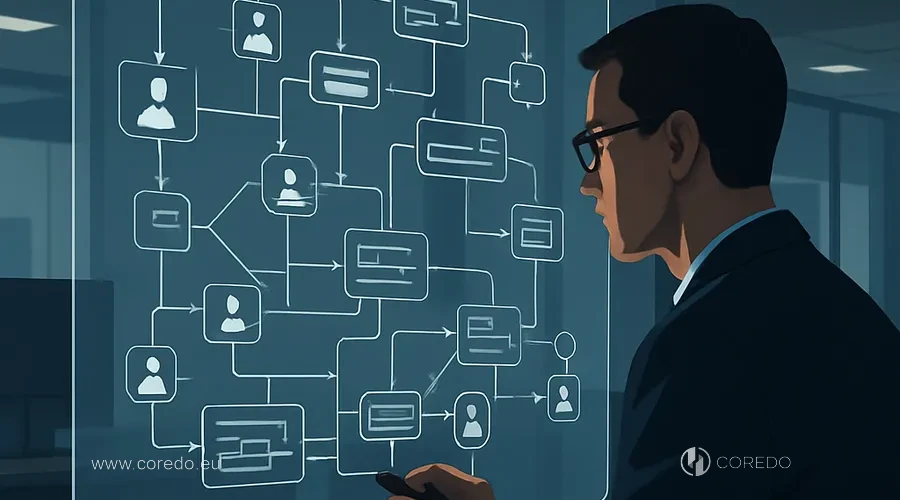
Identification of the ultimate beneficial owner is not a formality but the central element of CDD/EDD procedures. Banks are required to conduct UBO checks taking into account ownership chains, nominal directors and trust structures. In my practice, a significant share of onboarding delays arises from incomplete tracking of indirect ownership.
Banks build beneficiary checks around several main layers: corporate structure (incorporation registers), sanctions checks of beneficiaries by OFAC/EU/UN, PEP and OSINT screening for adverse publications. The COREDO team has implemented dozens of complex cases where such a combined approach revealed hidden controllers and substantiated risk classification for the bank or regulator.
Risk-based approach FATF/AMLD5/6
FATF directly recommends a risk-based approach to CDD: the depth of review increases with the risk of the jurisdiction, the type of activity and the transaction profile. In Europe AMLD5/6 enshrined the obligation of access to beneficial ownership registers and expanded expectations for EDD, especially for PEPs and complex corporate structures. Our experience at COREDO has shown that early calibration of the risk model and linking OSINT sources to risk categories reduce FPR and increase explainability for the regulator.
When a client is preparing for EMI/PI licensing in the EU or for crypto registration, I always recommend: establish an internal CDD methodology with references to FATF and AMLD5/6, define EDD triggers and the procedure for documenting sources. This is not bureaucracy – it is an operational tool for the compliance team and the foundation for a successful audit.
PEP, sanctions, adverse media: screening
PEP and OSINT are a constant “pair” in the daily work of compliance. A PEP flag alone does not mean prohibition, but requires EDD, source verifications and contextual analysis of adverse media. We use a combination of sanctions lists (OFAC SDN list, EU sanctions, UN sanctions), OpenSanctions as an aggregator, and negative news processed with NLP filters for sentiment and relevance.
The solution developed at COREDO allows separating “noise” from material publications: panel data and adverse media are calibrated by source, date, geography and proximity to the client’s profile. This approach reduces false positive triggers and speeds up committee decisions, especially for international business structures.
OSINT sources for banks: what works

The most common question at strategic sessions: which public sources do banks use to check beneficiaries? It is important not to rely on a single registry, but to build a “portfolio of sources” covering the EU, Asia and the CIS while taking local specifics into account. Below: a core set that has proven itself in COREDO projects.
Company and beneficial ownership registers in the EU
In the EU, the backbone is formed by public company registers and beneficiary registers of the EU. For the UK, Companies House with API and open filings, and in a number of EU countries beneficial ownership registers are available (with different access modes). We often use OpenCorporates for cross-checks and OpenCorporates owner checks help quickly build the “skeleton” of a structure.
Global LEI (Legal Entity Identifier) and GLEIF provide standardized entity identification and links to subsidiary structures. For Due Diligence this is valuable: LEI speeds up entity resolution, and links to GLEIF add trust when sharing with a bank. In our practice the combination of the national trade register, GLEIF and OpenCorporates provides a strong basis for further graph analysis of ownership.
Where to check UBOs in Asia and the CIS
In Asia the set of sources is more fragmented: commercial registers, trade registries and chambers of commerce databases. The COREDO team has systematized reliable sources for UBO checks in Asia: Singapore’s ACRA, Hong Kong registries, corporate databases of the UAE (including free zones), as well as local court publications. For MENA we add checks of Arabic-language media with attention to transliteration.
In the CIS and Kazakhstan, checking company owners requires the local language and knowledge of regulatory specifics. We use company registers, court portals and publications of securities regulators. Beneficiary verification in Asia and the CIS is effective only with a human-in-the-loop: local language, variability in name spellings and corporate forms require combining automation with manual validation.
Databases and panel data for KYC
Commercial databases for KYC speed up collecting corporate structures and financial profiles. Orbis (Bureau van Dijk) helps with international links, ownership history and directors. For sanctions and PEP we use OpenSanctions as a flexible layer, and for negative news — aggregators with NLP features. OSINT screening tools like Maltego, SpiderFoot and Recon-ng are indispensable in EDD cases involving complex chains.
Panel data and adverse media are needed not only for one-off checks but also for continuous monitoring. It is important to understand the difference between “data for signaling” and “data for evidence.” The former quickly point the direction, the latter form the evidentiary base for the regulator and the banking partner.
How to handle adverse media
Data leaks and journalistic investigations (Panama Papers, Paradise Papers) are important in high‑risk profiles, but they must be handled cautiously. I recommend using them as an indicator for EDD, followed by verification against official filings and court registers. This approach reduces reputational risks from relying on unverified publications.
Social networks for owner checks (LinkedIn, Facebook, Instagram) are applicable within local laws. We use privacy-preserving search methods, capture screenshots with timestamps and always note the limits of reliability. Additionally, we use WHOIS and archives (Wayback Machine) to verify the digital footprint, especially for fintech startups without a long corporate history.
How to integrate OSINT into an AML validator
Compliance architecture benefits when OSINT is not kept “on the side”, but is embedded in the AML validator and case management. On COREDO projects we build an automated screening pipeline where external and internal sources are connected via API, and results undergo normalization, entity resolution and human-machine validation.
Entity resolution and name disambiguation
Name ambiguity is the main source of false positives. We apply fuzzy matching and name matching taking into account local languages, transliteration and alias detection. Name disambiguation algorithms rely on dates of birth, positions, addresses and LEI links, as well as on local language sources and transliteration issues, which is critically important for Asia and the CIS.
To increase precision without losing recall, the COREDO team configures multi-level attribute weights and introduces human-in-the-loop for “grey” cases. This hybrid approach reduces the false positive rate in KYC and makes the solution explainable to the compliance officer and an external auditor.
Ownership analysis and hidden beneficiaries
Graph analysis of ownership makes it possible to untangle company ownership chains (ownership chains) and identify hidden beneficiaries through multi-layered structures, funds and SPVs. We use graph analysis of ownership to visualize controlling participants, thresholds at 25%/10% and trust bridges. In EDD projects cross-border linkages often emerge, and the visual graph speeds up decision-making and communication with the bank.
Beneficiary checks using graph analysis of connections pair well with data from GLEIF, OpenCorporates, Orbis and court filings. Such a “combo package” provides not only a visual, but also evidence that can be attached to the case file and used to defend the case before the regulator.
Screening APIs, SaaS and human-in-the-loop
Automating OSINT processes in a bank begins with choosing APIs for bulk beneficiary screening and integrating them into the AML case management system. In COREDO projects, SaaS OSINT platforms for banks and screening APIs are often used, covering sanctions, PEP and adverse media. For corporate structures, connectors to trade registers and OpenCorporates.
At the same time, human-in-the-loop remains mandatory, especially for EDD and disputed matches. We build workflow automation for due diligence: an automated process scans and prioritizes, an analyst confirms and documents, and the validator records the decision and creates an audit trail. Such a process is resilient to client base growth and meets regulator requirements.
Legal frameworks for risk-free OSINT collection

Legal restrictions on scraping in the EU and Asia (GDPR, local laws) are a topic I raise at every implementation. Access to open data does not mean freedom to collect and process it en masse without justification and notification. It is important to define the legal bases, retention periods, purposes and minimization mechanisms in advance.
GDPR and the legality of web scraping
The legality of web scraping in the EU depends on access conditions and the source’s copyright. We assess the legal admissibility of scraped data and try to use official APIs and licensed channels. In Asia, rules vary, and COREDO’s practice involves a separate legal memo for key jurisdictions and coordination with offshore registries or chambers of commerce.
GDPR and the processing of open data allow KYC/KYB when there is a lawful interest and a regulatory obligation, but require principles of minimization and transparency. I recommend recording the legal bases in the compliance policy and training the team to handle personal data in OSINT scenarios.
Evidence and explainability for the regulator
The evidential base (audit trail) in OSINT checks: these are screenshots, links, timestamps, hash signatures and a description of the search methodology. Evidence collection for compliance ensures reproducibility and protects the decision during regulatory oversight.
Explainability: the next layer. How to ensure explainability of OSINT results for the regulator? We keep the scoring rules, the weights used for attributes, the compliance officer’s rationale and a link to the primary source. This approach addresses questions during inspections and speeds up license approvals.
Performance and Quality Metrics
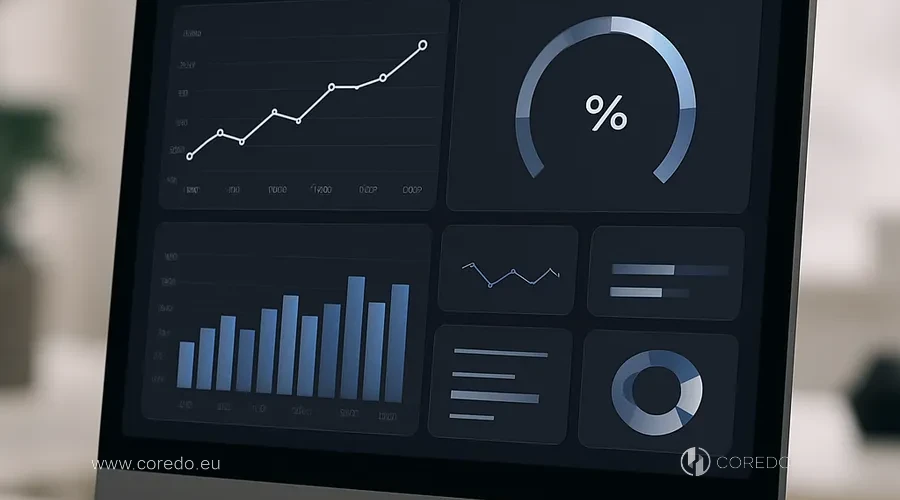
Without metrics, OSINT turns into a «black box». I insist on measurability: precision/recall in AML matching, false positive rate in KYC, share of manual escalations, average time per case and the quality of data sources. Metrics allow adjusting rules and proving the ROI of a business line initiative to the board of directors.
False positives: Precision/recall, FPR
Efficiency metrics for OSINT screening (FPR, recall, precision) reflect the balance between speed and quality. By raising name-matching thresholds, it’s easy to lose recall on transliterations and aliases. Therefore the COREDO team applies stratified thresholds: different rules for PEPs, sanctions and adverse media, as well as separate profiles for the EU, Asia and the CIS.
Managing false positive triggers in OSINT includes linguistic filters, local dictionaries, contextual features and black/white lists. Using linguistic analysis and NLP for adverse media is especially effective with streaming news, where it’s important to separate legal facts from opinions.
SLA, data quality scoring, monitoring
How to build an SLA with an OSINT data provider? Specify the update frequency, delivery delays, coverage of jurisdictions and quality metrics. Vendor due diligence of data providers is a mandatory part of implementation, and I recommend assessing data quality scoring by completeness, timeliness and legal permissibility of use.
Continuous monitoring vs one-time checks – the choice depends on risk and licensing. In the fintech segment we more often implement continuous monitoring of sanctions and adverse media, as well as quarterly reassessment of beneficiaries. Such a decision brings predictability and reduces the risk of regulatory sanctions.
Economics of an OSINT Platform: ROI and Budget
Executives ask me: how much does deploying an OSINT platform for KYC cost and when will the project pay off? The calculation is simple: reducing cost per onboarding, shortening time-to-onboard and reducing regulatory risks. If onboarding used to take 15 days and now takes 5–7, the bank or payment company gains in conversion and turnover.
Deployment and Onboarding Costs
The budget depends on sources (public/commercial), onboarding volume, level of automation and storage requirements. For mid-size fintech players, basic integration of screening APIs, connecting registries and configuring an AML validator fit into a modular budget that is usually spread over 3–6 months. In the Cost per onboarding include licenses, infrastructure, analysts’ time and audit.
The ROI of deploying OSINT tools in the bank’s AML processes shows up through faster decision-making, a reduced share of manual work and a decrease in risk of fines. In COREDO projects we see double-digit reductions in FPR and growth in the compliance team’s throughput without increasing headcount.
Scaling and time-to-onboard
How to scale OSINT checks as the client base grows? Horizontal scaling of APIs, task queues, prioritization of EDD cases and caching of stable sources. We also recommend separating the primary identification pipeline from monitoring so as not to block onboarding with re-checks of “slow” sources.
Time-to-onboard metric: a key indicator of customer experience. Reducing time must not reduce quality, so human-in-the-loop and risk stratification are mandatory. Continuous monitoring covers residual risks and improves the overall compliance health of the portfolio.
COREDO cases and solutions
Here: a few examples from projects where the solution developed at COREDO helped secure licensing and bank onboarding without unnecessary delays. I deliberately generalize the details to preserve confidentiality.
UBO verification for a PI/EMI license
An EU fintech was preparing for a payment institution license. The partner bank required an in-depth UBO check and ownership chain across three countries. The COREDO team gathered corporate documents and incorporation registries, engaged GLEIF, OpenCorporates and national registries. We performed the bank’s UBO verification in a “mirror” format: we replicated the bank’s logic, including OFAC/EU/UN sanctions lists, PEP screening and adverse media.
Thanks to graph analysis of ownership and entity resolution we quickly identified a previously missed director in an affiliated structure. Case management recorded the audit trail, and the regulator accepted the package without additional requests. As a result, time-to-onboard was halved, and the license was obtained on schedule.
AML OSINT for crypto in VARA/MAS/Estonia
A crypto provider operating in Dubai and Singapore was going through regulatory approvals (VARA/MAS) and bank onboarding in the EU. OSINT checks of beneficiaries included UAE free zone registries, ACRA in Singapore and the Estonian financial supervisor for VASP status. COREDO’s practice showed that a combination of OpenSanctions, Orbis and local court publications works well to identify reputational risks.
We integrated OSINT screening tools into the client’s AML validator, using KYC APIs and configuring NLP filters for negative news monitoring. Thanks to human-in-the-loop we reduced false-positive matches on similar names in the MENA and Southeast Asia markets. The bank approved the account, and regulators accepted the EDD justifications without iterations.
Asia and CIS counterparty due diligence
A trading company from the EU was expanding into Central Asia and the CIS. The task: counterparty due diligence using OSINT and LSI with a focus on hidden beneficiaries and litigation risks. The COREDO team used trade registries, local court registers, media in local languages and graph analysis of company ownership chains with name transliteration.
We identified the affiliation of two counterparties through a common UBO and historical links in registries. Documentation for the regulatory audit included data provenance, a reference list of sources and match explainability. The client received a clear, validated picture of risks and optimized contract terms.
Best practices and common mistakes
COREDO’s accumulated practice has produced a list of recommendations that improve the reliability of OSINT checks and reduce costs. Below is what most often distinguishes a mature process from “ad hoc searches” on the internet.
Banks conduct OSINT UBO checks in the EU.
- Defining the perimeter: corporate structure, jurisdictions, licenses, transaction volumes.
- Collecting the corporate database: EU public company registries, EU beneficial owner registries, OpenCorporates, GLEIF/LEI.
- Sanctions/PEP: OFAC SDN list, EU sanctions, UN sanctions, OpenSanctions; configuring matching rules.
- Adverse media: sources with NLP filters, negative news monitoring, linguistic specifics.
- Graph analysis: ownership chains, trusts, nominee directors, documents and company filings.
- EDD: public court registers, deal announcements and corporate news, WHOIS/Wayback for digital traces.
- Documentation: audit trail, data provenance, legal memo on GDPR/local laws, explainability of rules.
- Monitoring: continuous monitoring for sanctions and adverse media, periodic UBO review.
This is how banks use OSINT to check UBOs in the EU: in a structured way, with traceability and clear SLAs within the compliance function. The COREDO solution complements this approach with manual validation methods and flexible integrations.
Implementation mistakes: how to avoid them
- Lack of a risk-based approach: the same depth of checks for all clients raises FPR and prolongs timelines.
- Ignoring local laws: legal restrictions on scraping in the EU and Asia and incorrect legal bases undermine protection in a dispute.
- Overestimating “major” sources: which open-source beneficial owner registries are considered reliable is an important question, but without local registries and court publications the picture is incomplete.
- Underestimating name ambiguity: to deal with name ambiguity and fraudulent pseudonyms – use entity resolution, alias detection and linguistics.
- Weak audit trail: without evidence collection for compliance it’s difficult to explain decisions and defend them during an inspection.
- Lack of SLAs and quality control: how to set SLAs with an OSINT data provider and manage data quality is key to process stability.
Legal and compliance issues when using social networks to verify owners are addressed through regulation, trained roles and data minimization. For dark web monitoring, maintain strict rules and separate tools so as not to mix it with basic KYC.
Beneficiary verification system with COREDO
OSINT: not a “search engine”, but a discipline that combines sources, technologies, law and methodology. When I help clients enter the EU, the United Kingdom, Singapore or Dubai, I see how a mature KYC OSINT system removes barriers: accounts open faster, licenses are granted without delays, and compliance teams work predictably and confidently. This is what our work aims to do: integrate OSINT into an AML validator, build an evidentiary base and give businesses transparency of processes.
The COREDO team has implemented projects in the EU, Asia and the CIS – from legal entity registration to obtaining financial licenses and comprehensive AML support. We know how to combine automated and manual beneficiary checks, configure tools for OSINT screening, document decisions and pass regulator audits. If your plan is scaling, entering new markets or obtaining licenses in a complex jurisdiction, COREDO’s practical solutions will help turn compliance into a manageable and measurable process.
Ultimately, reliability is built on three pillars: correct sources, the right architecture and a team that takes responsibility for the result. I have been developing this approach since 2016, and it consistently works – regardless of the country, licensing regime or industry.