
COREDO – EU Legal & Compliance Services Expert legal consulting, financial licensing (EMI, PSP, CASP under MiCA), and AML/CFT compliance across the European Union. Headquartered in Prague, we provide seamless regulatory solutions in Germany, Poland, Lithuania, and all 27 EU member states.

Pavel Kos
08.12.2025 | 6 min read
Updated: 08.12.2025
According to the European Banking Authority, in recent years the number of licensed Electronic Money Institutions in the EU has grown many times over, and competition for customers in cross‑border payments has become tougher than in the traditional banking market. Against this background choice of jurisdiction for an EMI license has ceased to be a technical matter: it determines the cost of raising capital, the speed of entering the EU market and even the final business model.
To many founders and CFOs the picture seems simple: “We need an EMI license in Europe, we’ll pick a country with a fast regulator and minimal requirements, and off we go.” In practice the COREDO team regularly sees the opposite: essentially the same product in Lithuania, Portugal, Germany or the Czech Republic turns into four businesses different in economics and risk. A mistake at the jurisdiction selection stage easily “eats” 2–3 years and hundreds of thousands of euros.
I suggest looking at the question “how to choose a country for an EMI license” as a strategic decision rather than a formal registration. In this article I will examine:
- what an EMI license actually means / EMI license EU;
- which selection criteria for a jurisdiction actually affect PL
- how Lithuania, Portugal, Germany and the Czech Republic differ in regulatory and operational parameters;
- what practical steps need to be taken to obtain an EMI license and preserve flexibility for scaling.
If you are considering registering an EMI company in the EU not as an experiment but as a long-term project, I recommend reading the material in full: below is not theory, but a distillation from real COREDO cases in Europe and the EEA.
EMI license: what it is and why it is needed in Europe
EMI license (Electronic Money Institution): this is an authorization to issue electronic money, hold and move client funds, as well as provide a wide range of payment services within the European Economic Area (EEA). The legal framework – Directive 2009/110/EC on electronic money and PSD2 (Payment Services Directive 2), which sets standards for payment services, security and access to the EU payments infrastructure.
From a practical standpoint, an electronic money license provides:
- access to the EU and EEA single market with the ability to passport services;
- the right to open and operate e-wallets, issue prepaid instruments, work with merchant acquiring;
- operation within a clear regulatory environment with established approaches to risk and compliance in fintech.
It’s important to understand the differences between Small EMI and Full EMI:
- Small EMI (sEMI):
- typically operates within a single country;
- limited in transaction volume and average monthly balance of client funds;
- offers a fast market entry but scales poorly beyond the national market.
- Full EMI:
- full EMI license EU with the standard initial capital (€350 000);
- ability to freely passport across the EU/EEA;
- stricter requirements for capital, governance, operational risk management and IT‑infrastructure.
For payment and crypto projects targeting cross-border business, COREDO’s experience shows: a Full EMI is usually economically more advantageous already on a 2–3 year horizon, despite the more complex process of obtaining an EMI license.
Criteria for choosing a country for an EMI license in Europe
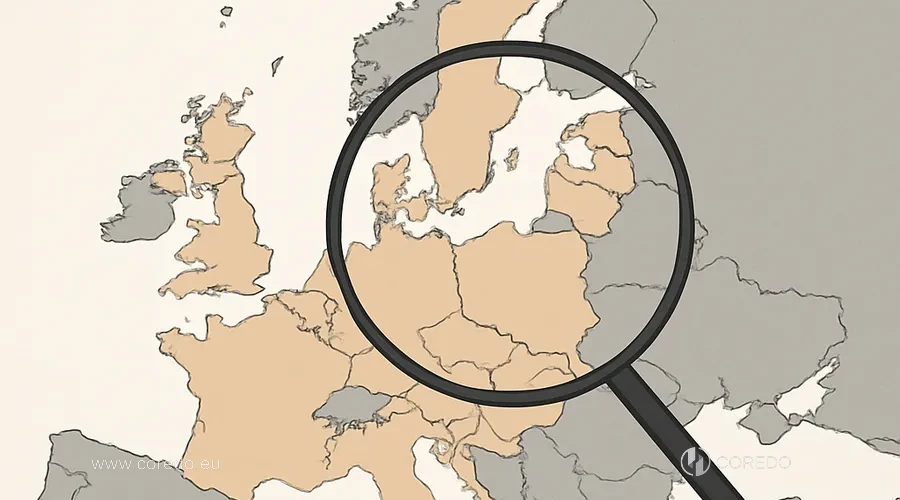
When a team comes to me with the question «how to choose a country for an EMI license», I suggest considering a jurisdiction through eight groups of factors.
regulatory requirements and legislation
Formally all EU countries implement the same directives, but differences in EMI licensing across European countries are noticeable in practice:
- the level of formalism of the financial services regulator (BaFin, CNB, Bank of Lithuania, Central Bank of Portugal);
- willingness to engage in dialogue in English;
- the depth of assessment of the business model and IT architecture;
- emphasis on local presence, office, resident management.
Our experience at COREDO shows that you need to evaluate not only the text of the law, but also the actual practice of reviewing dossiers.
Share capital and financial requirements
The basic requirement of the Directive – share capital for an EMI license from €350 000. In a number of countries the following are added:
- requirements for additional capital depending on the volume of operations;
- expectations regarding the structure of equity, liquidity and financial stability and reporting.
When choosing a country it is important to model from the outset:
- forecast of turnovers and commission income;
- potential capital requirements over a 3–5 year horizon;
- impact on the project’s ROI and KPIs.
Application process and document review timelines
Timelines, one of the key practical criteria:
- the format of communication with the regulator (online portal, email, in-person meetings);
- number of rounds of questions;
- typical application process and review timelines in a specific country.
For COREDO clients we prepare a roadmap in advance: from the registration of a legal entity (LLC, s.r.o.) to the final decision, so that the team can synchronize this with the product roadmap and funding rounds.
Taxation and cost of support
The question «how to choose a country to register an EMI company taking into account the tax regime and the cost of support» always comes second after regulatory matters:
- corporate tax and the tax treatment of IP and revenues from payment services;
- the cost of external audit and accounting, the requirement for a local auditor;
- the price of ongoing compliance support and audits for the EMI business.
A country may be attractive as a regulator, but too expensive in terms of operating costs.
Requirements for top management and residency
Requirements for company management when licensing an EMI in the EU are similar:
- proven experience in payments, risk management, the banking sector;
- an impeccable business reputation;
- actual involvement in management.
Differences begin in the details:
- the share of resident directors;
- the need for physical presence of C-level executives;
- formal requirements for staff qualifications.
In addition, regulatory requirements for shareholders are assessed: a transparent ownership structure, source of funds, absence of conflicts of interest.
AML, KYC and compliance
For the EMI business in Europe, AML requirements become one of the key factors:
- the depth and detail of the Anti‑Money Laundering (AML) policy;
- mandatory KYC procedures and AML for EMI companies;
- the models used for risk‑scoring, restrictions by jurisdictions and client types.
The COREDO team in each project builds client identification procedures and transaction controls so that they satisfy not only the national regulator, but also future banking partners and payment infrastructure providers.
IT infrastructure and cybersecurity
Requirements for IT infrastructure for an EMI license have become significantly more complex in recent years:
- architecture of the core platform and accounting systems;
- presence of a PCI DSS security certificate when working with cards;
- logging systems, event monitoring, disaster recovery plan;
- data protection, compliance with European payment security standards.
The solution developed at COREDO for one client included a separate block: mapping the regulator’s requirements to the existing IT architecture, so as not to rewrite the product ‘for Licensing‘.
External factors: Brexit and regulatory trends
A separate topic: the impact of Brexit on EMI licensing: the UK license no longer gives automatic access to the EU market, and many players are moving their regulatory center to EU countries. At the same time, since 2023 the following have been tightened:
- requirements for comprehensive internal documentation of an EMI company;
- expectations for disclosure of information on risks and operational processes;
- an emphasis on the resilience of models to technological and cyber risks.
Regulatory requirements in key European countries
# EMI license in Lithuania
The Bank of Lithuania has in recent years become one of the most active regulators in fintech. COREDO’s practice shows that it combines:
- clear requirements, transparency and speed of review;
- willingness to engage in dialogue in English;
- clear expectations for sEMI and Full EMI licenses.
Key features:
- standard share capital for an EMI license €350 000 for the full model;
- detailed requirements for the business plan and financial reporting and 3-year projections;
- special attention to the description of the product line and customer geography;
- emphasis on well-developed operational risk management and IT security policies.
The COREDO team implemented several projects where Lithuania was chosen as a base for scaling payment services across the EU thanks to the convenient EU payment infrastructure and flexibabout the regulator’s approach.
# EMI license in Portugal
In Portugal, oversight of EMIs is conducted by the Central Bank of Portugal. The country is often attractive to projects that plan to combine payment services with other financial products aimed at Southern Europe and Portuguese-speaking markets.
Features:
- standard capital, but a stricter emphasis on funds safeguarding models;
- increased focus on holding client funds in a separate account and on audit procedures for EMI companies in Portugal;
- mandatory regular external audit and accounting;
- attention to IT architecture and business continuity plans.
A separate area is local documentation requirements for applying for an EMI license in Portugal: the regulator expects detailed, comprehensive internal documentation, including a description of the technology base and compliance processes.
# EMI license in Germany
The German regulator BaFin is traditionally considered one of the strictest in Europe:
- deep analysis of financial resilience and reporting, sources of capital;
- high requirements are imposed on top management and residency, real presence in Germany;
- risks and limitations are assessed separately when licensing EMIs in Germany, including the business model and partnerships.
Our experience at COREDO shows that Germany is suitable for those who build a long-term track record with an emphasis on sustainability and work with the corporate segment, and who are prepared to accept the high cost of legal and audit support.
Specifics of EMI licensing in the Czech Republic
In the Czech Republic, supervision is carried out by the Czech National Bank (CNB). The jurisdiction is attractive to projects that value a balance between regulatory strictness and the cost of support.
Key points:
- standard minimum capital for a Full EMI;
- registration requirements for the legal entity (s.r.o.), a local office and part of the staff;
- emphasis on the internal control system and risk control procedures;
- clear timeframes for obtaining a license when the dossier is well prepared.
COREDO’s practice confirms: projects that set up reporting systems, risk management and AML procedures in advance obtain licensing in the Czech Republic without significant delays.
Comparison of key parameters in a table
| Parameter | Lithuania | Portugal | Germany | Czech Republic |
|---|---|---|---|---|
| Regulator | Bank of Lithuania | Central Bank of Portugal | BaFin | CNB |
| Share capital | €350 000 | €350 000 | €350 000 | €350 000 |
| Review period | 2–3 months (for a complete dossier) | 3–6 months | 3–6 months or more | 3–6 months |
| Requirements for top management | Experience in fintech and payments | Experience and local involvement | Strict requirements for experience and residency | Qualified personnel, partially local |
| AML/KYC procedures | Strict, risk‑oriented | Strict, emphasis on monitoring | Strict, detailed | Strict |
| Safeguarding of client funds | Separate bank account or safeguarding‑models | Separate account + mandatory audit | Separate account | Separate account |
| Technology base | Detailed software requirements | High requirements for IT and security | High requirements for IT and governance | Requirements for software and internal systems |
| Cost of support | Average | Above average | High | Average |
Obtaining an EMI license in the chosen country: practical steps
Once the country is chosen, it is no longer analytics but project execution. In most cases COREDO uses the following framework.
Business plan and financial forecasts
To prevent preparing a business plan for an EMI license from becoming a bureaucratic exercise, it is important to:
- describe the target audience, product line, geography and competitive positioning;
- prepare financial statements and 3-year forecasts: P&L, cash‑flow, balance sheet, scenario analysis;
- demonstrate capital resilience and the realism of unit economics.
Regulators closely assess the logic of assumptions: this is not a formal table, but a test of management maturity.
Internal documentation and risk management
Second block: comprehensive internal documentation of the EMI company:
- AML policy and KYC and AML procedures for EMI companies;
- policies and procedures for managing operational risks;
- IT security regulations, including a disaster recovery plan and business continuity;
- descriptions of risk control, escalation and reporting procedures.
The COREDO team often builds this documentation from the start taking into account future requirements of correspondent banks and card schemes, so it does not need to be rewritten after launch.
A practical step: registering a legal entity (LLC, s.r.o. etc.) in the chosen country:
- forming the shareholder structure and governance;
- appointing directors and key functions (CEO, CFO, COO, MLRO);
- opening temporary accounts for depositing the authorized capital.
Here it is important to consider regulatory requirements for shareholders and top management in advance: sometimes it is more appropriate to change the beneficiary structure first, and only then apply for licensing.
Preparation and submission of the dossier
At this stage the full package is formed:
- questionnaires and resumes of key personnel;
- business plan, financial models;
- all policies and procedures;
- descriptions of IT architecture, technology base and software for the EMI;
- evidence of shareholders’ sources of funds.
COREDO’s experience shows: the more coherently the business logic and its risk and compliance management are described, the fewer additional requests from the regulator.
Interaction with the regulator
After submission active communication begins:
- responses to clarification requests;
- revisions of specific sections;
- clarification of technical and organizational details.
It is critical to have a team that can communicate confidently both with the regulator and with the project’s product and IT teams.
Post-licensing support
obtaining the license is not the end, but a change in the operating mode:
- regular regulatory reporting and external audit;
- maintaining up-to-date AML/KYC and IT policies;
- preparation for checks and inspections;
- planned scaling of the EMI business in Europe: new countries, products, partnerships.
COREDO often gets involved at this stage as a long-term partner for compliance and regulatory strategy.
PSD2 compliance specifics and protection of client funds
PSD2 and related EU regulations define precisely how an EMI company should protect clients and the market.
PSD2, key requirements
PSD2 and the EMI license are connected through:
- requirements for transparency of fees and terms;
- standards for access to accounts and interaction with third parties (TPP);
- the requirement for strong customer authentication and security incident management.
These requirements cannot be ignored: they directly affect front-end and back-end architecture, UX, and integrations.
Safekeeping of client funds
Basic principle: holding client funds in an account separate from the EMI’s own funds:
- safeguarded accounts in banks;
- insurance or similar protection mechanisms for certain models.
This is not only a regulatory issue but also an important element of trust for clients and partners.
Payment security and IT infrastructure
To protect data and transactions, regulators expect:
- compliance with the PCI DSS standard and security certification when working with card data;
- secure transmission channels, encryption, and segmentation of environments;
- a well-designed disaster recovery plan and business continuity plans.
In COREDO projects we often start with an IT gap analysis: it’s easier to adapt the architecture before submission than to later prove to the regulator that critical changes are safe.
AML/KYC and risk management
Effective KYC and AML procedures for EMI companies include:
- multi-level customer identification (remote/on-site, by risk segments);
- transaction monitoring and detection scenarios for suspicious activity;
- regular risk reassessment and updating of customer profiles.
Together, this forms the core of risk and compliance in fintech, without which scaling the business becomes extremely vulnerable.
How to scale an EMI business in Europe after obtaining a license?
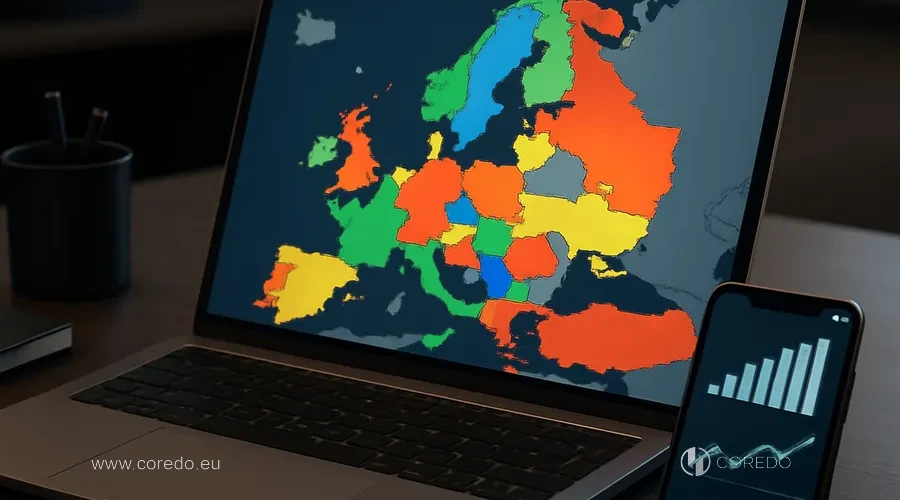
After obtaining a Full EMI license the main question is: how to scale an EMI business in Europe without losing manageability and profitability.
Strategy for entering the EU and EEA markets
Primary tool: passporting:
- notifying regulators in target countries;
- setting up local processes (support, localization of documents, marketing);
- building partnerships with banks and payment infrastructure providers.
COREDO helps clients build a phased market entry strategy for the EU: from test countries to scaling across the entire EEA.
Technology base and services
A strong technological base and EMI software enable:
- rapidly adding new payment methods and currencies;
- integrating with local payment systems;
- using data to improve risk‑scoring and the product.
The earlier modularity and scalability are built in, the cheaper further development becomes.
Financial resilience and performance metrics
Growth requires discipline:
- continuous monitoring of financial resilience and reporting;
- managing capital and liquidity;
- assessing performance through key metrics (ROI and KPIs): LTV/CAC, cost‑to‑serve, share of problematic transactions, retention.
The COREDO team helps clients build a management reporting system that satisfies both regulators and investors.
Impact of regulatory requirements on scaling
As you grow, regulators’ tolerance for «startup mistakes» decreases:
- increased focus on governance and independent directors;
- higher expectations for internal audit, second line of defence;
- requirements for capital buffers and risk models change.
It’s important to view this not as a constraint, but as a tool for long-term resilience.
Key findings and recommendations
In summary, when choosing a country for an EMI license in Europe, I always recommend that clients structure the decision into four blocks:
- Regulatory framework and practice: transparency of requirements, the regulator’s experience with fintech, realistic timelines.
- Finances: minimum and operating capital, taxes, the cost of audit and compliance.
- Operations and technology: requirements for office premises, personnel, IT infrastructure, payment security.
- Growth strategy: passporting opportunities, market reception of the jurisdiction, prospects for scaling across the EU and EEA.
COREDO’s experience shows that projects that from the outset focus on a solid business plan, a well‑designed AML/KYC architecture, PSD2 compliance, a reliable IT foundation and systematic risk management end up with not just an EMI license but a functioning, scalable and investment‑attractive business.
If at this stage you want to turn the general idea «getting an EMI license» into a clear action plan for a specific country, the COREDO team is ready to help you go through this process systematically – from choosing a jurisdiction to building a sustainable model of operational and regulatory support.