
COREDO – EU Legal & Compliance Services Expert legal consulting, financial licensing (EMI, PSP, CASP under MiCA), and AML/CFT compliance across the European Union. Headquartered in Prague, we provide seamless regulatory solutions in Germany, Poland, Lithuania, and all 27 EU member states.

Pavel Kos
04.04.2026 | 6 min read
Updated: 04.04.2026
When I launched COREDO in 2016 as a legal and financial advisory, we decided from the outset: any client’s international transaction must secure data and be transparent to regulators, otherwise it is not worth the risk. Since then the COREDO team has completed dozens of projects in the EU, the UK, Singapore and Dubai, where confidentiality and data access within a clean team became either a deal accelerator or its bottleneck. In this article I have collected practical working practices that explain how to organize a clean team in mergers and acquisitions so as to comply with antitrust constraints, data protection requirements and protect trade secrets, without blocking the due diligence process.
Our experience at COREDO has shown: if you design a clean room for M&A correctly, you gain controlled access to the core of the target company’s business while simultaneously reducing regulatory and cyber risks. Below: a step‑by‑step look at the legal, technical and organizational framework, plus examples of how this works in the EU, Asia and in cross‑jurisdictional deals.
Why a clean team is needed in M&A and the boundaries of information exchange
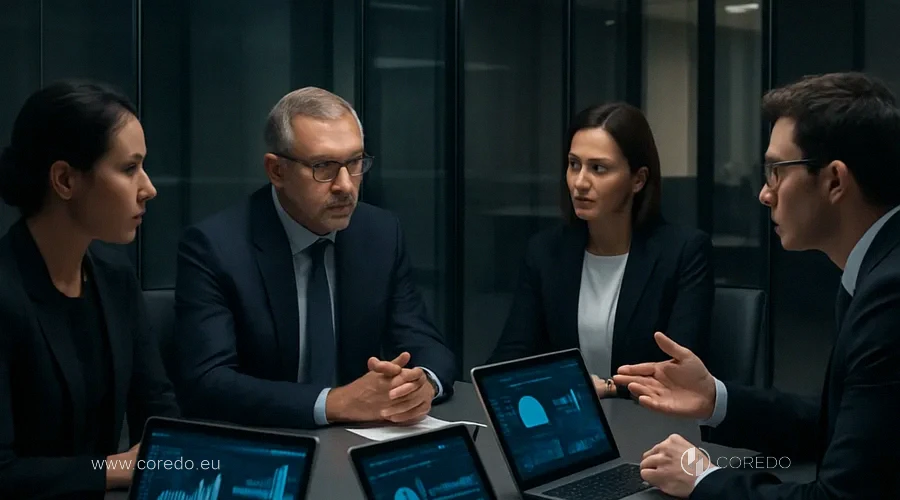
Clean team confidentiality: it’s not about a formal NDA, but about a system of access permissions, procedures and technologies that provide exactly the amount of information needed to assess the deal, and no more.
Key objective: to prevent the anti-competitive exchange of sensitive data (for example, on prices, margins, client lists) before closing the deal and to comply with personal data requirements. COREDO’s practice confirms: the absence of such a system increases the risk of antitrust claims and leaks, and also complicates integration after closing.
Antitrust risks and the clean team always go hand in hand. regulators in the EU and the United Kingdom look at whether the parties exchanged strategically sensitive information. Sometimes the market hears the phrase «circumventing antitrust prohibitions through a clean team», but it is more accurate to talk about how to avoid breaching prohibitions by using clean channels and information barriers. This means: data are structured and filtered through independent experts and external lawyers, and decisions about access are documented.
Architecture of the clean room and roles
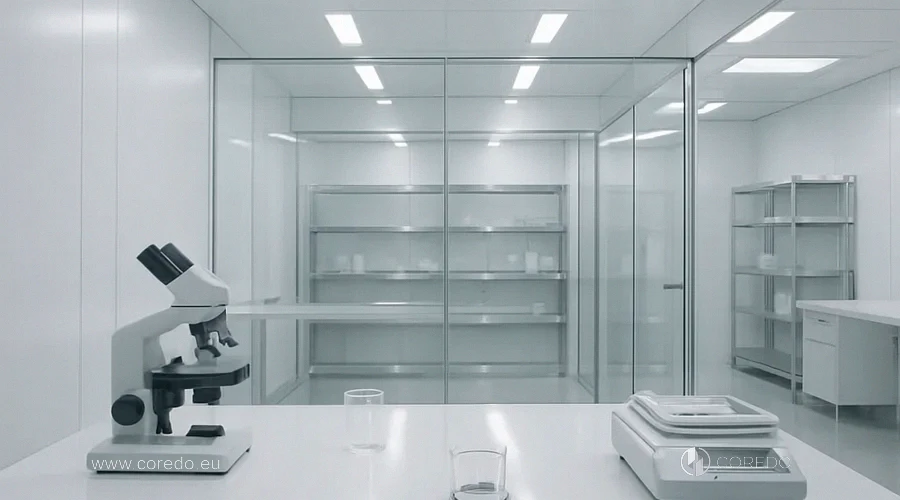
I start a project by modeling a clean room: it is a controlled data access environment where the information barriers of a clean team (Chinese walls) operate. Only individuals with a confirmed role and purpose are admitted to it; these are typically independent experts, external attorneys, and a limited pool of analysts. The COREDO team often implements an outside counsel filter, where initial access to raw data is available only to external lawyers, while the buyer’s business users receive de-identified or aggregated outputs.
The role of an independent expert in the clean team is critical. They validate aggregation and anonymization methodologies, and also prepare analytical reports that do not violate antitrust restrictions. The role of external lawyers in the clean team is to ensure that data exchange complies with the NDA, the clean team agreement, and applicable law, and to conduct a privilege review so that attorney–client privilege is not lost.
GDPR and cross-border transfers
Legal support for a clean team starts with a set of documents: a clean team confidentiality agreement, a clean team agreement (and its practical template with a checklist of schedules), plus a data processing agreement (DPA) for the clean team.
In the DPA we establish the controller/processor roles, the purposes and legal bases of processing, retention periods and deletion mechanisms. In the clean team agreement we set out the data categories, access levels, prohibitions on re-identification and the escalation procedure.
The GDPR and clean team require separate attention. I always initiate a DPIA (data protection impact assessment) for the clean team if there is systematic processing of PII, and I also approve basic DSAR procedures and the work of the DPO. For inter-party data transfers under GDPR requirements we determine the legal mechanisms for cross-border transfer: standard contractual clauses (SCC), and sometimes: additional measures in response to Schrems II consequences.
If jurisdictions with their own regimes are involved, PIPL (China), PDPA (Singapore), APPI (Japan), PDPO (Hong Kong), POPIA (South Africa), the Nigerian Data Protection Act, we check data residency requirements and add local provisions.
Safe harbour mechanisms and safeguards in our documents: these are clear prohibitions on using data outside the purposes of the deal, obligations to notify about breaches and a deletion/return protocol. The COREDO team takes into account legal risks of disclosure to regulators: we set out eDiscovery and litigation hold so that the client has ready and legitimate chains of custody when requests arise.
Access and audit: who sees data and when
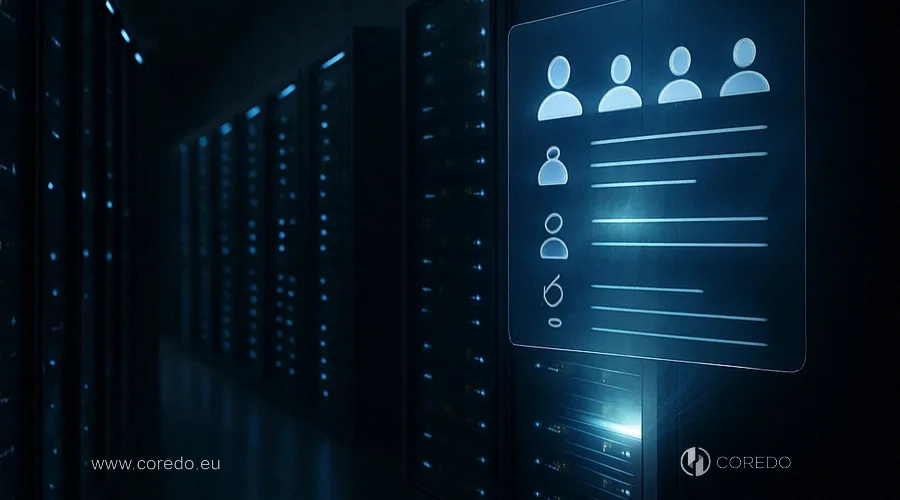
Access management in the clean team is built on the principle of least privilege. We combine RBAC (role-based access control) and ABAC (attribute-based access control), where the role defines the base set of rights, and attributes, context (jurisdiction, data type, time of day, IP).
For critical roles we deploy PAM: privileged access management, as well as one-time tokens and temporary accounts.
COREDO’s practice confirms the effectiveness of role‑based attestation and regular recertification: every 30–60 days system owners review who needs access and why. Time-limited access rights management helps keep the risk window minimal, especially during periods of active correspondence and file exchange. For high-risk transactions we build a zero trust architecture, supplementing it with MFA and geo‑restrictions.
Logging and access auditing in the clean team is not a checkbox, but the foundation of protection. We enable immutable logs (immutable logs), session recording, and user activity monitoring. SIEM monitoring systems and UEBA analyze behavioral anomalies, and triggers instantly block suspicious sessions. Forensics readiness and a well-developed response plan for a leak reduce response time and make it possible to meet data-breach notification deadlines in different jurisdictions.
Protection measures: encryption and isolation
Technical protection measures for the clean team start with encrypting data at rest and in transit. For keys we use KMS and HSM, and we separate privileges for key management and system administration. In some projects I use Trusted Execution Environment (TEE) or Secure Enclave to isolate computations, and for highly sensitive assets I help deploy air‑gapped isolated environments.
We carefully select VDR providers and selection criteria include SOC 2 compliance, ISO 27001 and ISO 27701, audit logs, session recording, print/download control, support for watermarking and granular RBAC. Requirements for cloud providers for the clean team include data residency options, contract‑level SLA and SLO, log export to SIEM and supply‑chain risk checks. We strengthen data clean room security with data tokenization, document hashing for integrity verification, and leak monitoring with automatic extraction of indicators of compromise.
The clean team data retention and deletion policy defines clear retention periods, a secure deletion procedure and deletion verification through provider reports and third‑party audit. Deploying PAM and session recording, as well as separate domains for different jurisdictions, reduce the risk of unauthorized cross‑jurisdictional replication.
Redaction and differential privacy
Data minimization for the clean team: my first question at the start: which deal issues can we address with aggregates, de-identified datasets and synthetic data.
Pseudonymization and anonymization for Due Diligence help remove direct identifiers, and we assess the risk of re-identification after pseudonymization taking into account rare combinations of attributes. Re-identification risk metrics include k‑anonymity, l‑diversity and t‑closeness, and for especially sensitive tasks I apply differential privacy.
The redaction and privilege review procedure should be automated, but with legal oversight. The solution developed by COREDO combines automation of redaction using NLP and machine learning to detect PII with manual review by lawyers under an outside counsel filter.
The use of synthetic data for due diligence has proven particularly effective in projects with PDPA and APPI restrictions, where it was necessary to demonstrate behavioral models without disclosing personal identities.
For complex cooperation between analysts from different companies I use secure multiparty computation (SMPC) and homomorphic encryption in a clean room when you need to jointly compute metrics without revealing the underlying datasets. Yes, this increases cost and requires expertise, but at stages where disclosure is impossible, these methods open a secure alternative.
VDR and antitrust reviews in M&A
Using a virtual data room for the clean team: it’s standard, but it’s important to link it to the M&A workflow. I build automation for the due diligence workflow: request checklists, SLAs for document delivery, status trackers, and automatic deadline monitoring. Integration of the clean team into the M&A process includes gate control: without a completed privilege review and redaction the package is not sent to business users.
Preparing for antitrust reviews via the clean team: this involves team training, a logical map of information barriers and a disclosure roadmap that can be shown to the regulator. Attorney-client privilege protects your valuation analysis if you properly label communications and comply with the outside counsel filter.
When necessary, we start eDiscovery and evidence preservation via litigation hold in advance to balance the completeness of the response to the regulator and maintaining confidentiality.
Scaling across multiple jurisdictions
Scaling a clean team in multinational deals requires a modular architecture. We arrange international data transfers in the clean team via SCCs or other lawful mechanisms, and for data residency we allocate regional VDRs and network segments.
In the EU, the Czech Republic, Slovakia, Cyprus and Estonia the COREDO team deployed such segments in parallel with SPV structuring and company registration so as not to slow the corporate track.
Managing third‑party risk (third‑party risk management) is critical: vendor due diligence checks of contractors include evaluation of SOC 2/ISO 27001, penetration test reports, DPA, DPIA and technical measures. For clean-team providers I set SLAs and SLOs for availability, recovery time and RPO, as well as logging requirements under regulatory standards. Periodic audits and access recertification at contractors reduce the risk of lateral movement.
How to measure ROI, timelines and cost
The impact of a clean team on deal timelines often depends on when you started. If the architecture and documents are prepared before the start of due diligence, we see a 15–30% acceleration in closing time.
Deal KPIs: time to close, compliance cost, data leakage risk, these are three metrics I use to calculate effectiveness. I add DSAR responses, incident metrics and provider SLA stability to them.
The cost of implementing a clean team and ROI consists of VDR licenses, external lawyers’ and experts’ services, SIEM/UEBA integration, as well as training. In practice, per-user costs and pricing models vary: some providers charge a flat fee for the dataroom plus user packages, consultants – fixed vs hourly billing for services. The ROI calculation for implementing a clean team takes into account prevented incident cost, reduced timelines and lower legal support costs during audits.
cyber risk insurance during M&A and clean team: a useful layer of protection if the policy covers VDR incidents, PII leakage and regulatory fines. Corporate liability and the clean team’s reporting are formalized through regular reports to the board of directors on access, incidents and audit results.
COREDO Case Studies: EU/UK/Singapore
Recently the COREDO team supported the acquisition of a payment company in the EU with a simultaneous application for a financial licence in one of the Union’s countries. We built a clean room on a provider with ISO 27001 and ISO 27701, implemented RBAC/ABAC, and customers’ personal data were pseudonymized and aggregated. A DPIA for the clean team confirmed the adequacy of the measures, and SCCs with additional encryption guarantees closed the Schrems II issue. As a result, due diligence was completed in eight weeks, and the regulator raised no questions about the data exchange.
In the United Kingdom our client from the forex sector was acquiring a fintech in Estonia. The solution developed at COREDO used an outside counsel filter: external lawyers conducted privilege review and automatic redaction based on NLP. We applied k-anonymity and l-diversity to client samples, and commercial contract terms were hidden via tokenization and synthetic data. The antitrust authority received a transparent map of information walls, and the deal proceeded without delays.
In Singapore we set up a clean team for a multi-jurisdictional deal involving a company from Dubai and a holding in the United Kingdom. PDPA and GDPR required separate VDRs with export restrictions, plus a DPA for each provider. For joint analysis we used SMPC in places, and access was granted via temporary accounts with one-time tokens and recertification every two weeks. The client reported a 40% reduction in response time to auditor requests and no change in the number of incidents.
How to implement a clean team with support
- Assessment of confidentiality risks in a transaction and creation of a data register, including access to personal data in the transaction and protection of trade secrets when exchanging data.
- DPIA (data protection impact assessment) for the clean team and a matrix of permissible processing purposes.
- Contractual package: NDA, clean team agreement, DPA, SCC for cross-border data transfers, and a clean team data retention and deletion policy.
- Technical design: VDR, SIEM/UEBA, PAM, RBAC/ABAC, KMS/HSM, encryption at rest and in transit, zero trust and TEE where necessary.
- Processes: redaction procedure and privilege review, outside counsel filter, information barriers, role of an independent expert, role of external lawyers and team training.
- Launch of monitoring and leak detection for the clean team, testing of the incident response plan and forensics readiness.
- Integration with corporate confidential data handling policies and the AML framework, if the transaction involves licensed activities (crypto, payment services, forex).
- Closure: audit reports, data deletion, updating corporate standards and KPI retrospective.
How to avoid common mistakes
The most common mistake is starting redaction and setting up the VDR after the exchange has already begun. I always plan these steps before the first data request. The second mistake is underestimating local data laws: PIPL, APPI, PDPO or POPIA will quickly turn a one-size-fits-all policy into a source of risk if you don’t take data residency and transfer mechanisms into account.
- Excessive centralization of access rights. Role-based access control in the clean team and attribute-based rules should initially limit lateral movement, and session recording and immutable logs should provide transparency for audits.
- Skimping on monitoring: without SIEM/UEBA you won’t see quiet anomalies, and without SLA/SLO from providers you won’t be able to demonstrate due diligence.
- Belief that pseudonymization automatically solves everything. The risk of re-identification remains if you don’t look at combinations of attributes, and without k-anonymity, l-diversity, t-closeness or differential privacy, de-identification can be an illusion.
- Ignoring cyber risk insurance: a well-chosen policy reduces the financial impact of incidents.
Clean team in international transactions
- The minimization principle as a strategic approach: first synthetic data and aggregates, then pseudonymization, and only in exceptional cases — original data.
- Zero trust by default: temporary access, MFA, geo-restrictions and independent log auditing.
- Separation of roles and privileges: outside counsel filter, independent experts and a clear map of responsibilities.
- Standards compatibility: adherence to ISO 27001 for the clean room, ISO 27701 for privacy and SOC 2 for service providers.
- International data transfers to the clean team — only with SCC/supplementary measures and local residency control.
- Privacy technologies applied appropriately: SMPC/homomorphic encryption where no alternatives exist; otherwise, structural methods and synthetic data.
- Managed cost: transparent pricing “fixed vs hourly” and KPIs for time to close, risks, and compliance.
clean team: registration and licensing
In many COREDO projects registration of a legal entity and obtaining financial licenses run in parallel with M&A, and the clean team helps synchronize the legal and compliance tracks.
В ЕС и Великобритании при лицензировании платежных услуг или криптоактивов регуляторы внимательно смотрят на управление данными, поэтому готовые DPA/DPIA и zero trust архитектура становятся плюсом досье. В Сингапуре и Дубае аналогично: согласованные PDPA/локальные требования к хранению данных укрепляют доверие надзорных органов к новой структуре.
Команда COREDO обеспечивает юридическое сопровождение clean team в сочетании с AML‑консалтингом: KYC/KYB‑процессы интегрируются в VDR, а разграничение ролей исключает ненужный доступ к чувствительным комплаенс‑материалам. Это особенно важно при лицензиях форекс, платежных и криптосервисов, где регуляторы ожидают строгого контроля над PII и журналами доступа.
A reliable partner matters more than the tool
Clean team: it’s not just about VDR and NDA. It’s a management solution that links law, technology and the M&A process, reducing risks and preserving deal momentum.
When I take on a project, I start from the client’s strategy, not from a set of trendy technologies: we design minimization measures, choose compatible standards, set up monitoring and only then open the doors to analysts.
Over years of COREDO’s work in the EU, the Czech Republic, Slovakia, Cyprus, Estonia, the United Kingdom, Singapore and Dubai, practice has shown: a properly built clean team speeds up due diligence, increases predictability of timelines and protects against regulatory and reputational losses. If you are planning a deal that involves personal data, antitrust risks or licensed activities, implement a clean room and information walls at the outset. It’s an investment that pays off at the moment of the regulator’s first request, and preserves the value of the deal where improvisation is too costly.