
COREDO – EU Legal & Compliance Services Expert legal consulting, financial licensing (EMI, PSP, CASP under MiCA), and AML/CFT compliance across the European Union. Headquartered in Prague, we provide seamless regulatory solutions in Germany, Poland, Lithuania, and all 27 EU member states.

Gregory Lutsenko
03.02.2026 | 6 min read
Updated: 03.02.2026
I have led COREDO since 2016 and every day I see the same thing: companies lack structured, pragmatic compliance that works as a business asset rather than a bureaucratic overlay. Over years of working in the EU, the Czech Republic, Slovakia, Cyprus, Estonia, the United Kingdom, Singapore and Dubai, the COREDO team has delivered hundreds of projects - from company incorporations and obtaining financial licenses to building AML/CFT systems and regulatory reporting. This text is not a review of 'best practices', but a distillation from real cases, mistakes and solutions that turn a compliance strategy into a real driver of business growth and investor confidence.
Compliance as a competitive advantage

The compliance strategy as a competitive advantage begins with a clear thesis: compliance reduces the cost of capital and speeds up access to banking services. When a bank sees mature corporate compliance and risk management, it opens accounts faster, expands limits and reduces reserve requirements. COREDO's practice confirms that effective compliance and access to banking services are directly linked: better KYC/CDD, fewer refusals and delays.
Compliance as a factor in investor trust is even more pronounced. Funds and strategic investors evaluate compliance for startups and scaling as carefully as product metrics. Publicly documented policies, ISO 37301 (compliance management system) and ISO 37001 (anti-bribery system), risk appetite, sanctions compliance and export control — these are no longer 'checkboxes', but parameters of the company's valuation model. Our experience at COREDO has shown: when we implement the risk-based approach and proportionality in controls, M&A deal speed increases and the risk discount decreases.
Return on investment in compliance (ROI) is easy to calculate if you acknowledge direct and indirect benefits. On one hand, a reduction in fines and the cost of compliance breaches; on the other — acceleration of client time-to-onboard, higher transaction throughput due to a lower level of false positives. In several projects we showed boards of directors the compliance ROI calculation formula and scenario modeling: ROI = (avoided losses + margin increase from accelerated processes + savings on manual operations) / investments in processes, people and RegTech.
Compliance for international business

When I design a compliance framework for an international group, I start with governance. The board of directors defines the risk appetite, approves the roles of the CCO and the functions of internal control and compliance. Next, compliance policies and procedures for international groups, including KYC and CDD in the compliance strategy, third‑party management, conflicts of interest and fit & proper for key executives. Such allocation of responsibilities allows the business to scale without a "manual brake".
Customer and partner screening components cover PEP screening and risk levels of politically exposed persons, sanctions lists: OFAC, EU, UN and screening practices, as well as beneficial ownership registers, the EU beneficial owners register and national registers. Compliance and requirements for beneficial owners often become a blocking factor when opening accounts and registering companies. The solution developed at COREDO includes automation of UBO identification, document management and an audit trail, which removes regulator and bank questions at the start.
Integrating GDPR and data protection into a compliance strategy is mandatory for any company that operates in the EU or interacts with European clients. We conduct a data protection impact assessment (DPIA) in compliance, apply privacy-by-design and data minimization, and plan international data transfers via SCC and other transfer mechanisms taking Schrems II implications into account. For identification, it is useful to use eIDAS and an electronic signature, as well as biometric verification and identity checks; we always assess model risk and explainability when implementing biometric algorithms.
Sanctions compliance and export control are becoming mandatory not only for defense or high-tech sectors. Compliance for export and international business: it is control of the end user, geographic restrictions and dual‑use items. At COREDO we implement screening and approval processes with segregation of duties and recording of decisions in the document management system to ensure demonstrability and readiness for inspections.
Compliance program: stages and KPIs

Внедрение комплаенс-программы в компании я делю на четыре этапа: risk assessment and compliance maturity model: assessment framework; проектирование контролей по принципу best practices: risk-based approach и proportionality; автоматизация и обучение персонала; мониторинг, регуляторная отчетность и улучшения. Индекс зрелости комплаенса (compliance maturity) помогает быстро объяснить совету директоров, на каком уровне находится организация и какие инвестиции наиболее окупаемы.
Мы закрепляем комплаенс KPI и метрики эффективности, включая time-to-onboard, SAR rate (доля и качество suspicious activity report), false positive rate в транзакционном мониторинге, время закрытия инцидентов, процент third-party Due Diligence с повышенным риском и долю закрытых «alarms» в SLA. Антифрод и комплаенс для платежных операций измеряются через fraud loss rate, chargeback ratio и результаты антивозвратного аудита и контроля транзакций. Такие метрики дают прозрачность и позволяют корректировать ресурсное обеспечение.
Технологии транзакционного мониторинга на базе ML и антифрод-аналитика и поведенческая аналитика снижают число ложных срабатываний, но требуют governance. В COREDO мы внедряем ML/AI: governance, explainability и модельный риск с периодической валидацией моделей, калибровкой порогов risk scoring и обучением аналитиков. Регуляторы развивают suptech решения, и проверяющие все чаще ожидают отчетность с понятными «feature attributions» и логикой эскалаций.
Registration and licenses - Europe/Asia/CIS

Compliance when registering a legal entity in the EU today includes checking beneficiaries, sources of funds and the business model already at the stage of submitting documents to the register and when opening accounts. The regulatory architecture in the EU and national regulators - from the EBA and ESMA to local FIUs - have synchronized approaches, and AMLD5/AMLD6 set the framework for identification, monitoring and SARs. COREDO's practice confirms: a correct group structure, a transparent UBO and readiness for the bank's KYC questions shorten the process by weeks.
Compliance when registering companies in Asia and Africa requires taking different rules into account. In Singapore, MAS and in Dubai (DFSA/FSRA) impose strict AML requirements/KYC, independence of the compliance function and regulatory reporting deadlines. In Asia, AML/KYC regulatory requirements provide for local CDD specifics, address verification and more detailed profiles of transaction activity. The COREDO team builds benchmarking of compliance practices across jurisdictions to avoid transferring European templates without adaptation.
Separate section: financial licenses. Compliance for financial institutions and payment providers covers licenses for payment institutions, electronic money, forex dealers, crypto providers and banking authorizations. We support the preparation of AML policies, CDD/EDD procedures, monitoring scenarios, business continuity plans, independent audit tests and «fit & proper» for management. In some cases COREDO implemented a «pre-audit» approach, when the regulator saw readiness for FIU procedures and SAR processes before issuing the license.
COREDO cases: from idea to operations
First case, Licensing of a payment company in the EU. The client had delays in opening accounts due to a non-transparent UBO and the absence of a sanctions policy. We redesigned the ownership structure, included beneficial ownership registers and chain-of-control checks, implemented sanctions screening (OFAC/EU/UN) and PEP screening, set up SAR scenarios and regulatory reporting. Time-to-onboard decreased from 21 to 9 days, the false positive rate fell by 37%, and the bank increased limits. The client demonstrated compliance as a competitive advantage in M&A a year later and closed the deal without a discount.
Second case, a crypto company in Estonia. The organization required AML/CFT updates under the new FIU rules, configuration of centralized KYC and KYC re-routing between ecosystem products, as well as integration of eIDAS signatures. We implemented transaction monitoring based on ML, explainable rules, anti-fraud analytics and behavioral models. Result - onboarding speed increased by 50%, increased approval of correspondent accounts by banks and a 22% reduction in chargeback ratio.
Third case: a trading company’s expansion to Singapore with exports to several Asian countries. Key elements were sanctions compliance and export control, supply chain due diligence and responsibility for subcontractors. We implemented third-party management and third-party due diligence, end-user controls, a gifts and conflicts of interest policy, a whistleblowing channel and internal investigations. The business gained access to a key customer for whom ISO 37001 certification was a mandatory requirement for supply.
Third parties in international supply chains
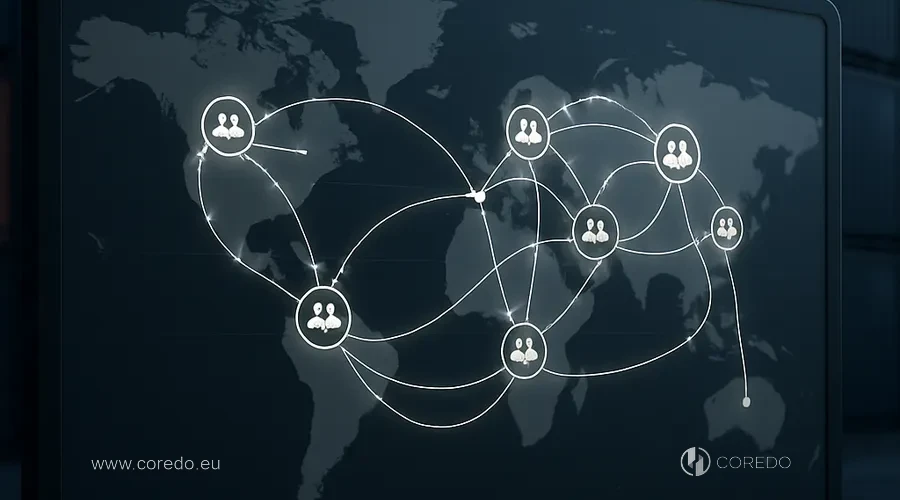
Compliance when working with third parties and contractors requires a layered control model. We conduct third-party due diligence, assess beneficial ownership, sanctions risks and ESG factors, review compliance practices and perform supply chain due diligence for critical suppliers. Agreed SLAs, clauses on audit rights and periodic re-assessments provide manageability of the chain.
Managing conflicts of interest and fit & proper policies prevent gray areas. A gifts policy, interaction restrictions, transparent escalation and accounting for “connected persons” support corporate ethics. At COREDO we set up corporate investigations and privileged communications so the organization remains protected and ready for inspections without leaks or breaches of attorney–client privilege.
DPA (deferred prosecution agreement) and arrangements with regulators become relevant when a business quickly discloses incidents, conducts internal investigations and remedies violations. Such openness reduces sanctions and returns the company to operational mode. Our lawyers prepare remediation roadmaps, documents for the FIU and adjust regulatory reporting: formats and deadlines must match supervisory expectations.
RegTech and compliance automation
Automation of compliance processes (RegTech) turns manual checks into a controlled factory. Identity verification goes through eIDAS, biometrics, PEP/sanctions databases, and centralized KYC and KYC re-boarding allow reuse of verification results within the group. RegTech platforms and solution providers offer modularity: screening, transaction monitoring, case management, audit trail and regulatory reporting.
Methods to reduce false positives in transaction monitoring include a combination of rules and ML, training on high-quality labeled data, adaptive thresholds, customer segmentation and explainability with "reason codes". Justifying investment in RegTech to the board of directors is based on comparing the cost of non-compliance with a cost-benefit analysis of implementation, including FTE savings, reduced time-to-onboard and a lower SAR rate due to better upfront filtering.
Implementing ML/AI requires governance: models undergo validation, versions are recorded, and decisions and exceptions are logged. We use document management tools and an audit trail so that every step is reproducible. Control of regulatory changes and horizon scanning are embedded into processes: regulators change SAR guidance, FIUs update formats, and banks refine KYC terminology and documents; the system must pick up updates without failures.
Compliance in investments and M&A
Compliance as a competitive advantage in M&A manifests through a reduction of "regulatory debt". A buyer assesses compliance due diligence, the presence of ISO 37301/37001, the completeness of SAR processes, the quality of data protection, the maturity of AML/CFT and readiness for regulatory inspections. Compliance and corporate reputation management directly affect deal value, and ESG factors amplify reputational risks and insurer interest (D&O, professional liability).
The impact of compliance on the cost of capital and credit rating is linked to transparency and stability. Banks and agencies trust companies with clear risk governance, proactive internal investigations and modular automation. When a business demonstrates compliance budgeting, KPIs and models for evaluating the effectiveness of compliance programs, borrowing costs decrease.
The legal consequences of non-compliance — fines, bans, criminal prosecution — do not by themselves stop a company’s growth, but they erode flexibility. Analysis of the cost of non-compliance (cost of non-compliance) always shows that proper compliance assessment and independent audits pay off faster than they appear. At COREDO we present scenarios: "no change", "minimal measures", "transformation" — and forecast how multiples and bank contracts evolve.
Budget and ROI for the Board of Directors
Compliance budgeting and cost-benefit analysis start with a risk map and "critical gaps". I use the formula: Compliance ROI = (avoided fines and losses + revenue uplift from faster onboarding + savings from manual operations + reduction in cost of capital) / (costs for people, systems, audits and training). Scenario modeling adds ranges and sensitivity to changes in the regulatory environment.
The Board of Directors cares about simple metrics: time-to-onboard, SAR rate and its conversion into confirmed cases, false positive rate, cost to process a single case, share of "high risk" clients, time to respond to regulatory changes, percentage of completed trainings and test results. The COREDO team prepares packages for audit and risk committees where each KPI is tied to a business outcome and a budget line.
The compliance team should remain lean and proactive. Building the compliance team and the role of the CCO assume a combination of in-house specialists and outsourcing compliance and services of external consultants. Question: what are the risks when outsourcing the compliance function to another jurisdiction? Answer: loss of local context and control deadlines; we mitigate this through SLAs, local officers and a unified case management system.
Culture of learning and continuous improvement
Staff training and a compliance culture are not a one-off mailing but a cycle. I document topical modules: AML/CFT, sanctions regime, GDPR, fraud patterns, conflicts of interest, export control. Corporate ethics and whistleblowing systems provide early signals, and internal control and compliance receive data for improvements.
Cross-jurisdictional compliance for cross-border business requires alignment of policies and procedures so that differences between jurisdictions do not lead to "risk migration". We carry out corporate group structuring with compliance in mind, adapt regulatory reporting, and build mechanisms for centralized KYC and portable effective checks. Interaction with banks, as well as KYC terminology and documents, is simplified through standard packages: incorporation documents, proof of address, UBO diagrams, descriptions of sources of funds, and the business model.
COREDO regularly prepares clients for regulatory reviews and inspections. Internal investigations and audit preparation for the regulator include test SARs, sample checks, walkthrough processes and interviews. We work transparently, acknowledge difficulties, and develop an improvement plan that the regulator views as constructive cooperation.
Frequently Asked Questions from Clients
Question: How to justify investments in compliance to the board of directors?
Answer: Link investments to business metrics: time-to-onboard, reduction in false positives, increase in conversion, reduction in cost of capital, scenario analysis of fines. Show the ROI formula and the 'critical gaps', embedding CAPEX/OPEX into a 12–24 month roadmap.
Answer: Link investments to business metrics: time-to-onboard, reduction in false positives, increase in conversion, reduction in cost of capital, scenario analysis of fines. Show the ROI formula and the 'critical gaps', embedding CAPEX/OPEX into a 12–24 month roadmap.
Question: Which metrics to use to assess compliance ROI?
Answer: time-to-onboard, SAR rate and share of confirmed cases, false positive rate and cost to process a single case, fraud loss rate and chargeback ratio, percentage of tasks closed within SLA, response time to regulatory changes, proportion of employees who completed training, and results of an independent audit.
Answer: time-to-onboard, SAR rate and share of confirmed cases, false positive rate and cost to process a single case, fraud loss rate and chargeback ratio, percentage of tasks closed within SLA, response time to regulatory changes, proportion of employees who completed training, and results of an independent audit.
Question: How to integrate AML and GDPR without conflicts?
Answer: Conduct a DPIA, document the legal basis for processing (legitimate interest/legal obligation), use privacy-by-design and data minimization, restrict access by role, apply SCCs for cross-border transfers, and maintain an audit trail for demonstrability.
Answer: Conduct a DPIA, document the legal basis for processing (legitimate interest/legal obligation), use privacy-by-design and data minimization, restrict access by role, apply SCCs for cross-border transfers, and maintain an audit trail for demonstrability.
Question: What risks arise when outsourcing the compliance function to another jurisdiction?
Answer: Loss of local regulatory context, SLA gaps and mismatched reporting formats. Establish quality control, a local representative and unified policies, and regularly conduct benchmarking and independent audit tests.
Answer: Loss of local regulatory context, SLA gaps and mismatched reporting formats. Establish quality control, a local representative and unified policies, and regularly conduct benchmarking and independent audit tests.
Question: How to adapt a compliance strategy when entering a new market in Asia?
Answer: Take into account local regulator requirements (e.g., MAS/DFSA/FSRA), configure local CDD/EDD, rebuild sanctions lists, adapt SAR formats to the FIU, check export controls and local personal data rules. Use local RegTech integrations and certification.
Answer: Take into account local regulator requirements (e.g., MAS/DFSA/FSRA), configure local CDD/EDD, rebuild sanctions lists, adapt SAR formats to the FIU, check export controls and local personal data rules. Use local RegTech integrations and certification.
Question: How does compliance affect deal value in M&A?
Answer: A mature program reduces regulatory discount, speeds up due diligence and lowers the amount of warranties and indemnities. Having ISO 37301/37001, clear SAR processes and an ESG framework increases buyer and lender confidence.
Answer: A mature program reduces regulatory discount, speeds up due diligence and lowers the amount of warranties and indemnities. Having ISO 37301/37001, clear SAR processes and an ESG framework increases buyer and lender confidence.
Question: Which RegTech solutions reduce time-to-onboard by 50%?
Answer: A combination of remote eIDAS/biometric verification, centralized KYC, preconfigured sanctions screening with PEP risk tiers, behavioral scoring and case management with automated playbooks. The COREDO team implemented such stacks and achieved a twofold reduction in TTO.
Answer: A combination of remote eIDAS/biometric verification, centralized KYC, preconfigured sanctions screening with PEP risk tiers, behavioral scoring and case management with automated playbooks. The COREDO team implemented such stacks and achieved a twofold reduction in TTO.
What leaders should remember
Compliance and anti-money laundering efforts (AML/CFT) are not a brake on business, but a quality control system. Financial intelligence units (FIU) and SARs: part of day-to-day operations, not a "force majeure". Sanctions control, export rules, GDPR and beneficial owner requirements: elements of a single architecture, where each policy is supported by a process, a role and metrics.
Scaling issues of compliance systems as a company grows should be solved in advance: modular automation, clear SLAs, a review of risk appetite and regular recalibration of models. Third-party management, supply chain due diligence and responsibility for subcontractors require discipline and a complete audit trail. And most importantly - a compliance strategy for the business should enable access to new markets, not become a barrier.
Conclusions
Compliance as a factor of competitive access to new markets: it is already a fact, not a prospect. When I speak with founders and chief financial officers, I ask them to view compliance through the lens of ROI, deal speed, and the trust of banks and investors. COREDO builds solutions that connect strategy, regulatory requirements and technology: from compliance for the registration of a legal entity in the EU to licensing and daily AML‑operations in Europe, Asia and the CIS.
If you need a partner who understands regulatory logic, knows how to calculate profitability and turns requirements into clear processes, the COREDO team is ready to help. We will turn complex standards FATF, AMLD5/AMLD6, ISO 37301/37001, GDPR and sanctions regimes into a system that accelerates scaling, strengthens corporate governance and increases the company's market value.