
COREDO – EU Legal & Compliance Services Expert legal consulting, financial licensing (EMI, PSP, CASP under MiCA), and AML/CFT compliance across the European Union. Headquartered in Prague, we provide seamless regulatory solutions in Germany, Poland, Lithuania, and all 27 EU member states.

Grigorii Lutcenko
25.12.2025 | 6 min read
Updated: 25.12.2025
Imagine: 70% of alternative investment funds in the EU spend more than a year obtaining a full AIFMD licence, with compliance costs exceeding €500,000. And if you manage private equity or real estate and are looking for a quick launch in the Czech Republic without a bureaucratic nightmare? ZISIF §15 in the Czech Republic offers a notification regime – a flexible alternative to classic alternative investment funds in the Czech Republic, ideal for qualified investors. This is the “small regime” under Act 240/2013 Sb., where the Czech National Bank (ČNB) reviews the notification in weeks, not years. Practice COREDO confirms: such structures speed up cross-border fundraising from Asia and the EU, minimizing risks. Read on, we’ll explain when ZISIF §15 really works, how to register it and how to avoid the pitfalls.
Quick facts:
- Registration timeline: 2–4 weeks in the ČNB register.
- Investors: only qualified (assets >€500k or income >€100k/year).
- Benefits: notification regime vs full Licensing AIFMD.
- Main risks: lack of substance and AML shortcomings.
ZISIF §15: legal basis and regulatory scope
Legal basis
ZISIF §15 is governed by §15 of Act No. 240/2013 Sb. on asset management, defining it as an AIF with simplified supervision for small funds (assets <€500 million without leverage). The COREDO team has repeatedly used this “small regime” for clients from Singapore, where similar Pte Ltd structures require a resident director. Difference from AIFMD: no EU marketing passporting, but freedom in investment strategy.
Registration of ZISIF §15 in the Czech Republic
Registration of ZISIF §15 in the Czech Republic is done via notification to the ČNB: the articles of association, investment memorandum, UBO data and evidence of substance. The notification regime vs licensing speeds up the process to 30 days, versus 6–12 months for AIFs. The ČNB register checks basic compliance, without prudential supervision.
ČNB requirements for ZISIF
ČNB focuses on the ČNB requirements for ZISIF: the presence of an LEI for the fund, risk management and an AML policy. The boundaries of prudential supervision – assets <€500 million exclude a deep audit. The solution developed by COREDO helped the client pass the inspection in 18 days by providing a local office.
ZISIF §15: When a Structure Is Advantageous

Who ZISIF §15 really works for: primarily investors and business structures that already have a clear strategy and a scale of tasks for which such a model provides tangible savings, flexibility and capital protection. Below we will examine the criteria of expediency (when the structure is advantageous) using real cases, from classic private equity and real estate to SPV structures and venture deals.
When is ZISIF §15 advantageous for an entrepreneur?
For SPVs in M&A or venture deals with complex assets: real estate, private equity, crypto-assets. What assets can be held in a ZISIF §15 (real estate, crypto)? Up to 100% of the portfolio in illiquid assets with third-party valuation. Our experience has shown: a real launch in 2 months.
ZISIF §15 for qualified investors limits marketing to private placement rules, not retail. Cross-border fundraising from the EU/Asia works through Due Diligence of investors, without passporting.
ZISIF §15 vs AIFMD loses when there are >50 investors or leverage. Restrictions on attracting investors – max 150 LPs. When is ZISIF §15 more advantageous than AIFMD for a fund in the Czech Republic? For a start with TVPI >2x.
Corporate structure: limited liability company vs. joint-stock company
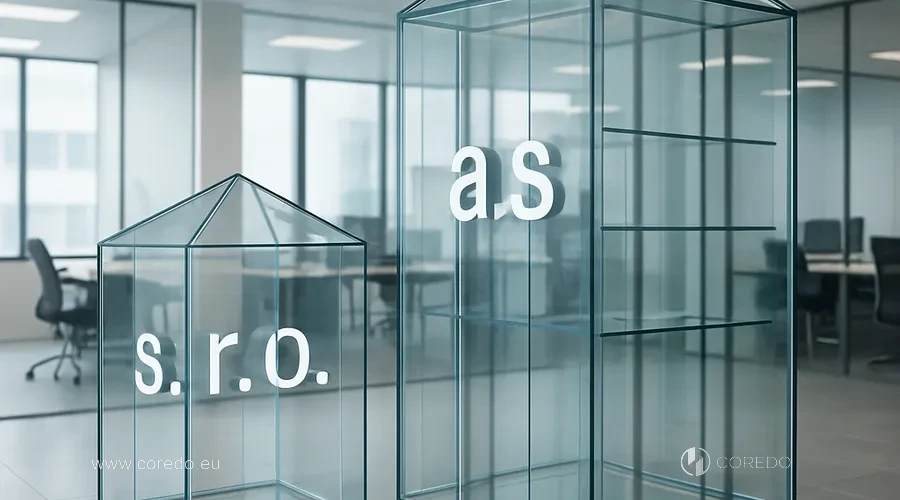
corporate structure and organizational options determine how the fund will be managed, who is responsible for what, and what risks the founders and investors bear. In practice, the choice between s.r.o. vs a.s. and the format through a management company becomes a key organizational decision when establishing a §15 fund and sets the framework for all subsequent legal and operational processes.
s.r.o. or a.s. – which to choose for a Section 15 fund
| Criterion | s.r.o. | a.s. |
|---|---|---|
| Капитал | €1 (flexible) | €25k+ |
| Governance | Simple, 1 director | Board of directors |
| Гибкость распределения | High (LPA) | Medium |
| Банкинг | Easier for a small fund | Preferred for larger funds |
Corporate structure ZISIF s.r.o. vs a.s.: choose s.r.o. for speed, as in 80% of our cases.
Is it necessary to have a management company under AIFMD for ZISIF §15? No, self-managed is allowed with a fiduciary director. A management company is optional for scale.
The fiduciary director / fund director bears director’s responsibilities and fiduciary duties: loyalty, due care. COREDO practice: a local director provides substance.
Substance, economic presence and ‘letter-box’ risks

Substance, economic presence and ‘letter-box’ risks today directly affect whether your company is recognized as a real business or merely a shell. To ensure the security of a structure in the Czech Republic, it is important to understand which elements of substance regulators and banks expect: an office, personnel, place of decision-making and accounting.
The need for genuine management (substance)
The need for genuine management (substance) in ZISIF §15 — an office in Prague, 2+ employees (compliance officer, risk manager), local decision-making. Substance / economic presence according to OECD tests.
Checklist of evidence of economic activity
- Local office + lease.
- Director working 20 hours/week.
- Minutes of meetings in the Czech Republic.
- Economic activity test for ZISIF: 70% of operations carried out locally.
We minimize the “letter‑box” risk by economic presence: arm’s length transfer pricing. A COREDO client passed an audit with 3 employees.
Compliance, AML/CFT and UBO: procedures and optimization

Compliance, AML/CFT and UBO disclosure for ZISIF under §15 is no longer an option but a set of mandatory procedures without which it is impossible to open an account, attract investors and legally work with financial institutions. To avoid inflating the internal control budget, it is important from the outset to build the AML/CFT, KYC and UBO processes in a way that simultaneously closes regulatory risks and optimizes ongoing costs.
Compliance and AML for ZISIF §15 under RBA
Compliance and AML for ZISIF §15 under RBA: MLRO, AML/CFT procedures and PEP checks, STR reporting. AML requirements/CFT for alternative funds in the Czech Republic: screening within 24h. Costs: €20k/year.
AML checklist:
- KYC of all LPs.
- PEP screening.
- Transaction monitoring.
UBO and transparency requirements for ZISIF
UBO and transparency requirements for ZISIF: >25% in the register (not public). What are the UBO disclosure requirements for ZISIF §15 in the Czech Republic? ID + address. Privacy: trusts for masking.
KID / key information documents are mandatory for retail (rarely). Reporting and KID for ZISIF §15 investors: quarterly IRR, MOIC.
Tax implications: EU, Asia, CIS
Tax implications and international aspects (EU, Asia, CIS) become a key factor when choosing and structuring a ZISIF §15 fund in the Czech Republic, especially when the structure includes investors and assets from multiple jurisdictions. In practice this directly affects the effective tax rate, the application of EU benefits and CFC rules, as well as which optimization schemes will be permissible and sustainable when dealing with residents of the EU, Asia and CIS countries.
Tax consequences of the ZISIF §15 structure in the Czech Republic
Tax consequences of the ZISIF §15 structure in the Czech Republic: 5% on dividends for qualified investors, 19% corporate income tax (CIT). Tax optimization vs tax risk through DTT (double tax treaties) (90+ countries).
DTT with Singapore/UK minimizes withholding tax. CFC risks: substance demonstrates tax residency.
Opening a bank account in the EU for the fund — at ČSOB with an LEI. Sanctions compliance for Asian LPs: screening.
Operational matters: custody, valuation, reporting
Operational matters in investment structures go far beyond the choice of instruments: it is critical to establish transparent asset management, reliable custody, correct valuation and timely reporting to investors. In practice, the rules for the asset class and their portfolio structure determine how custody, valuation and disclosure of information for real estate, private equity and crypto will be organized.
investment strategy and permissible assets
Investment strategy and permissible assets: 100% in crypto/real estate with valuation policies. Custody: a custodian for illiquid assets.
Custodial arrangements / depository + escrow for M&A. Chains for crypto.
Waterfall distributions and carried interest: 2/20 model. KPIs: IRR 15–25%, TVPI 2.5x.
Comparison of ZISIF §15 and AIF/AIFMD: risks and choices
Comparison of ZISIF §15 and AIF/AIFMD allows assessing key risks, advantages and selection scenarios for investors seeking a balance between flexibility and regulation in the Czech Republic. ZISIF §15 offers simplified registration with the CNB without a full AIFMD license and with a low administrative burden up to EUR 100 million in assets, whereas AIF/AIFMD requires a licensed management company and detailed reporting. This comparison will help choose the optimal structure depending on the size of the business and the investors.
Comparison table
| Criterion | ZISIF §15 | AIF/AIFMD |
|---|---|---|
| Supervision | Notification-based | Full |
| EU marketing | Private placement | Passporting |
| Substance | Minimal | Stringent |
| Cost | €50k | €500k+ |
| Investors | Qualified | All |
ZISIF §15 vs AIFMD: the table shows the speed.
Choose ZISIF for <€100 million; AIF for scale.
How to register ZISIF §15 and launch it
Пошаговая инструкция: как зарегистрировать ZISIF §15 и вывести его на работу (actionable checklist) начинается с блока, где вы заранее продумываете структуру фонда и готовите ключевые документы, чтобы регистрация и запуск прошли без лишних пауз. На этапе предварительной подготовки вы определяете UBO, заказываете LEI, решаете, нужен ли KID, и собираете юридическую и корпоративную базу, без которой ZISIF §15 невозможно корректно вывести на работу.
Preliminary preparation: structure and documents
- Choose an s.r.o.
- LEI for the fund.
- UBO/KID.
How to register ZISIF §15 with the CNB: step-by-step instructions
Как зарегистрировать ZISIF §15 в ЧНБ пошаговая инструкция: 4 недели.
Сколько времени занимает регистрация ZISIF §15 в ЧНБ? 20–30 дней. Замечания: substance.
Наймите MLRO, откройте счёт.
Case studies and short examples
In this section we will examine cases and practical examples (short case studies) to show how legal structures and substance requirements work not in theory but in real projects. Using the example of a venture fund structured through ZISIF §15, we will go step by step through choosing the structure, building up substance, and explain what result this produces for the investor and the fund.
Example: venture fund through ZISIF Section 15 (structure, result)
Example
s.r.o. ZISIF: €20 million from Asia, IRR 22%, substance – 3 employees.
Real estate SPV: DTT saved 10% in tax.
Rejection for letter-box: added an office, approved.
Risks and ways to minimize them (compliance, reputation, sanctions)
Risks and ways to minimize them (compliance, reputation, sanctions) go far beyond the formal requirements of regulators and directly affect the resilience of the business model and access to markets. Understanding the legal and operational consequences, from liability and fiduciary duties to the specifics of offshore structures, is a necessary condition to build effective compliance and proactively reduce reputational and sanctions risks.
Risk mitigation
Liability protection through carve-outs. Trusts and offshore structures — with due diligence.
PEP checks quarterly.
Transfer pricing with local contracts.
Checklist for Owner, CEO, COO
- Assess assets (<€500 mln).
- Choose s.r.o.
- Provide a minimal substance package (office+staff).
- Appoint an MLRO.
- Prepare AML roadmap.
- Obtain LEI.
- Submit to ČNB.
- Open an account.
- Start LP due diligence.
- Monitor KPI (IRR, DPI).
- Plan reporting.
- Reserve €30k for compliance.
What level of compliance is required to maintain the §15 regime? Full internal governance.
Scaling, AIF and exit options
Scaling, the transition to an AIF and exit options – is a stage at which the fund’s structure ceases to be an experiment and begins to operate as a full-fledged European instrument. At this step it is important to understand when to ‘grow into’ AIF/AIFMD status, how to structure a management company in the EU for future scale, and which exit options such an architecture will open up for founders and investors.