
COREDO – EU Legal & Compliance Services Expert legal consulting, financial licensing (EMI, PSP, CASP under MiCA), and AML/CFT compliance across the European Union. Headquartered in Prague, we provide seamless regulatory solutions in Germany, Poland, Lithuania, and all 27 EU member states.

Pavel Kos
06.04.2026 | 6 min read
Updated: 06.04.2026
When I launched COREDO in 2016, I was often asked whether beneficial ownership disclosure is really about strategy, and not just about “checking a box”. Years of practice in the EU, the UK, Singapore and Dubai have shown the obvious: a beneficial owners register is not a line in a form, but the foundation of trust from banks, regulators and investors. The COREDO team has implemented hundreds of projects for company registration, obtaining financial licences and AML setup, and I see how competent management of UBO data speeds up account openings, reduces regulatory risks and increases business valuation.
Today I will offer a structured approach: from terminology and country-by-country differences to documentation, automation, KYC integration and cost optimization. At the same time, I’ll share COREDO case studies and specific solutions that have proven effective.
Why businesses need beneficiary transparency

Global transparency rules long ago went beyond individual jurisdictions. FATF recommendations and the 4th, 5th and 6th EU AML Directives have established standards of beneficial ownership transparency, and the Corporate Transparency Act in the US confirmed the trend toward mandatory identification of the ultimate beneficial owner (final beneficiary). In the United Kingdom the PSC register operates through Companies House and is being strengthened by identity verification measures. These initiatives are forming a common international language: the source of funds matters, control thresholds are clear, and data storage and protection are mandatory.
Since 2022 there have been targeted adjustments to public access in the EU due to ECJ rulings and GDPR. This has not abolished disclosure, but has reconfigured access and procedures. COREDO’s practice confirms: even with “closed” EU beneficial ownership registers, banks and obliged entities retain access to data through KYC and CDD, and companies are required to maintain the accuracy and currency of their information.
Who is a beneficial owner: thresholds and control

In most jurisdictions the ownership threshold for identifying a beneficial owner is 25% and above, but control is not limited to shareholding. Control can manifest through contractual rights, the right to appoint directors, negative control (veto) and coordination via trusts or foundations. Our experience at COREDO has shown that documenting evidence of controlling influence is as important as confirming the percentage stake.
Special attention is required for nominee shareholders and nominee directors. The principle of ownership chain transparency applies here: the UBO register is completed for the ultimate natural person, and the nominee is accompanied by trust declarations and agreements. For investment funds, GP/LP relationships, investment manager rights and the existence of carried interest are taken into account; an accurate control map saves months in approvals.
UBO: EU/United Kingdom/Switzerland/Asia
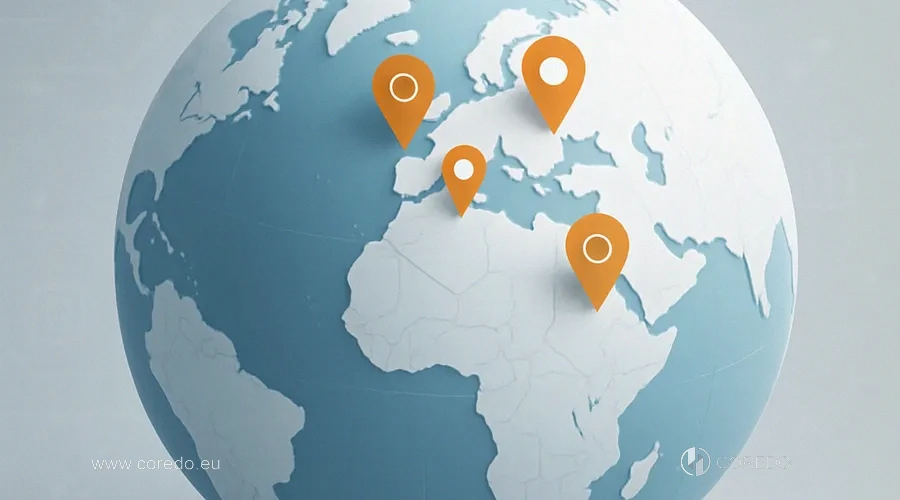
It is necessary to understand where and how to disclose UBOs, guided by the map of requirements for the EU, the United Kingdom, Switzerland and Asia. Let’s start with EU registers, where the balance between data accessibility and personal data protection sets the tone for other jurisdictions.
EU and the UBO register: data access and protection
The EU beneficial owners register operates at the country level, and the format for submitting data to the register varies. Jurisdictions use electronic filing, identity verification and requirements for regular updates. In some countries there is a public versus closed beneficial owners register with restricted access, in others partial publication. eIDAS electronic identification helps verify identity for remote submissions, and integration of KYC with the beneficial owners register speeds up communication with banks.
Companies House and PSC in the United Kingdom
The UK’s register of beneficial owners (PSC) sets thresholds and significant control tests, and companies are required to file and update data through Companies House. Mandatory identity verification of controllers is being implemented, which strengthens the reliability of the data. The COREDO team has successfully built processes for clients in London, where regular PSC reviews are integrated into the corporate events calendar.
Cyprus, Estonia, the Netherlands, Switzerland — nuances
Disclosure of beneficial owners in Cyprus is made via the Registrar of Companies UBO platform; access by the general public is restricted, but obliged entities receive information for CDD. Beneficial ownership disclosure in Estonia is handled through the e-Registry with a convenient e-Residency signature and requirements to update information when the structure changes. Disclosure in the Netherlands operates through the national UBO register with consideration of GDPR and data rights holders. Beneficial ownership disclosure in Switzerland still follows the “registration and access for authorities and obliged entities” model, while the country is moving towards a centralized system, maintaining an emphasis on confidentiality.
Offshore jurisdictions in Asia and reporting
Singapore requires a Register of Registrable Controllers (RORC) and filing of data with ACRA; the register is closed, but accessible to regulators and certain entities. Hong Kong operates a Significant Controllers Register (SCR) held by the registered office and accessible to competent authorities. In the UAE and free zones (for example, DIFC, ADGM, Dubai VARA) there is a specific UBO disclosure regime; access is restricted, and requirements for verifying the source of funds are high. In offshore zones such as the BVI and the Cayman Islands there are private filing systems (for example, BOSS), while banks require a full package of documents to verify the company’s beneficial owner and the source of funds.
How to fill in the register of beneficiaries
Below is the practical algorithm that the COREDO team applies, adapted to the client’s jurisdiction and industry.
-
Determining the composition of UBOs and beneficial ownership thresholds. We describe the entire ownership structure, build the ownership chain and record controlling rights, including agreements and options. This reduces the risk of disputes with the regulator and speeds up banks’ KYC.
-
Collecting basic KYC packages for UBOs. For individuals this is an identity document, proof of address and a resume indicating professional background. For legal entities, statutory documents, the shareholders register and proof of authority of governing bodies.
-
Documents to confirm the beneficiary and source of funds. We prepare source of funds / source of wealth, including reports on investments, dividends and asset disposals. This is key to expedited approval of accounts and licenses, especially in the payment and investment sectors.
-
Translations, apostille and notarization. Translation and apostille for the beneficiaries register are done through sworn translators and notaries, taking into account the requirements of the country of submission. Notarization of documents for the UBO register reduces the number of clarification requests.
-
Data submission format for the beneficiaries register and technical files. Some registers accept XML/CSV/JSON, as well as electronic submission of a beneficiary statement. We agree the format in advance to avoid resubmission and delays with the registration number.
-
Sanctions and PEP screening with a compliance log. Sanctions checks and PEP screening are carried out before submission and annually, and the results are documented. This creates a transparent audit trail valued by banks and licensing authorities.
-
Signing and electronic filing. We use digitization and electronic signatures where permitted, taking into account eIDAS and local laws. This practice saves weeks, especially with an international chain of approvals.
-
Regulatory notifications and filing deadlines. For each country we create a calendar of deadlines and reminders, and a responsible employee monitors submissions and updates. Such control protects against fines and suspension of operations.
Documents to verify the ultimate beneficial owner

For individuals, the package typically includes a passport, proof of address, a bank or investment statement in respect of the source of funds, and tax returns upon request. I recommend adding proof of employment or business activity to link the origin of capital to professional experience. The COREDO team builds a coherent ‘capital story’ with clear dates and documents.
For legal entities, it is important to provide certified copies of charter documents, extracts from registers, and documents disclosing the ownership chain up to the ultimate individuals. For trusts — the trust declaration, details on the settlor, trustee, protector and beneficiaries, as well as the distribution terms. For foundations: founding acts, information about the council and beneficiary details. Accounting for trusts and foundations when completing the UBO is critical, as many registers require extended fields on control and beneficial owners.
How COREDO builds the process
The solution developed at COREDO relies on the principle of end-to-end data control and a role-based model. The corporate secretary maintains the authority matrix and is responsible for submissions, while the authorized compliance officer validates KYC, CDD and risk scoring. This division of roles increases reliability and also creates an evidentiary basis for regulators and banks upon request.
Automation of beneficiary verification and integration with ERP/CRM has become standard for our projects. We connect platforms for document verification, biometric checks and liveness tests, as well as encryption of storage with access segmentation. Electronic identification under eIDAS, where available, speeds up license issuance and account opening.
A separate COREDO practice: a data update policy and regular UBO reviews. We set triggers for M&A events, debt-to-equity conversions, reorganizations and changes of director. This approach maintains the accuracy of the record and eliminates the risks of unplanned inspections.
UBO and banks, payment and crypto licenses
When licensing payment institutions in the EU and the UK (PI/EMI), regulators closely review the UBO structure, the residency of beneficiaries and source of wealth. COREDO’s practice confirms that a high-quality UBO roadmap reduces cycles of queries from regulators and partner banks. We agree in advance on each UBO’s role in risk management and appoint a responsible MLRO.
When licensing crypto services (VASP) in Estonia, Singapore or Dubai, the regulator assesses the competencies of the UBO and management, as well as the Travel Rule approach and sanctions control. We prepare the company’s AML policy taking into account the specifics of the jurisdiction and the product type, including the integration of blockchain analytics for transaction monitoring. Such a package speeds up banking compliance when onboarding accounts.
For forex and investment licenses in Cyprus and the United Kingdom, independent directors, clear governance and a risk appetite confirmed by procedures are important. COREDO builds a target operating model where the UBO structure supports independence of control and reduces conflicts of interest. As a result, the regulator sees not formal compliance, but a working system.
KYC Integration with the Beneficial Owners Registry
Our methodology relies on risk-based approach: high risk — enhanced CDD and frequent reviews, medium — regular updates and event-triggered checks. The UBO registry, as part of AML risk management, is synchronized with KYC and transaction monitoring, and sanctions screening and PEP screening are built into the ongoing process. This allows us to maintain speed when scaling operations.
GDPR and restrictions on data publication set the rules for storage and access. We apply encryption practices, access logging and key rotation, and also designate a data owner for UBO records. This approach ensures confidentiality while meeting requirements for data availability to auditors and regulators.
How to minimize errors and risks
A common cause of refusals is inconsistent country-by-country data and untimely record updates. A risk-minimization strategy for UBO disclosure includes a single document repository, cross-checking of dates and names, and an early-warning system for deadlines. Our clients appreciate that COREDO’s corporate calendar is synchronized with the schedule of regulatory notifications.
Key focus areas, disclosure of beneficiaries via power of attorney, consideration of trust and fund structures and working with nominee shareholders. We always document underlying agreements and prepare notarized confirmations with an apostille if required by the country. This package removes the bank’s doubts and allows Due Diligence to be completed without delays in M&A transactions.
Fines and criminal liability for concealing beneficiaries exist in many jurisdictions, and regulators actively exchange information through CRS and FATCA. We take these mechanisms into account when designing structures to avoid conflicts of law and to reduce tax and reputational risks. For holdings with a presence in multiple countries, COREDO develops a compliance matrix that shows which country-specific requirements for UBO verification apply and when deadlines expire.
Budget and ROI of the process
Cost savings through a centralized registry and proper organization of processes reach tangible levels. We combine proof packages for different jurisdictions so as not to order duplicate translations and apostilles, and we also use certified copies accepted in several countries at once. This creates a single pool of documents and reduces the cost of ownership of the compliance function.
ROI metrics for compliance processes include the speed of account approvals, time to issue a license, and the cost of unscheduled checks. Scaling compliance processes across the holding is achieved through a unified policy, automation of verifications, and centralized reporting. When some functions are outsourced to compliance outsourcing and AML service providers, we keep with the client the key decision-making roles and quality control.
COREDO Case Studies: How UBO Addresses Challenges
Recently the COREDO team supported a fintech group entering the payment services market in the EU and the UK. We analyzed the ownership structure, removed conflicting agreements, strengthened corporate governance and implemented regular UBO reviews. As a result the client obtained a payment license in the EU and opened correspondent accounts without delays, and the PSC register in the UK always reflected up-to-date information.
Another example is an investment platform based in Cyprus with a back office in the Czech Republic. We arranged disclosure of ultimate beneficiaries in Cyprus and the Netherlands for the subsidiary, aligned GDPR processes and automated sanctions screening. The partner bank reduced its list of questions about the source of funds thanks to a logically formed capital history and a transparent chain of control.
The third case involves a crypto service operating in Estonia and Dubai. COREDO’s practice confirmed that a unified package of KYC/AML documents, taking into account the Travel Rule and local requirements, speeds up licensing and the onboarding of payment providers. We set up integration with Estonia’s e-Registry, conducted PEP screening of the entire ownership chain and agreed the format for submitting UBO information in the UAE with consideration of the local register.
How to file in multiple jurisdictions
The step-by-step guide to completing the beneficial owners register begins with standard formats and baseline templates. I recommend creating a master UBO file with passport details, addresses, proof of source of funds, and links to apostilles and translations by a sworn translator. This approach speeds up the production of packages for new countries and reduces the likelihood of discrepancies.
Comparing beneficial ownership disclosure requirements in the EU and Asia helps build an update schedule. In the EU the focus is on synchronization with the corporate register and limited public access, while in Asia: on local registers and keeping information with the company with access for authorities. In both cases, practices for storing and encrypting UBO details are important, as well as a clear protocol for responsible persons.
For international holdings, COREDO applies testing scenarios for disclosure processes and documents evidence of control and ownership. We model reorganization, director changes, and investor entry in advance to see how quickly the record is updated and what set of documents will be required. Such proactivity reduces downtime between rounds and minimizes administrative burden.
Articles of association and electronic signature – what matters
Amendments to the articles of association to disclose control create a legal basis for requesting information from shareholders and UBOs. We include provisions banning bearer shares, owners’ obligations to provide data in a timely manner, and mechanisms to suspend rights in case of refusal to disclose. This reduces internal friction and speeds up register updates.
Technical formats (XML/CSV/JSON) and e-Registry examples like Companies House and Estonia’s e-Residency simplify integration with corporate systems. We connect APIs to transfer data from ERP/CRM and configure validation so the form “understands” the structure and warns about errors. Digitalization and electronic signatures create a transparent trail that is easy to verify during an audit.
In some countries there are legal grounds for denying public disclosure in cases of security risks, and it is important to act within the law and under the guidance of local advisers. COREDO helps properly substantiate requests for restricted access, maintaining the trust of regulators and banks. Such a balance between transparency and data protection makes it possible to scale the business without compromising security.
What to do if the structure is complex?
When a structure includes trusts and foundations, we pay attention to the settlor’s role, the protector’s rights and the distribution terms. Documenting these aspects demonstrates actual control and removes concerns about anonymity through trusts by ensuring disclosure. For nominee schemes we prepare extended packages, including declarations and confirmation of relationships, and also conduct an independent verification of the beneficiary.
In M&A transactions, UBO due diligence becomes a mandatory step, and we combine compliance and legal reviews into a single roadmap. It is important to notify registries and banks about changes of control, and to synchronize timelines across countries. This approach prevents pauses in settlements and operational activity.
How COREDO supports clients
Our experience at COREDO has shown that the optimal approach is comprehensive support: from company formation in the EU, the United Kingdom, Slovakia, the Czech Republic, Cyprus, Estonia, Singapore or Dubai to developing AML policies and obtaining financial licenses. We create a project team with clear areas of responsibility, a work schedule and performance metrics. This provides a predictable timeline and eliminates unnecessary iterations with registrars and banks.
The COREDO team stays involved after submission because data updates and regular UBO reviews are an ongoing task. We train the client’s staff, implement internal compliance and audit procedures, and set up notifications about deadlines and changes. Such a system supports resilience and reduces the cost of compliance as the business grows.
Transparency as an asset
Disclosure of ultimate beneficial owners is not just a regulatory requirement. It is a capital of trust that affects deal speed, access to financing and partnerships. When a business views UBO management as a strategic tool, risk is reduced and operational flexibility grows.
The COREDO team helps build this strategy without excessive bureaucracy and with maximum practicality. We design processes tailored to specific jurisdictions, industries and client objectives, align legal and financial requirements, and deliver measurable results. If you value a reliable and comprehensive solution, I am ready to discuss your needs and show how to implement UBO best practice for your international business.