
COREDO – EU Legal & Compliance Services Expert legal consulting, financial licensing (EMI, PSP, CASP under MiCA), and AML/CFT compliance across the European Union. Headquartered in Prague, we provide seamless regulatory solutions in Germany, Poland, Lithuania, and all 27 EU member states.

Nikita Veremeev
11.03.2026 | 6 min read
Updated: 11.03.2026
Since 2016 I have been leading COREDO and am responsible for ensuring that entrepreneurs from Europe, Asia and the CIS do not spend months deciphering terminology and guessing about regulators' requirements. We design and launch funds and management companies in Luxembourg, Ireland, the United Kingdom, the Czech Republic, Slovakia, Cyprus, Estonia, Singapore and Dubai, as well as in international jurisdictions such as the Cayman Islands and BVI. During this time the COREDO team has implemented dozens of LP‑GP structures: from venture funds and private equity to crypto and hybrid strategies - and I can clearly see where entrepreneurs lose speed and money.
In this article I will break the LP‑GP fund structure down into practical steps. I will show which key fund documents actually determine the economics, how the duties of the GP and LP are organized, which jurisdictions help and which hinder, and how to build AML/KYC and operational processes so that compliance does not strangle investments. These are not theoretical notes: our experience at COREDO has shown that a well-designed architecture of documents and processes, done right the first time, saves up to a quarter of time and eliminates most of the "unexpected" costs.
Structure of the LP‑GP Fund: Roles and Control
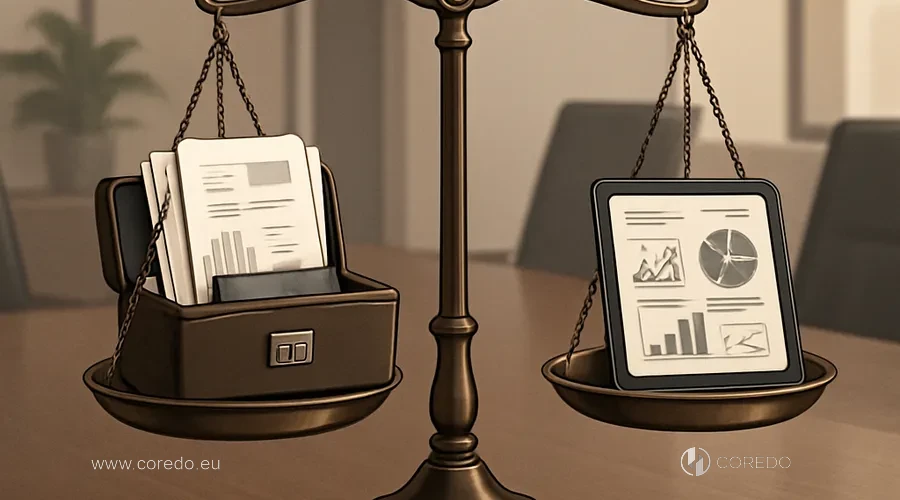
LP‑GP is not just a "limited partnership". It is a contractual architecture of interests where the GP manages and the LPs fund and control risks. In the classic model the GP bears fiduciary duties: the duty of care and the duty of loyalty — acting in the interests of the fund and the LPs, not for its own tactical purposes. The GP commitment serves as an anchor for aligning interests: I usually consider 1–5% of total commitments a reasonable range, while for first‑time managers investors often insist on the upper end.
Duties of the GP and LP are not reduced to generic phrases about management and capital. The GP is responsible for investment decisions, compliance, selection and oversight of service providers, preparation of reporting and capital call processes. LPs undertake to make capital commitments and to comply with transfer restrictions and confidentiality, while receiving protective provisions and a number of veto rights over reserved decisions (change of investment mandate, extension of term, change of key provider). COREDO's practice confirms that a clear allocation of reserved matters in the LPA reduces conflict and speeds up deals.
Governance defines the fund's "nervous system". I form an investment committee with clear terms of reference: quorum, independence, conflict of interest rules, emergency approvals. The LP advisory committee (LPAC) functions include resolving conflicts, addressing valuation issues for atypical assets, approving side pockets and exemptions from investment restrictions. It is important to synchronize LPAC charters with the LPA and the valuation policy, otherwise committees become a formality. The solution developed at COREDO,, is a single governance package (IC ToR, LPAC charter, conflict of interest policy) linked by cross‑references to the LPA and PPM.
Fund documents: what to sign and what to read

Understanding the fund's key documents is primarily necessary to know what to sign and how to read the provisions that define participants' rights, obligations and risks. Let's start with the Limited partnership documents, the LPA, which in practice serves as the fund's "constitution" and sets the basic rules of the game.
Fund LPA documents
The Limited partnership agreement (LPA) sets the rules of the game: investment restrictions, term and liquidation, income allocation, the procedure for capital calls, restrictions on transfers of interests and LP exits. In my practice we always work through the distribution waterfall structure in detail: preferred return/hurdle rate IRR, promote and catch‑up mechanisms, carried interest allocation, performance fee clawback and GP clawback provisions. It is the waterfall and clawback clauses that determine when the GP starts to "earn" and how LPs are protected when results are revisited.
Key clauses of the partnership agreement also include valuation rules (valuation policy reference), the procedure for calculating NAV, investment committees, GP replacement and dissolution mechanics. I insist on clear limited partner withdrawal terms, rules for transfer of interests, secondary sale restrictions and consent requirements; this prevents undesirable investor‑pool dynamics in the middle of the fund's life cycle. For funds with potentially troubled assets we embed procedures for creating side pockets and managing a distressed portfolio.
PPM and offering memorandum, risks
Private placement memorandum (PPM) and offering memorandum are about transparency. Here the investor sees the strategy, risk factors, fees, distribution waterfall, NAV calculation methodologies, valuation policy and fair value hierarchy, as well as GP fiduciary duties. I require that the PPM contain clear definitions of IRR, MOIC, TVPI, DPI, the calculation methodology and publication frequency, as well as a description of the independent fund administrator role and fund custodian/custody services, if applicable.
We link the PPM with AIFMD disclosure packages in the EU and with local offering requirements in other jurisdictions. This reduces the risk of misrepresentation claims and speeds up Due Diligence by institutional LPs. The COREDO team often prepares legal opinions for fund formation and cross‑reference matrices between the PPM, LPA and side letters, which eliminates terminology mismatches.
Subscription: onboarding without bottlenecks
The Subscription agreement and subscription book set the procedure for investor entry, confirmation of investor accreditation and suitability standards, UBO disclosures and consent to the main provisions of the LPA. We prepare documents for due diligence for the investor at subscription: KYC onboarding checklist for LPs, beneficial ownership (UBO) disclosures, FATCA and CRS reporting obligations, sanctions screening and ongoing monitoring consents. This architecture turns onboarding into a manageable process rather than a "chain of emails with edits".
We often add escrow and subscription funds mechanics to accumulate commitments until the first close while simultaneously controlling legal status. In the EU I additionally check compatibility with AIFMD marketing and national private placement regimes so as not to stumble over local distribution formalities.
Side letters - without systemic risks
Side letters and preferential terms for investors are a reality for any fund. Standard side letter clauses concern MFN rights, reporting, fee breaks, co‑investment rights, transparency and additional compliance obligations. Preparing a side letter for strategic investors — sovereign wealth funds or family offices — often includes bespoke provisions on sanctions compliance, ESG reporting and the right to audit providers.
I insist on a side‑letter registry and cross‑default mechanics, as well as LPAC notifications if individual terms may affect the interests of other LPs. This reduces the risk of conflicts of interest and claims for breach of the duty of loyalty. For secondary transactions we build in LP transfer restrictions and consents, as well as secondary sale procedures to avoid destabilizing the investor pool.
fees, waterfall, and capital calls of the fund
Understanding of how a fund's economics are structured through the mechanisms of fees, waterfall and capital calls is important for assessing the allocation of profits and obligations between investors and managers. First, let's look at the Management/GP fee: its formula, tax implications and the impact of the place of management on calculations.
Management/GP fee: formula and taxes
Structuring GP fee and management fee is not just "2 and 20". I select management fee calculation methods taking into account strategy and stage: from committed capital during the investment period and from invested capital or NAV during the exit period. In the EU it is important to consider VAT treatment of management services and possible exemptions for collective investments, as well as transfer pricing issues for cross‑border flows between the management company and the GP.
Taxation of GP and LP in international structures requires treaty analysis and assessment of withholding tax on dividends, interest and capital gains. The choice of tax residence of the GP and the management company affects substance, PE risks and the benefits of double tax treaties. The COREDO team models options in advance to avoid "tax surprises" after the fact.
Waterfall and carried interest: team incentives
Carried interest waterfall models are the mathematics of incentives. I use promote and catch‑up mechanisms, where after reaching a hurdle rate IRR, for example 8%, the GP receives an accelerated catch‑up to the agreed share of carry, after which proceeds are split proportionally. Performance fee clawback mechanisms and a general GP clawback protect LPs when results are recalculated and excess carry must be returned at the end of the term. We provide for escrow for carry payments and auditor confirmation of DPI/TVPI before final distributions.
GP commitment levels: a separate question of trust. If the strategy is risky or the investor profile is institutional, I recommend an increased GP commitment and clear limits on side‑pockets so as not to turn carry into a one‑sided option.
Capital calls and drawdowns: the rhythm
Capital commitment schedule, capital call notice template and drawdown notice process are operational discipline. I set the standard: notices at least 10–15 business days in advance, a clear breakdown by use (investments, fees, reserve), escrow/custody details, FX instructions and consequences of default. In co‑investment cases we synchronize drawdowns to reduce cash gaps and the rate of delays.
In new funds it is useful to test the capital call and banking routes with the administrator in advance to avoid technical hiccups. COREDO's practice shows that a pre‑agreed capital call playbook with the administrator and custodian saves weeks on the first deals.
Where and how to register a fund

Regulation and choice of jurisdiction determine the set of requirements and risks the fund being created will face. In particular, we will consider EU nuances: AIFMD, domiciliation and the role of providers to understand how and where to register the structure and what to expect at each stage.
AIFMD, domiciliation and EU providers
In Europe AIFMD compliance checklist is the foundation. We compare passporting against national private placement regimes, take into account country-specific marketing nuances and appoint mandatory providers: independent fund administrator, depositary/custodian (for UCITS/certain AIFs), auditor. For funds in Luxembourg, Luxembourg SIF and Luxembourg SICAR structures are available depending on risk and asset types; in Ireland, Ireland ICAV offers flexible tools for launches and master-feeders.
Regulatory filings and company registry requirements are important from day one. I prepare constitutional documents and articles of association for the management company in advance, set up management company corporate governance, the investment committee and the conflict management policy. This reduces friction with the regulator and investors during due diligence.
Cayman Islands and the British Virgin Islands: jurisdictions
Cayman Islands exempted limited partnership (ELP) and British Virgin Islands partnership structures remain popular for global strategies. Economic substance requirements and BEPS 2 implications come into play here, especially for management‑fees and intellectual functions. We ensure substance through local directors, office functions and protocols to confirm the reality of management and reduce tax risks.
Legal opinions for fund formation, nominee arrangements and trustee services I engage when the structure includes trusts, nominee holders or complex beneficiaries. This strengthens the position with banks and institutional LPs and speeds up account openings and KYC.
Luxembourg or the Caymans: how to choose
fund registration in Luxembourg or the Cayman Islands is a choice between regulatory integration with the EU and greater flexibility outside the EU. Luxembourg offers strong compatibility of structure with AIFMD and European marketing rules, depositary infrastructure and access to EU investors. In the Caymans: speed, flexibility of offering documents and optimisation with common law expertise.
AML/KYC requirements for investors in a fund are high in both directions: AML risk assessment for funds, sanctions screening and ongoing monitoring, UBO disclosures. The COREDO team configures a single standardized AML package to meet the expectations of banks and administrators in any domicile.
Risks for a GP under a foreign jurisdiction
Legal risks when moving a GP under a foreign jurisdiction arise at points of loss of tax residency, breaches of employment relations of key persons and non-compliance with delegation of authority arrangements. I prepare mandatory agreements: management agreement, administration agreement, delegated investment management agreements and sub‑advisory agreements between the GP and the management company. This supports transparent allocation of functions and reduces the risk of recognition of a hidden PE (permanent establishment).
Separate attention: relationships with placement agents and distribution agreements. I include transparent fees, restrictions on marketing jurisdictions and reputational warranties, as well as anti‑money laundering compliance procedures within the fund structure for agents.
Operational and compliance practices
Operational and compliance approaches should link corporate policies to measurable indicators so that regulatory compliance is reproducible and controllable. Next we'll explain why AML/KYC should be built as a single system, not as a folder of documents, and how this translates into concrete processes and figures.
AML/KYC as a system, not a folder
I build an AML program as a “living” infrastructure: regulatory AML program documentation, risk‑based approach, KYC onboarding checklist, sanctions and PEP screening, ongoing monitoring, triggers for revising risk profiles. For complex investors: funds of funds, family offices with nominee layers, I apply enhanced UBO checks and source of funds verification.
Sanctions screening and ongoing monitoring must be integrated with the banking provider and the administrator. COREDO's practice has shown that a single data room and agreed reporting formats reduce bank queries and prevent blocked payments during capital calls.
NAV valuation and dispute-free reporting
The NAV calculation procedure and the fund's validation policy are integrated documents. Valuation policy and fair value hierarchy describe methods for private assets, crypto instruments, loans, as well as the revaluation frequency. NAV calculation methodologies we validate with an independent administrator and auditor so that quarterly financial statements for the funds and annual financial audit requirements pass without surprises.
I set the reporting cadence: quarterly letters to LPs with IRR, MOIC, TVPI, DPI, material portfolio events, notes on risks and ESG metrics, if applicable. Investor relations and reporting cadence discipline the team and build trust.
Operational risks: outages and cyber threats
Third‑party service provider due diligence is mandatory: administrator, custodian, auditor, lawyer, IT provider. Operational risk controls and business continuity plans cover scenarios of system unavailability, bank failures, sudden regulatory updates. Cyber security and data protection for fund managers: not a buzzword: encryption, MFA, access rights segmentation, regular tests.
I keep reputational risk and sanctions compliance in separate incident and response procedure registers. This allows documenting LPAC and investment committee decisions in contentious situations and reduces the risk of claims.
Distressed assets and side pockets
Side pocketing distressed assets is a practical tool if provided for in the LPA and PPM. The procedure for issuing side pockets, the principles of valuation and allocation, restrictions on insider transactions and LPAC approval cover investors' and auditor's requests. Exit provisions and dissolution mechanics must take into account the liquidity of distressed assets and liquidation preferences.
I agree winding‑up procedures and liquidation preferences with the administrator and lawyers in advance, including arbitration mechanisms. This speeds up fund closure and the distribution of proceeds when the portfolio has already been realized.
Rules for the transfer of interests and LP exit
Secondary market for limited partnership interests is a normal practice for mature funds. LP transfer restrictions and consents in the LPA determine who and on what terms an interest may be sold. I recommend providing the GP with a right to refuse on sanctions and reputational grounds, as well as a prohibition on splitting interests below the minimum threshold.
The terms of limited partner withdrawal and transfer of interests should be aligned with tax considerations and creditors' covenants (if there are fund-level credit lines). I formulate dispute resolution, arbitration clauses and choice of jurisdiction unequivocally: preferably neutral arbitration (LCIA, ICC) and a clear governing law (Luxembourg, Cayman, England & Wales), synchronized with the structure.
COREDO case studies: how we solved the challenges
Recently the COREDO team implemented the launch of a PE fund in Luxembourg under the SIF model with the GP in the form of a Sàrl and a management company compliant with AIFMD. We drafted the LPA with a distribution waterfall based on an 8% IRR hurdle, implemented a performance fee clawback and MFN mechanics in side letters. The administrator and depositary were selected after an independent RFP; the IC ToR and LPAC charter were aligned with the valuation policy and NAV methodology. The result: a successful first close with European institutional LPs and no additional rounds of legal amendments from investors.
Another example: a Cayman ELP for a crypto strategy with a Singapore management company. We built economic substance in the Cayman Islands through local directors, operating protocols and quarterly meetings, implemented a robust AML/KYC package with sanctions screening and investor source-of-funds verification. In the LPA we provided for side-pocketing of distressed assets for illiquid tokens, NAV calculation with independent validation and restrictions on the provider's proprietary trading. The fund passed audit without adjustments and withstood market volatility without conflicts with LPs.
Third case - a venture fund with a feeder structure, where an Irish ICAV was used as a “window” for European LPs, and a Cayman master provided flexibility for deals in Asia and MENA. We prepared offering documents for both domiciles, agreed relationships with placement agents and distribution agreements in a number of EU countries under NPPR, established transfer pricing for management fees and the VAT position in Ireland. The LPAC helped resolve conflicts of interest on co-investments, and side letters for family offices included bespoke ESG requirements and enhanced reporting.
Roadmap for launching a fund, step by step
- Strategy and economics: determine the fund's LP‑GP structure, GP commitment, management fee and carried interest waterfall models with hurdle and catch‑up; set IRR/MOIC/TVPI/DPI metrics and publication policy.
- Jurisdiction and taxes: choose domicile (Luxembourg SIF/SICAR, Ireland ICAV, Cayman ELP, BVI), check AIFMD compatibility and marketing, work through tax residence of GP/ManCo, substance and withholding tax/treaty analysis; consider VAT treatment and transfer pricing.
- Documents: prepare limited partnership documents (LPA), PPM/offering memorandum, subscription book and investor onboarding pack with KYC onboarding checklist, FATCA/CRS and UBO disclosures; draw up management agreement, administration agreement, custodian/depositary agreements, delegated investment management and sub‑advisory agreements.
- Governance and compliance: approve investment committee terms of reference, LP advisory committee charters, conflict of interest policy and disclosure; implement regulatory AML program documentation, AML risk assessment for funds, sanctions screening and ongoing monitoring.
- Valuation and reporting: adopt valuation policy and fair value hierarchy, NAV calculation methodologies, reporting cadence, quarterly financial statements and annual financial audit requirements; agree the role of independent fund administrator and fund custodian.
- Marketing and distribution: build relationships with placement agents and distribution agreements, consider passporting vs national private placement regimes; prepare side letter standard clauses and templates for strategic LPs.
- Operations: test capital commitment schedule, capital call notice template and drawdown notice process; set up escrow and subscription funds mechanics; prepare operational risk controls and business continuity.
- Legal 'safety nets': embed dispute resolution, arbitration clauses and governing law; formulate LP transfer restrictions and consents, conditions for limited partner withdrawal and exit provisions and dissolution mechanics; provide for the issuance of side pockets.
What cooperation with COREDO provides
I am responsible for ensuring that the solutions developed at COREDO are practical and verifiable. We take on the design of LP‑GP architecture, the preparation of the fund’s key documents, tax‑legal design, and the launch of the operating infrastructure. For clients this means predictable timelines, clear budgets, and no “paper” dead-ends with regulators, administrators, and banks.
The COREDO team does not separate legal structure from economics. We view waterfall and fees through the lens of taxation and substance, and AML/KYC through the lens of onboarding and banks’ requirements. This approach creates a coherent system: the fund operates, deals close, investors receive timely reporting, and risk management is built into processes rather than left in an archive.
Conclusions
An LP–GP fund structure is the language of agreements and discipline. The winner is the one who precisely defines roles, economics and compliance, and then cements everything in the LPA, PPM and operating procedures. I follow a simple principle: the clearer the documents and governance, the faster the deals and the higher LPs' trust.
If you are planning a fund — venture, private equity, credit, or crypto‑hybrid — it's worth starting with a clear roadmap and a proven team. COREDO's practice confirms: a properly chosen jurisdiction, a well‑thought‑out waterfall model, reliable AML/KYC processes and a carefully selected set of providers form a sustainable structure for years ahead. My team and I are ready to walk the entire path with you, from the idea and the first drafts of the LPA to the first capital call and a stable quarterly reporting rhythm.