
COREDO – EU Legal & Compliance Services Expert legal consulting, financial licensing (EMI, PSP, CASP under MiCA), and AML/CFT compliance across the European Union. Headquartered in Prague, we provide seamless regulatory solutions in Germany, Poland, Lithuania, and all 27 EU member states.

Gregory Lutsenko
22.01.2026 | 6 min read
Updated: 25.08.2026
I welcome you as the CEO and founder of COREDO. Since 2016 our team has been helping entrepreneurs from Europe, Asia and the CIS overcome the barriers of international expansion. We focus on company formation, obtaining financial licenses and ensuring AML compliance, turning complex regulatory challenges into competitive advantages. In this article I will share a practical guide based on real experience: how to balance substance requirements with licensing, minimize risks and achieve tax benefits of 0-3% with real economic presence. Over the past 10 years we at COREDO have supported more than 280 international structures - from IP holdings and payments startups to licensed financial companies. We have been involved in projects with CySEC, Labuan FSA, FSC Mauritius, BVI FSC and ADGM, and have gone through regulatory interviews, substance audits and banking committees. All recommendations in the article are not theory but conclusions drawn from specific client cases.
Substance as the key to global markets in 2026
In 2026 substance requirements go beyond formalities: they determine whether you will get a bank account, a license, or tax preferences. EU and OECD regulations have tightened control: without proven economic presence banks reject applications, and tax authorities ignore benefits.
The COREDO team has repeatedly encountered this in practice: clients who ignored substance lost up to 6 months on re-registering structures.
In 2024-2025 we supported several projects where banks in the EU and the UAE refused already at the pre-screening stage - without considering the business model - solely due to the absence of a local team and an operational office. After establishing substance, repeat submissions passed banking committees 3–5 times faster.
Define the boundary between basic substance and a full financial license. If your business is a holding or an IP structure, a local director, an office and an annual audit are enough. But for relevant activities like banking, insurance or fund management a license is required. From regulators' point of view, the key test is «core income generating activities» (CIGA): where management decisions are made, where key employees work, where economic value is created.
It is precisely the CIGA logic that substance audits in the EU, BVI, Mauritius and Labuan are being structured around today.
COREDO's practice confirms: for fintech startups in the EU CySEC requirements combine substance with KYC/EDD procedures, where the source of funds is checked at the start.
Our experience has shown: the ROI from investing in a local team pays off in 12-18 months. Establish a registered office and hire residents: this is not an expense, but an asset that opens doors to IBANs and multi-currency accounts.
Steps to create economic substance: from analysis to compliance

Organize the process sequentially to save time. In our work we use a regulatory framework of four blocks: legal substance (structure and licenses), operational substance (personnel and processes), financial substance (expenses, capital, taxes) and compliance substance (AML, risk management, reporting). Without covering all four areas companies fail both tax audits and bank Due Diligence. Here is the algorithm we apply at COREDO for clients from Singapore and Dubai:
- Formalize the business model. Indicate the geography of clients, relevant activities and risks. For crypto service providers (VASP) in Anguilla, Anguilla substance 2026 requires a local compliance officer and EDD for high-risk sectors such as FX or adult.
- Choose a jurisdiction for your purposes. In the EU - Cyprus or Estonia for Crypto licenses EU and EMI/IBAN. In Asia: Labuan with Labuan FSA for trading companies: here Labuan substance audit focuses on digital reporting. BVI under the Economic Substance Act (ESA) is ideal for banking business: organize economic substance in the BVI with a local director. Mauritius with GBC structures balances substance and licenses for fintech: metrics such as real management and an annual audit by a trust company confirm tax incentives.
- Gather evidence of substance. Prepare a legal opinion on substance for the classification of activities. Implement internal controls: the fintech compliance officer monitors AML/CFT, UBO disclosure and the due diligence checklist. For Mauritius, GBC substance is measured by the number of directors' meetings and on-site decisions.
- Simultaneously undergo KYC and bank due diligence. Banks require the articles of association, an extract from the register, a business plan and proof of sources of funding. The risks of lacking substance when opening an account are high: refusals increase by 40% in high-risk sectors.
The solution developed at COREDO speeds this up: we file documents in parallel: incorporation documents, KYC on the beneficiaries and a legal opinion. A client from the Czech Republic registered an IP holding in Cyprus in 4 weeks, proving substance with an office and a resident director.
Obtaining financial licenses for fintech and banks
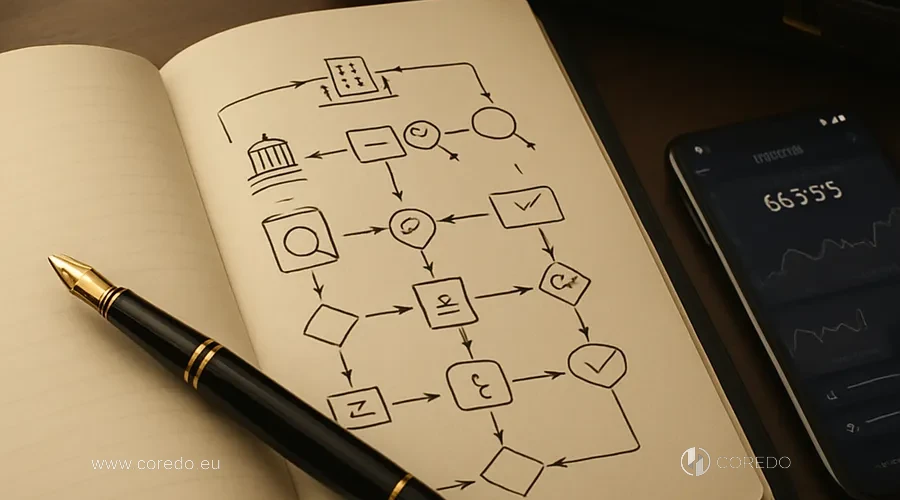
As CEO of COREDO I personally participate in designing licensing projects, in negotiations with regulators and in preparation for supervisory reviews. We build models that are designed from the start to meet the requirements of regulators and banks' risk committees, not for a formal «company registration».
Fintech Licensing: our strong suit. For a banking license or payment services in the EU go through the VASP frameworks with enhanced EDD. CySEC requirements for IT companies include a compliance officer and digital reporting to the FSC. In Asia Labuan FSA issues licenses for insurance and funds subject to a substance audit.
Practical case: a European fintech client scaled operations to Dubai (ADGM free zones). We organized substance in the offshore jurisdictions — a local team and audit, which allowed to obtain a license in 3 months. Without this, banks blocked IBANs. This case was subsequently used as an internal model when scaling three more fintech projects with turnovers of over €20 million per year, where regulators checked not the documents but the real business processes. Another example: an Asian fund in the BVI under BVI ESA for insurance business. Organizing economic substance with real management ensured 0% tax and access to EU banks.
The EU‑OECD influence on Asia is obvious: substance requirements for crypto service providers in Anguilla now include AI infrastructure for reporting. Scale with shelf companies? Only if you adapt them to EU substance 2026 — otherwise there are risks of redomiciliation.
AML compliance and KYC: minimizing the risks of scaling
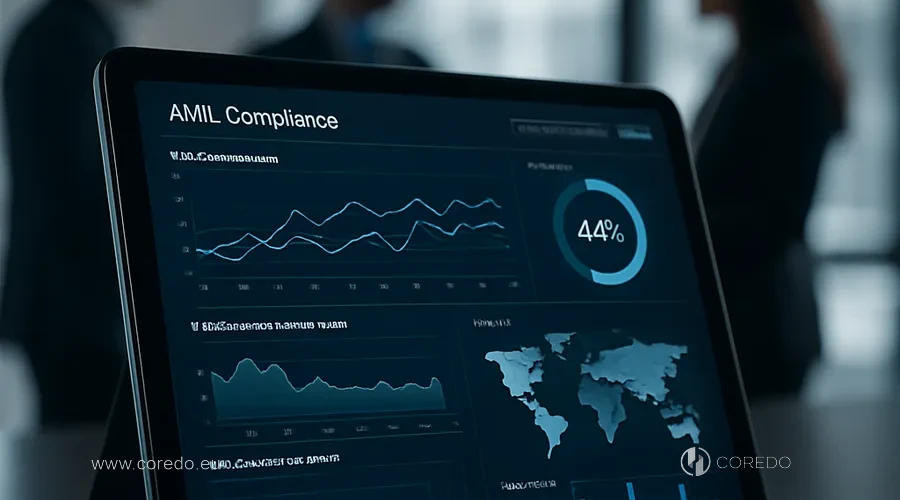
AML compliance: not bureaucracy, but business protection. Implement KYC procedures. In recent years we have assisted clients in dozens of enhanced due diligence procedures from banks and regulators. In practice we see: it is precisely a pre-established compliance framework that becomes the main factor why a company does not lose accounts, licenses and business partners when scaling.
COREDO's practice confirms: transparency of the source of funds speeds up account openings twofold. For CySEC, in IT companies arrange a compliance officer — this reduces fines by 70%.
Case: a client from Slovakia expanded a payment service to Singapore. We set up internal control and reporting, including UBO checks, result: license and accounts without delays.
Is it worth investing in a local team in the BVI for banking services? The ROI calculation is simple: savings on fines and taxes pay back the costs within a year.
Support: from registration to growth

registration from scratch vs a ready-made structure? Choose based on substance requirements: a shelf company speeds things up, but requires rapid adaptation. Our approach at COREDO is full-cycle: from jurisdiction selection to the annual audit. Clients from the United Kingdom and Estonia use us for IP holdings and holding companies, obtaining tax preferences when substance is demonstrated.
Long-term consequences of non-compliance? Account freezes, OECD audits and loss of benefits. Choose an African/Asian jurisdiction (Mauritius) for balance: scaling fintech with substance in Mauritius yields 25%+ ROI.
At COREDO we operate on a regulator-first principle: every structure is designed as if a bank, the tax authority and the licensing regulator would inspect it tomorrow. This is the approach chosen by entrepreneurs focused not on "open quickly" but on sustainably scaling their business.
Ready to take the step? The COREDO team will ensure transparency, speed and support. Contact us; we'll turn your idea into a global business.