
COREDO – EU Legal & Compliance Services Expert legal consulting, financial licensing (EMI, PSP, CASP under MiCA), and AML/CFT compliance across the European Union. Headquartered in Prague, we provide seamless regulatory solutions in Germany, Poland, Lithuania, and all 27 EU member states.

Pavel Kos
06.03.2026 | 6 min read
Updated: 15.10.2026
I have been building COREDO since 2016 as a company focused on legal and financial consulting for businesses that think globally. During this time the COREDO team has implemented dozens of projects in the EU (Czech Republic, Slovakia, Cyprus, Estonia), the United Kingdom, Singapore and Dubai - from company registration and licensing to implementing compliance and AML processes. Today I want to systematize the most important topic: client funds protection and account segregation: how to choose a model, on what regulatory grounds to build processes and how to ensure that control over client assets actually works and scales with your growth.
This article is not theory and not a summary of regulatory norms. It is a collection of proven solutions that COREDO practitioners confirm through their daily work: we design client pools, handle Licensing of payment and electronic money in the EU and Asia, build AML/KYC/KYB, prepare SLAs with banks and custodians and help pass independent audits of controls. I will go through all the key sections: from choosing account types to responding to a partner bank default, from tokenization of client balances to the TCO model of segregation.
Basic models and concepts
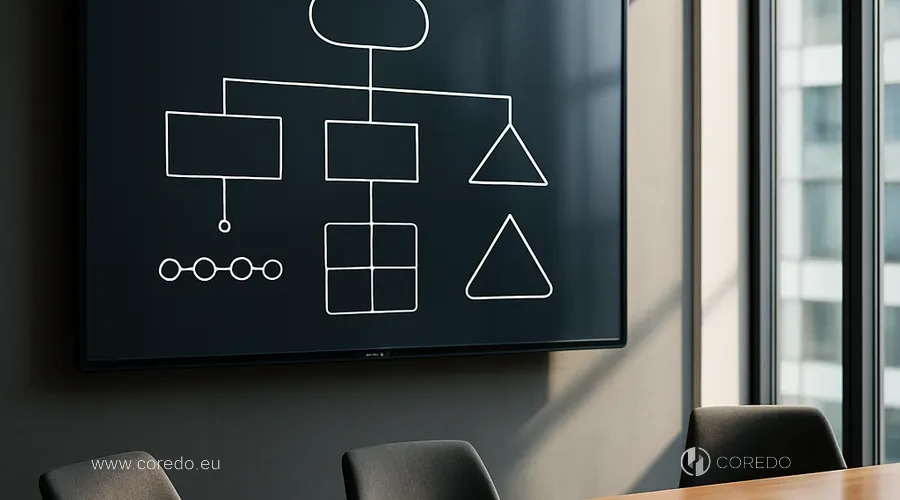
Any strategy for protecting client funds relies on a clear vocabulary and well-defined structures. Types of client accounts: omnibus, individual segregation, trust — these are the three pillars around which contractual and operational schemes are built. It is important already at the architecture stage to understand the boundaries of responsibility, the legal title to the funds and the operational roles of participants.
Omnibus account versus segregated: the question is not only about accounting convenience but also about risk management. Omnibus account and allocation of responsibility look attractive due to low cost and speed, but carry risks of commingling and difficulties with recovery in the event of a custodian default. Individually segregated client accounts provide more transparent traceability and better insolvency coverage, but require mature reconciliation processes and high SLAs.
The third structure, a trust account for business. In a trust we achieve fiduciary segregation and legal segregation of funds: assets are separated from the provider's operating balance and protected by mechanisms for ring-fencing client assets. The legal status of escrow in different jurisdictions complements this lineup: escrow accounts and escrow agreements allow deals to be safely closed when settlements are conditional, and the functions of the escrow agent are set out in the contract and regulated by local law.
Title: Segregation vs Ownership
In European and British practice it is important to distinguish title segregation vs beneficial ownership. Under title segregation the legal title to the money is with the client, and the provider is only the custodian. In the beneficial ownership model the beneficiary's right is with the client, but the title may temporarily belong to the custodian: here additional "safeguards" are needed in the form of a custody agreement, SLA and procedures in case of default.
Operational segregation vs legal, another axis. The first is about processes, accounts and accounting, the second is about law. I insist that companies implement both: a legal structure without daily reconciliation and strict SoD easily cracks in reality, and operational isolation alone without a firm legal framework provides weak protection in a dispute or a counterparty bankruptcy.
Regulatory: mandatory, best practice

In the EU, PSD2 requirements for the protection of funds and the EBA recommendations on safeguarding client assets define two main safeguarding models for payment providers: account segregation for payment institutions and insurance/guarantees. Segregation in e-money institutions is based on similar principles with nuances regarding liquidity and the permissibility of investing "free balances".
MiFID II and the protection of client assets are a separate domain for investment firms: here the emphasis is on the UK's CASS procedures (FCA CASS rules on safeguarding clients' money), requirements for the custodial chain and the frequency of reconciliations. AMLD5/AMLD6 and requirements for holding clients' funds impose expectations for KYC/KYB, monitoring, sanctions and PEP checks, as will the AML Regulation (EU) 2024/1624 from 10 July 2027. GDPR sets the framework for data and logs: data retention rules and GDPR here are not optional, but part of the licensing "hygienic minimum".
Licensing of payment and electronic money in the EU and Asia always includes demonstrating operational safeguarding procedures. In Singapore, for example, the regulator will separately review legal agreements with banks and SLAs, segregation policy and incident response plan. COREDO's practice confirms: the earlier you formalize a compliance strategy for protecting funds, the faster licensing and account opening will proceed.
Choose a segregation model for fintech
I start with a product profile and risk analysis. For providers with high transaction frequency and a large number of clients, segregated client accounts with automated reconciliation and clear SoD are more suitable. For platforms with large ticket sizes and conditional settlements — a trust or escrow with transparent escrow agent functions.
Comparison of omnibus and individual segregation: risks and benefits should be assessed honestly. Omnibus is cheaper and simpler for liquidity management, but increases distribution complexity under stress scenarios. Individual segregation provides better protection and the trust of large counterparties, but increases cost per account — the method of calculating segregation costs — and the burden on IT/operations. The solution developed at COREDO often combines levels: omnibus at the top level plus internal sub-accounts and a strict legal framework, or a hybrid with escrow for large transactions.
Anti-money laundering measures to protect funds

The impact of AML on the safekeeping of client funds cannot be underestimated. KYC/KYB when segregating client accounts is a filter that reduces the risk of blocks and chargebacks, and also simplifies incident investigation. The list of mandatory KYC and KYB procedures includes verification of beneficiaries, sources of funds, business geography, and documentary sanctions checks.
Enhanced Due Diligence for high-risk clients helps set limits and service terms in advance. Sanctions screening and blocking of funds, PEP screening and a risk-based approach, monitoring of suspicious transactions and SARs: all of these are direct elements of protecting client funds because they prevent a "toxic" flow from entering your segregated environment and reduce the likelihood of a payment being frozen by the bank.
Operations accounting, reconciliations and automation

Separate accounting ledgers for clients are a basic control that I build into any model. Daily reconciliation of client balances and daily reconciliation procedures are not just a regulatory expectation, but a way to detect discrepancies early and resolve them quickly. Best-practice reconciliation frequency and the reconciliation interval depend on transaction volumes, but at minimum: daily automated reconciliation plus manual checks for anomalies.
Reconciliation automation technologies and automation of reconciliation using RPA and APIs remove routine work and reduce errors. Integration with banks via APIs and SWIFT/SEPA gateways, as well as control of payment channels — SWIFT, SEPA, ACH — provide transparency of cash flows and speed up the close of the operating day. At COREDO we often implement dashboards where bank statements, internal ledgers and monitoring signals converge.
Custodial chain and third parties
Outsourcing custodial services may seem convenient, but it conceals risks in the custodial service chain. Risks related to sub-custodians and ways to mitigate them include vendor due diligence, outsourcing controls and third-party management, as well as typical provisions of a custody agreement: custody procedures, sub-custodian structure, client rights in case of default, agreement termination procedures and SLAs for partner banks and custodians.
Insurance of client funds, coverage limits and bank guarantees to protect clients add a second "tier" of protection. Correspondent relationships and banks' KYC requirements demand your transparency: banks expect to see a mature policy, SoD, stress-scenario plans and regular control reports. Control reporting — ISAE 3402 and SOC 2 — helps formalize trust and speeds up onboarding with partners.
Banks, liquidity and multi-jurisdictional schemes
An international account structure for multi-jurisdictions often includes regional pools, local escrow/trust solutions and a central 'liquidity hub'. Managing liquidity on segregated accounts requires rules for intraday movements and limits; multi-currency segregated accounts and FX risks create a need for FX-hedging mechanisms for multi-currency pools and transparent conversion policies.
Legal agreements with banks and SLAs specify posting times, cut-offs, queue priorities and responsibility for errors. For payment providers and EMIs this is: the basis of operational quality, and for clients, a guarantee of predictability. Our experience at COREDO has shown that thorough drafting of SLAs and the right to audit correspondent bank processes greatly reduces operational incidents.
Custodian Default and Partner Insolvency
Crises cannot be "waited out"; they must be prepared for in advance. The bankruptcy of a partner bank and client protection are a test for your legal and operational setup: bankruptcy remoteness and protective structures, creating an SPV to isolate client assets and ring-fencing at the contract and jurisdiction level speed up recovery. Operational procedures for the insolvency of a partner bank must be documented and tested in drills.
Methods of returning funds in the event of a custodian default include invoking insurance coverage, bank guarantees, using trust and escrow mechanisms, as well as tools for automatic recovery (reclaim) where supported by the bank. Recourse claims and clients' rights in the event of loss of funds are set out in the terms of service and in separate legal clauses and client notices; the procedure for responding to an incident of loss of client funds must be agreed with the regulator in advance.
Cryptocurrency services and token models
Protection of clients' funds in cryptocurrency services is built around managing cold and hot wallets. Cold storage and hot wallet control are technical and procedural measures: limits, multisig, geographic distribution of keys and 24/7 monitoring. Custodial wallet providers for crypto require separate vendor due diligence, SLAs and incident-response tests.
Technological solutions: blockchain escrow and smart contracts, tokenization of client funds and smart-contract escrow create opportunities to automate settlements and increase transparency. Use cases for tokenizing client balances include instant segregation, programmable conditions and automatic fee calculation. At the same time, it is important to address compliance issues when creating client pools and to consider restrictions on cross-border transfers and repatriation of funds in certain countries.
Control and independent verification of data
Internal client funds protection policies are the main document that guides your daily decisions. Access control and segregation of duties (SoD), internal audit and independent verification of controls, regular stress-testing of fund protection processes: these are not 'options' but the maturity banks and regulators expect. Personal data processing rules (GDPR) and log retention are no less important: without traces of controls it is difficult to defend your position in a dispute.
Reporting on controls and external attestations such as ISAE 3402 and SOC 2 increase corporate clients' trust and simplify onboarding with correspondent banks. Interaction with the regulator in incidents of fund loss is built into the compliance plan and is regularly practiced in exercises involving operations, legal, and PR functions.
Economics of scaling
The cost of implementing account segregation consists of IT, legal agreements, processes and people. The TCO model for implementing account segregation takes into account licenses, integrations, audit, insurance and ongoing operations. The cost-per-account method of calculating segregation costs helps compare omnibus and individual models, and the assessment of ROI from protecting client funds and the ROI calculation methodology — cost of protection vs customer retention — link control with business metrics.
The calculation of economic efficiency: LTV, churn and fund protection often shows that safeguarding discipline reduces churn, increases average ticket size and improves conversion of enterprise clients. Scaling the segregation model as the business grows and scaling segregation as the number of clients increases require automation, a flexible account architecture and a well-considered legal structure for multi-jurisdictional segregation. The COREDO team traditionally designs these schemes with headroom for growth and plans for entering new markets.
The tax and legal consequences of segregation also need to be taken into account: some countries treat trust structures and sources of income from client balances differently. Local legal restrictions in countries in Asia and Africa can affect the choice of bank, the escrow formula and the terms of repatriation of funds: we factor these considerations into the early stages of design.
Provider migration and continuity
Migration of client accounts when changing providers: a sensitive project that requires predefined procedures. Procedures for migrating client balances between banks describe cut-over, parallel rollouts, test tranches and client notification. Due diligence checks of custodial service providers (vendor due diligence) on onboarding and periodic review reduce the likelihood of emergency migration.
selection criteria for a partner bank for segregation include resilience, currency coverage, API readiness, SLA quality and experience working with your business model. Legal agreements with banks and SLAs set KPIs to protect client funds, incident SLAs, time-to-fix targets and reporting obligations. COREDO's practice confirms that a transparent migration plan increases resilience and speeds up approvals with the regulator.
Implementation roadmap: mistakes
The implementation roadmap for account segregation consists of five blocks:
- Product and client risk assessment, choice of models (omnibus/individual/trust, escrow).
- Legal framework: standard provisions of custody agreement, escrow agreements, SLA, client notifications.
- Operations and technology: separate ledgers, reconciliation, RPA and API, integrations with SWIFT/SEPA/ACH.
- Compliance and AML: list of mandatory procedures KYC and KYB, EDD, sanctions, PEP, SAR, GDPR policies and logging.
- Contingency plans: insurance, guarantees, SPV, bank default instructions, reclaim and chargeback.
We adapt a template client funds protection policy to jurisdictions and licenses, including dispute resolution and chargeback procedures and chargeback procedures in international payments. Major mistakes when setting up client pools: underestimating "bottlenecks" in liquidity, weak automation of reconciliations and undefined roles in SoD. The solution developed at COREDO records best practices and tests them on a pilot with a limited number of clients before full rollout.
What the COREDO projects taught us
In a project for an e-money license in Estonia, the COREDO team implemented a hybrid scheme: individual sub-accounts on an omnibus root pool, daily reconciliation automation using RPA and APIs, and an SLA with the bank for D+0 credits. The client passed an ISAE 3402 audit, received regulator approval, and halved operational incidents in the first six months.
In Singapore we set up a trust structure with an SPV for a marketplace model with high-value transactions. Bankruptcy remoteness, ring-fencing and escrow agreements for large transactions allowed us to quickly close regulatory issues and sped up onboarding of enterprise-level sellers. In the UK a provider approached us after a case: the custodian's bankruptcy and its consequences for clients. We prepared an incident response procedure for loss of client funds, launched a reclaim and restored access to 97% of funds thanks to properly executed CASS agreements and insurance coverage.
In Dubai, for a crypto service we separated cold/hot architecture, signed agreements with two independent custodial wallet providers for crypto, implemented blockchain escrow for P2P transactions and described sanctions screening for on-chain activity. The client passed vendor due diligence at the correspondent bank and received approval to open segregated multi-currency accounts with managed FX risks.
Metrics control checklist
To keep the system «alive» every day, I orient teams toward measurability:
- KPI for protecting client funds and SLA: speed of crediting, reconciliation accuracy, T+0 incident response, share of funds under insurance/guarantee coverage.
- Best practices frequency reconciliation and reconciliation interval: daily auto-recon + weekly manual spot review.
- Outsourcing controls: quarterly contractor reports, annual vendor due diligence, test plans for sub-custodian default.
- Transaction monitoring and analytics technologies: anomaly alerts, triggers for sanctions and PEP, automatic SAR generation.
Such a checklist is not bureaucracy, but a foundation of trust. Banks, clients and regulators see it, and it is what ensures predictability on an operational day and resilience during stress periods.
How COREDO transforms requirements
Account segregation is not only compliance with rules but a strategic advantage. When you have legal segregation of funds, an operational perimeter, SLAs and compliance in place, you open accounts faster, obtain licenses more easily and confidently scale your business into new markets. An international account structure for multi-jurisdictions, transparent custody agreements and considered FX management turn safeguarding into an argument for large clients and partners.
COREDO helps you through the entire journey: from choosing models to audits and stress tests. I speak openly about the challenges: legal risks of commingling funds, sub-custodian risks, limitations of local legislation in countries in Asia and Africa, but for every challenge we have a practical solution and a clear roadmap. If you need to build or improve protection of client funds, let's discuss how to turn regulatory requirements into a resilient and scalable operational system for your business.