
COREDO – EU Legal & Compliance Services Expert legal consulting, financial licensing (EMI, PSP, CASP under MiCA), and AML/CFT compliance across the European Union. Headquartered in Prague, we provide seamless regulatory solutions in Germany, Poland, Lithuania, and all 27 EU member states.

Pavel Kos
14.02.2026 | 6 min read
Updated: 14.02.2026
The COREDO team has implemented dozens of structures in Luxembourg, the Czech Republic, Cyprus, Estonia, the United Kingdom, Singapore and Dubai. When entrepreneurs and chief financial officers from Europe, Asia and the CIS come to me with the task of quickly and cleanly launching a fund for professional investors, we often choose the Reserved Alternative Investment Fund: RAIF Luxembourg. It is a tool that combines private-market flexibility, AIFMD compliance, tax efficiency and predictable RAIF fund launch timelines.
Below I share a practical guide: from choosing a RAIF fund structure and an AIFM for the RAIF to AML/KYC requirements, valuation policies, tax planning and RAIF marketing in the EU. I use the language of business, real COREDO cases and the solutions that give our clients speed, risk control and investor confidence.
Why a RAIF in Luxembourg is advantageous

Luxembourg provides a stable legal environment and predictable law and regulation for RAIF. The RAIF was established by Luxembourg's 2016 RAIF Law; at the same time the fund does not require direct supervision by the CSSF: the CSSF’s role and oversight are exercised through a licensed management company — an AIFM for the RAIF — which significantly speeds up RAIF registration in Luxembourg and the first closing. This structure allows use of the AIFMD passport for cross-border distribution of the RAIF and marketing the RAIF in the EU to professional investors.
From a tax perspective, tax planning for a Luxembourg RAIF is transparent. In the typical regime the fund benefits from Luxembourg funds' exemption from corporate taxes and pays the nominal taxe d’abonnement (usually 0.01% per annum of NAV), while the transmission of income to investors occurs without withholding tax in Luxembourg, which reduces withholding tax issues at the fund level. The “risk capital” option makes a RAIF comparable to a SICAR in terms of regime, which is convenient for pure private equity.
In our practice COREDO uses the launch of a Reserved Alternative Investment Fund for private equity deals in Central and Eastern Europe, direct real estate funds (core/core-plus, value-add) and hedge strategies involving derivatives. The flexibility of the investment mandate and the rapid time-to-market save months and directly support raising AUM.
Regulatory framework: what you need to know
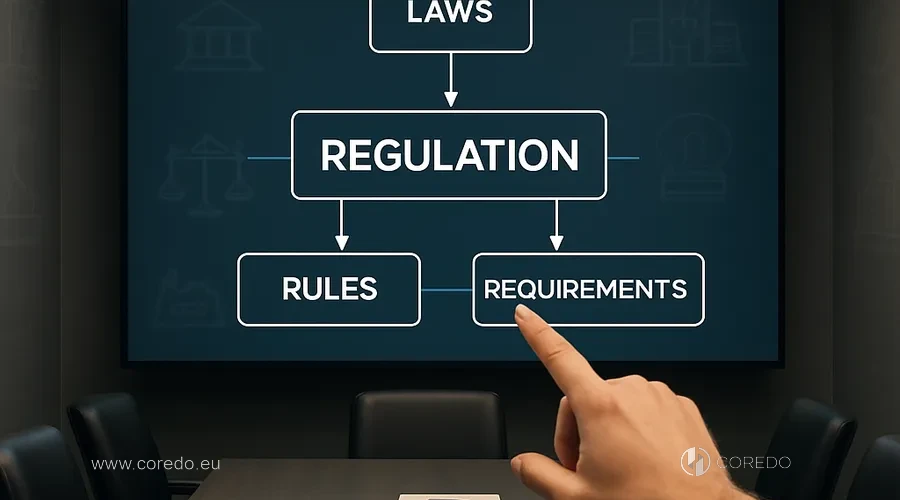
RAIF is managed by an external AIFM authorized in the EU; this is the AIFMD compliance “anchor” for the RAIF. The manager assumes risk management and portfolio management, liquidity control, conflicts of interest policy and the RAIF's ESG and SFDR compliance. The professional investor requirement precludes retail distribution: the RAIF is intended for well-informed and professional investors under MiFID; RAIF minimum investment thresholds typically start at EUR 125,000, and, upon competence certification, at the AIFM's discretion.
I often explain the RAIF vs SIF vs SICAR difference fairly briefly. RAIF: without CSSF authorization, faster, with an AIFM and an AIFMD passport, tax regime like a SIF (or the “risk capital” option). SIF/SICAR: direct CSSF supervision and a longer pre-sale phase, although some LPs prefer the “regulated” label. When investors value speed to market and flexibility, RAIF proves optimal.
Capitalization — clear and achievable: RAIF capital requirements: reach a minimum of EUR 1,250,000 within 12 months from launch. Implementation deadlines and monitoring are set out in the fund documentation and are overseen by the administrator and the AIFM.
RAIF structure and investment strategies

The choice of legal form depends on strategy and tax objectives. Most often I recommend SCSp (an unincorporated limited partnership) with an LPA agreement and rights of Limited Partners, where the carried interest remuneration structure and the profit distribution waterfall model can be configured flexibly. For hedge strategies corporate forms with a board of directors and independent directors are convenient - RAIF governance and independent directors increase LPs' confidence and improve audit.
- RAIF for private equity: growth and buyout deals, possibility of a master-feeder RAIF structure for different classes of investors and currencies.
- RAIF for a hedge fund: RAIF pricing and NAV, often monthly, side-pocketing of illiquid assets is allowed for stressed assets, redemption gates and suspension of redemptions for risk management.
- RAIF for real estate: valuation methodologies for real estate and illiquid assets, an independent valuer and a clear valuation policy and frequency of NAV (quarterly/semi-annually).
In master fund feeder structuring benefits we use multi-currency classes, optimize currency risks and hedging for the RAIF through class-level swaps and forward strategies. Side letters and investor preferences are applied selectively: the economics must not undermine equality between classes and the waterfall.
Providers and contractual architecture

The solution developed by COREDO to speed up the launch is a "block" of contracts and providers with ready-made SLAs. In such a scheme:
- Registration of the AIFM management company: we take an external EU-authorised AIFM or register a new one (longer and more expensive). Delegation of RAIF management is structured through a management agreement and agreements with the investment consultant.
- Depositary and custodian for the RAIF: RAIF depositary duties include cash flow monitoring, safekeeping and oversight. The depositary agreement is agreed together with the administrator.
- RAIF fund administrator services: maintaining the register, NAV calculation, financial reporting, subscription/redemption of shares (RAIF subscription and redemption procedure), KYC/AML operational processes. registration agent RAIF performs transfer agent functions.
- Independent auditor and NAV audit: annual audit of financial statements and valuation procedures.
- Asset valuation — independent valuer: for real assets and complex private debt portfolios.
- corporate governance: governance committee and investment committee with clear mandates; conflict of interest and disclosure policy - a mandatory element of AIFMD.
Fund documentation is built around the offering memorandum for the RAIF, the LPA (or articles of association), the term sheet for key parameters, subscription agreements, as well as distribution agreements for the EEA. COREDO's practice confirms: clear documentation at the start saves months in subsequent rounds of LP fundraising.
Operational AML and KYC procedures
AML KYC requirements for RAIF comply with AIFMD standards and Luxembourg rules. We set up AML risk assessment and control policies together with the AIFM and the administrator, including PEP screening and enhanced Due Diligence, sanctions monitoring and EU sanctions, as well as transactional monitoring of suspicious operations. Investor due diligence for RAIF covers KYC/KYB for institutional investors of the RAIF, source of funds analysis and the beneficial owner and UBO of the RAIF.
From the data exchange perspective the fund is classified under CRS, FATCA, RAIF. We organise FATCA registration and GIIN for investors where required, and configure the CRS European automatic exchange so that annual reporting cycles proceed predictably. Additionally, we ensure GDPR compliance for the fund in the EU, including IT security and protection of investor data, access segregation, operation logging and provider control under SLAs.
AML regulators and the recommendations of FATF set the "ceiling" of practices; my team adapts them to the risk profile of the strategy, the jurisdictions of target assets and the channels for attracting LPs. This approach is recorded in AML policies, and operational outsourcing and process customization reduce manual workload without losing control.
Taxes, substance and cross-border structuring.
The tax residency status of a RAIF fund depends on its form. In a "SIF-like" regime the fund is usually exempt from corporate tax and does not claim benefits under double tax treaties; to reduce taxes in portfolio jurisdictions we set up an SPV layer and substance requirements and economic substance (substance documents: office lease, employees, local directors). For private equity and real estate, transfer pricing and the RAIF affect loan and service agreements; we check compliance with the "arm's length" principle and the TP documentation.
BEPS and its impact on fund structure together with ATAD and EU anti-abuse rules (interest limitation, GAAR, CFC at the investor level) are becoming standard for the project. For cross-border financing programs I introduce DAC6 reporting and cross-border schemes as a mandatory checklist item. Issues of income allocation and withholding tax are resolved through a treaty-eligible SPV where economically justified; capital repatriation and foreign exchange control are taken into account in cash modelling for LPs from different countries.
Marketing and distribution: compliance
Thanks to the AIFM, RAIF marketing in the EU uses the AIFMD passport for professional investors, and marketing registration in the EEA is carried out centrally. For a number of markets pre-marketing is used, and, for non-EU jurisdictions, private placement is done under local NPPR. We comply with the public advertising restriction and distribution rules: no retail communications, clear legends and geographic filters.
In COREDO projects the marketing strategy for family offices is built around qualification sessions and a data room focused on risk metrics and governance. To attract institutional capital and for LP due diligence we assemble a package: track-record, AIFMD policies, ESG and SFDR compliance of the RAIF (arts. 6/8/9), valuation policy, independent directors, committees, auditor reports. We tie fund scaling and AUM attraction to fund performance KPIs and ROI metrics: IRR/TVPI/DPI, time-to-close, share of invested capital, and specific ongoing charges.
Liquidity and risk management
RAIF risk and liquidity management: the AIFM function and a documented LRM policy. In closed PE/RE structures, liquidity terms and lock-up periods are specified, as well as the schedule of capital calls and distributions. In open strategies, redemption gates and suspension of redemptions are used as a rare-event tool, and the fund's liquidity stress-testing is performed against market shock and outflow scenarios.
Currency risks and hedging for RAIF are implemented at the share-class or portfolio level: forwards, NDFs, swaps with counterparty limits. The valuation policy takes into account RAIF pricing and NAV, including FX, fair value and methods for illiquid assets; an independent auditor reviews the approach and the frequency of NAV calculation.
Documentation and procedures
Preparing the offering memorandum for the RAIF sets the rules of the game: description of the strategy, limits, valuation, risks, subscription and redemption procedures of the RAIF, fees, ESG, SFDR disclosures. The management agreement clarifies delegation and AIFM oversight; the depositary agreement and the agreements with the administrator and the registrar/transfer agent establish the control points. Side letters and investor preferences are permitted within the bounds of fairness between classes and without breaching the prospectus.
I insist on a clear conflicts of interest policy and a disclosure policy, including related-party transaction regimes and a governance committee with independent directors. This is partly within the scope of AIFMD, but genuine LP trust is built through transparent practice, not just by rules.
Timelines and costs — guidance
Our experience at COREDO shows that the launch timeline for a RAIF fund with a finalised strategy and an AIFM in place is 8–12 weeks to soft-close. This includes structuring, opening accounts with the depositary, negotiating agreements, registering in the registers and publishing the offering memo. If registration of the AIFM management company from scratch is required, the timeline is extended by 4–6 months.
The cost of launching a RAIF in Luxembourg depends on the mix of providers and the complexity of the structure. In a typical project the setup and first-year budget comprises legal support for the RAIF, fees for the AIFM, the depositary and administrator, an independent auditor, a registration agent, a valuer (if required), D&O insurance and marketing expenses. As a reference, formation and first-year ongoing charges for COREDO clients typically fall within the average range for institutional RAIFs, and the unit burden quickly decreases as AUM grows. I determine specific pricing after receiving a term sheet on the strategy and operating model.
Timeline and project launch checklist
To ensure process transparency and save time, I use a step-by-step checklist:
- Strategy, RAIF fund structure, choice of form (SCSp/corporate), tax regime.
- Economic term sheet: classes, fees, carried interest, waterfall and exit waterfall.
- Providers: AIFM, depositary and custodian, administrator, auditor, registration agent, independent valuer.
- Fund documentation: offering memorandum, LPA/articles of association, management agreement, depositary agreement, distribution/placement agreements, subscription agreement.
- Policies: valuation policy and NAV frequency, risk and liquidity management, AML/KYC, sanctions, GDPR and IT security, ESG and SFDR.
- Marketing and cross-border distribution of the RAIF: registration in the EEA, private placement outside the EU, restriction on public advertising.
- Substance: office, local directors, meeting calendar, recruitment compliance for the management team.
- Reporting and audit: annual audit, audit approval and annual general meeting, CSSF notification via the AIFM.
- Finance: transaction costs and ongoing charges, currency policy, hedging, banking and brokerage agreements.
COREDO case studies: solutions in practice
Recently the COREDO team launched a RAIF for private equity with a focus on buyouts in the EU industrial sector. We selected an SCSp, set out carried interest with a European waterfall, and implemented a master-feeder for multi-currency fundraising. For liquidity management we provided capital calls by deal stages, and for tax purposes - an SPV in contractual jurisdictions with substance and TP documentation. The investors' committee received independent members, and the AIFM adopted a risk policy and SFDR disclosures under Article 8.
Another project, a RAIF for real estate with a value-add strategy. We appointed an independent valuer, quarterly NAV, a side-pocket for rare workout assets and redemption gates in case of market shocks. A depositary with experience in real assets took custody and recordkeeping, an administrator, and robust KYC/KYB for institutional investors. As a result the fund reached first closing in 10 weeks, and subsequent marketing in the EEA was carried out through the AIFMD passport.
For a hedge strategy with liquid instruments, the solution developed at COREDO included daily pricing of key assets by a price provider, monthly NAV and strict counterparty limits. We built in liquidity stress-testing, FX hedging of classes and a suspension policy for extraordinary conditions. LPs received a transparent reporting pack and a clear fee model.
Secondary sales and investor exit
Exit strategies of RAIF investors depend on the structure. In closed-ended funds this is a waterfall distribution after exit from the portfolio; in open-ended funds: redemptions according to the rules and frequency described in the prospectus. If necessary, a secondary-market sale of a stake is permitted: transfer of an LP's interest with the consent of the GP and AIFM and updating the registers with the administrator. We add these mechanics in advance to the LPA and subscription agreements so as not to restrict the transferability of interests.
Where difficulties most often arise
The question "RAIF depositary obligations" when investing in illiquid or non-standard assets requires early selection of a custodian prepared for such classes. We begin negotiations at the term sheet stage, agree on the valuation policy and the description of ownership rights.
Another point — ESG and SFDR compliance for RAIF: an agreed level of ambition is needed (article 6/8/9) and real operational capability to collect data from SPVs and portfolio companies.
In cross-border structures I pay attention to BEPS/ATAD, substance and DAC6. Proper substance documents (office lease, local directors, meeting minutes) and recruitment compliance for the AIFM management team address issues of the "paper" structure and strengthen the position during institutional LP due diligence.
Benefits of RAIF for the investor
Benefits of RAIF for investors consist of three components. First, Luxembourg's legal regime, the stability of the legal environment in Luxembourg, and AIFMD compliance through an AIFM with clear roles for the depositary, auditor and administrator. Second, flexibility of the remuneration structure (carried interest and waterfall), governance and independent directors, committees and clear LP rights (LPA, side letters within the framework of fairness). Third, tax efficiency at the fund and SPV level, well-considered currency hedging and predictable Ongoing charges.
Institutional LPs also value automatic information exchange CRS FATCA RAIF, robust AML processes, sanctions monitoring, PEP screening and enhanced due diligence. KPI and ROI metrics, regular reporting and NAV audits matter to them — we build all of this into the operating model from day one.
Why I recommend RAIF and COREDO
RAIF is an instrument that combines speed to market, the AIFMD distribution passport, a flexible structure for private equity, hedge funds and real estate, and a transparent compliance regime. In COREDO projects this is expressed in a controlled timeline, a clear budget, predictable regulatory steps and investor trust even before the first closing.
When an entrepreneur or CFO comes to me with the task of "setting up" a fund for professional LPs and scaling AUM, I offer a roadmap: from choosing the form and tax regime to selecting providers, fund documentation, ESG and SFDR, AML and GDPR. COREDO's practice confirms: it is precisely the sequence and attention to detail — from the valuation policy to distribution rules and substance — that turn a strategy into a working RAIF that withstands institutional investors' due diligence and delivers a predictable result.